
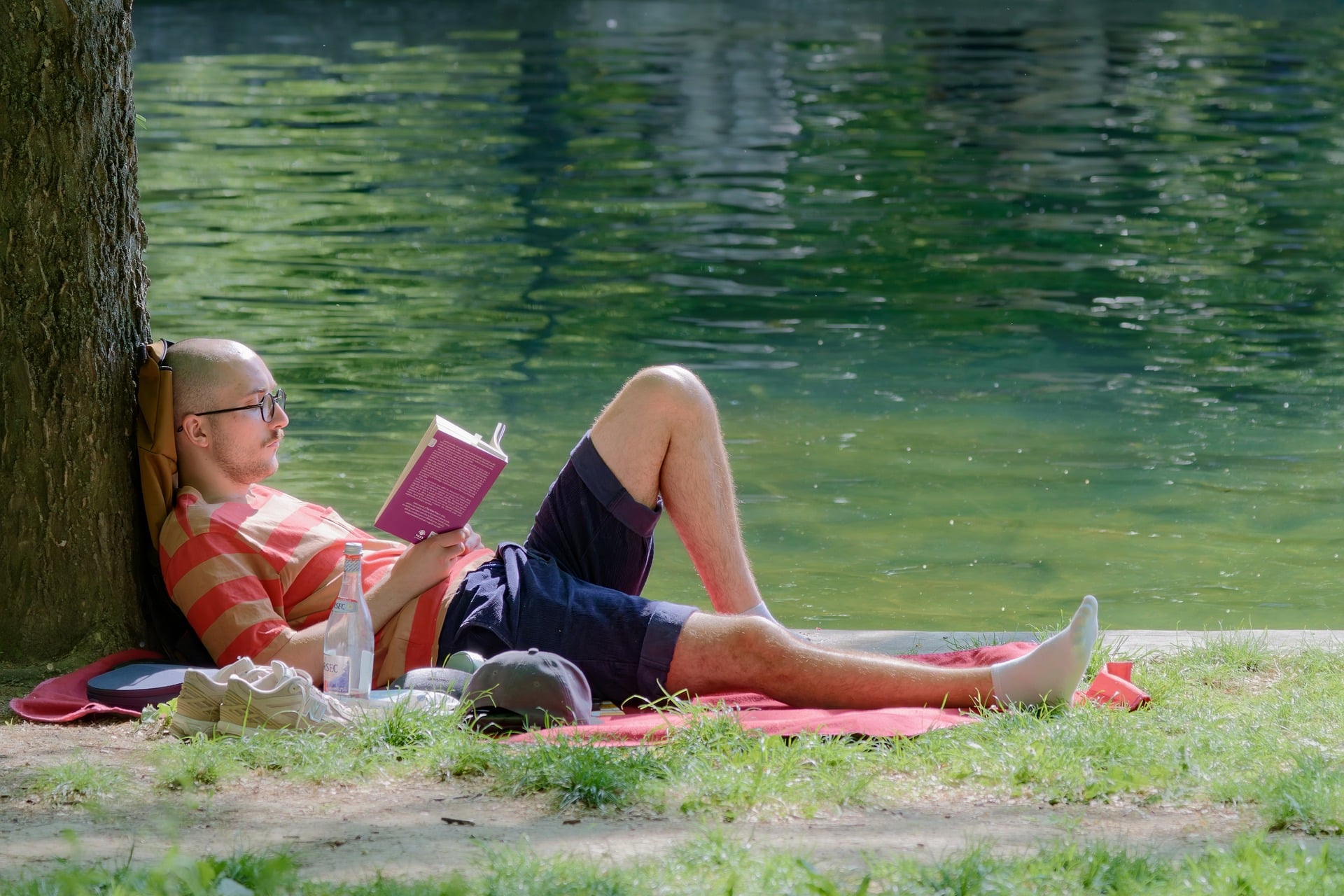
August is, traditionally, the month of school holidays. Whether you have any sub-adults still living under your roof or not, you’ll probably be hoping for a chance to sit in the sunshine and get cracking into that novel that’s been calling to you from your tottering ‘tbr’ pile.
Reading habits vary widely, but we all know that the best writers also read voraciously. I’ve long maintained the discipline of reading before I sleep. That makes it sound like a chore but, in fact, it’s a great way of decompressing from the day.
I tend to have regular seasons of wakefulness at stupid o’clock in the morning, so I frequently gallop through books in the wee small hours.
If you like a challenge, then being part of a book group can give you access to a raft of new material that perhaps you wouldn’t have chosen for yourself. I set myself a challenge on Goodreads every year because it sparks the competitive gene in me. Apparently I’m 18 books ahead of schedule and have completed more than 75% of my goal already. Numbers are irrelevant; it’s the reading that’s important.
If you like a bargain (and who doesn’t?), charity shops offer shelf upon shelf of books just waiting your delectation. I always feel that an outlet that doesn’t have at least one copy of Angela’s Ashes and one of Bridget Jones’ Diary isn’t doing it’s job. As writers, we’d all like people to buy a full price copy of our book but, as responsible adults who are continually chivvied about saving the planet, we can see the wisdom of blitzing the charity shops and then re-donating anything we’re not going to read again.
That online giant we love to hate not only sells second-hand books but has regular 99p offers on all sorts of books. Personally, I like to browse their historical fiction section. I used to haul a carry-on of books across the equator to keep my reading appetite sated and then donated the majority to the local ‘Flybrary’ at Cape Town airport. Your town or village may have it’s own book swap heaven equivalent. I’ve seen them set up in old telephone boxes and in home-made cupboards by public footpaths.
Of course, it’s always worth supporting your local library, especially as financial cuts threaten to close them. Increased use by the public gives less reason to shut them.
I used to always use the school holidays to read a classic. It was a personal challenge to dig into something a bit meatier than the usual selection: a Dickens, Gaskell, Hardy etc.
Whatever you read, make sure you’re reading something. Some of us have several books on the go at once. I can’t read anything too serious before bed but a chapter alongside lunch works well.
All this literary input serves to keep our creative juices flowing and our imaginations active – both vital to keep our writing fresh. Sometimes setting writing aside so we can read more is a worthwhile investment into our writing life.
What are you reading?
Processed with VSCO with c1 preset
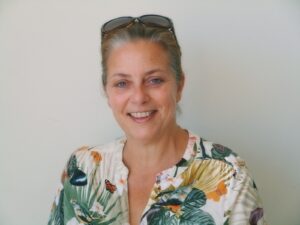
Jenny Sanders has spent the last fourteen years living between the UK and South Africa. She writes faith-inspired non-fiction: Spiritual Feasting (2020) asks how we can ‘feast’ when life serves unpalatable menus; Polished Arrows (2024), explores the allegory of God shaping us to be fired effectively into our culture and contexts.
Jenny also has two published collections of humorous short stories for Key Stage 2 children: The Magnificent Moustache and other stories, and, Charlie Peach’s Pumpkins and other stories. She is available for author visits and creative writing sessions in primary schools. She loves walking in nature, preferably by a river, and has a visceral loathing for offal, pineapple and incorrect use of car indicators on roundabouts.

