

Last month in a post titled, Mixed Emotions, I looked at my difficulties with engaging with my own emotions as a neurodivergent person and how, as writers, we deal with experiences outside our own. Sometimes we need to recognise that our experiences can help others process their challenges too.
I first came across ADHD and autism traits four years ago, when they were being discussed in a workplace staff disability chat group. As female colleagues I only knew from this group shared their experiences, something clicked. I wasn’t the only person in a professional job who felt awkward in social situations, had a brain like a popcorn machine and forgot where they put something five seconds ago.
This drew me to exploring other neurodivergent content on social media and web sites to find out about these conditions more independently. A year later, I asked my GP for assessments as I knew that self-knowledge was important for me.
When I was diagnosed with dyslexia in 2007, I had a sense of relief to find out that how I experienced life was not unusual. I just put my difficulties throughout my life down to being left-handed and assumed that I was trying to process the world backwards to everyone else. The assessment report highlighted adjustments I could request at work and in accommodate for myself at home. They also enabled suggested I could ask for extra time in test conditions to enable my intelligence to be tested regardless of the processing challenges I faced. It is not an exaggeration to say this new agency I found was life-changing.
My response to my autism diagnosis in January 2024 was almost the exact opposite. While it was helpful to acknowledge the root of many of my other life challenges, I wasn’t clear what to do with the knowledge. Waiting to hear if I would also be diagnosed with ADHD, probably didn’t help. Neither did the energy and cognitive hindrances I had from menopause and other health conditions. I often felt as if my brain was melting and I couldn’t find a bucket to catch it in. All my previous strategies to cope at work felt broken.
I had my ADHD diagnosis last month. I now feel able to start fully rebuilding my understanding of myself. Despite the hold-ups along the way, knowing a little more about the way my brain works (or not) was critical for my mental health. I learnt how to be more forgiving of myself and of others.
As member of the Association of Christian Writers (ACW), I have enjoyed similar camaraderie over common issues faced by other writers. In ACW blog posts, the members magazine and on the Facebook chat group, I have valued discussions on overcoming procrastination and the diverse powers of being a planner or a pantser. I find comfort in knowing that I’m not the only one with an issue and that we can all encourage each other to find a way through. Though with autism and ADHD, it often means I’m my own referee the internal battle between the planner and pantser.
Writing also has the power to bring acceptance to those that find life a challenge and feel that they are the problem. I would never have found all the content about neurodivergence without those writers. As mentioned last month, hearing about different experiences of others’ lives can also help us to understand that challenges others may be facing. I have especially enjoyed books by Deborah Jenkins (Braver) and Fran Hill (Cuckoo in the Nest, Home Bird) that are stories about people that feel different to the majority of those around them.
One of the passages I’m reflecting on as I discover my voice in writing is Isaiah chapter 58 verses 11 and 12. These passages talk of ‘satisfy[ing] your needs in a sun-scorched land’ and ‘rebuild[ing] the ancient ruins’. This is something I need to do personally but also to include in my writing journey. The final words of that scripture encapsulates what I think many writers should aim for, ‘you will be called Repairer of Broken Walls, Restorer of Streets with Dwellings.’
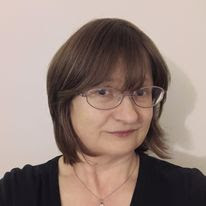
Elaine Langford lives in South East London with a husband and a cat. She is approaching retirement when she hopes to focus more time on writing. She writes an occasional post on her Faith Bites [https://faithbites.wordpress.com/ ] and Poetry Puddles [https://poetrypuddles.wordpress.com/ ] WordPress blogs.

