
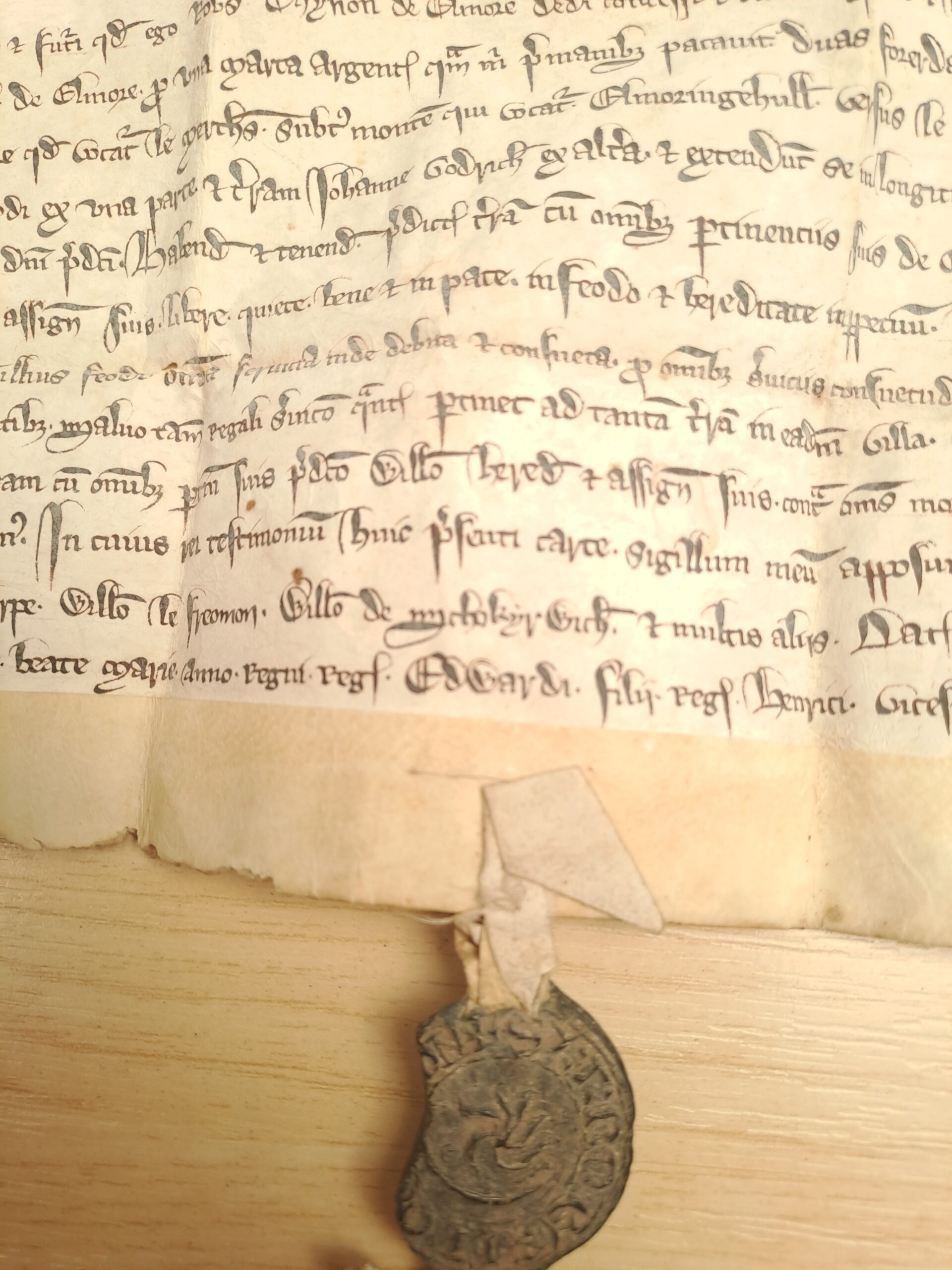
I’m working on my first historical novel, set in 1799. I picked that year, as that’s the year meetings started which led to the building of the chapel attached to our house. For quite some time, I have walked around with the idea of doing a murder mystery set around the village in that era. I mean, how hard could it be?!
Well, pretty hard. Not the writing itself, or even the research as such. The hardest thing was to stay on track with the research. I would start off in 1799 Chalford, and when I got back up for air five hours later, I was in 1864 Australia… And all of it had been gripping and exciting and deserving its own novel. So apart from the two or three useful notes, I also had another fifteen ideas for a new novel, or even a series.
Visiting the local archives was an experience in itself. It was like a new world, with a lot of information and things to do or not do, but the staff was very patient and helpful. We managed to find the numbers of some items belonging to the characters that would appear in my novel, and seeing documents and notebooks belonging to someone who lived in 1799 was impressive. It was also rather scary to touch something that old.
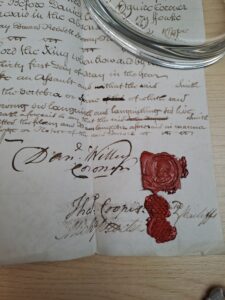
One of the documents signed by the coroner (Gloucester Archives, D1406 Box VI)
But looking through the items, and even items I looked at more recently whilst plotting a novel set in 1312, one thing really struck me. There was a small book, with names and amounts, and ticks when somebody had paid up. Not too exciting, you may think, unless you needed to know how much labourers were paid or how tithes worked, or to get some great sounding soli names, but here’s the best bit. Once the list was done, there was some paper left, and just like we might do with old school notebooks, the left-over pages were put to good use. There were recipes for sore throats, and even one with what to do after you were bitten by a viper!
To write novels, or to get a good feel for the time, it’s those kind of entries that are the most helpful. One of the coroners I looked at kept his own notebook, and some of the notes in there are quite telling. Rather than the mere legal documents, which is the only thing left of the second coroner I looked at, he had actually made notes for himself, explaining how the witnesses seemed to be honest enough, or how he wasn’t too sure about what had happened. Absolute gold.
My 1312 novel involves the Mortimers. It will be the fictional story of Roger Mortimer’s sister (Roger being the one involved with the queen…). This poor girl was sent to a convent or nunnery, most likely to make sure the inheritance didn’t have to be divided up too much. There were some official letters from that time, in the most amazing writing. But imagine if she had kept a diary. “My first night at the nunnery. Food definitely as bad as they said it would be. And that Sister Marg better cheer up tomorrow, otherwise I will seriously consider getting married.”
It made me think about things we write in a different light. What are we leaving behind? Will people see our walk with Christ in what is written down, or even in what isn’t? Our love for our families, or something of our character? Will hearts be warmed by our words, or is everything we leave behind for this world only? Because judging by what is left over from the 18th century, personal writing is the most precious legacy, the best gift to future generations. And don’t worry about bad handwriting, it will be seen as quirky and a wonderful glimpse of your character by then, and different historians will judge you…
Maressa Mortimer is Dutch but lives in the beautiful Cotswolds, England with her husband and four (adopted) children. Maressa loves writing Christian fiction, as it’s a great way to explore faith in daily life.
Her debut novel, Sapphire Beach, was published in December 2019, and her first self published novel, Walled City, came out in December 2020, followed by Viking Ferry, a novella. Beyond the Hills is the second book in the Elabi Chronicles, and was released in 2021, followed by stand-alone novel Burrowed, released in 2022. The third book in the Elabi Chronicles, Downstream, has just been released. All of Maressa’s books are available from her website, www.vicarioushome.com, Amazon or local bookshops.

