
A couple of
months ago I started a short series looking at ways to bring colour and
vibrancy to your writing. In this, the second part in that series, I want to show
you how you can use sensory language to draw your reader into a scene, and invigorate
your characters.
months ago I started a short series looking at ways to bring colour and
vibrancy to your writing. In this, the second part in that series, I want to show
you how you can use sensory language to draw your reader into a scene, and invigorate
your characters.
By way of
example, consider these two pairs of sentences:
example, consider these two pairs of sentences:
•
She boiled the water.
She boiled the water.
•
She watched the bubbles perk and dance in the
saucepan as the room filled with the third movement of Beethoven’s Eroica.
She watched the bubbles perk and dance in the
saucepan as the room filled with the third movement of Beethoven’s Eroica.
•
She is eating an orange.
She is eating an orange.
•
As she puts the first segment to her mouth the air
fills with a tangy zest; she licks her lips to catch all of the juice.
As she puts the first segment to her mouth the air
fills with a tangy zest; she licks her lips to catch all of the juice.
I’ve tried
to emphasise the point, especially in the first example, but I hope you will
agree that there is much colour and life in each second sentence than there is
in the first. One of the reasons for this is because I have packed each of
those second sentences with sensory cues.
to emphasise the point, especially in the first example, but I hope you will
agree that there is much colour and life in each second sentence than there is
in the first. One of the reasons for this is because I have packed each of
those second sentences with sensory cues.
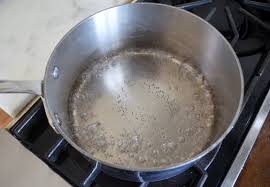
In the first
one I’ve focused on visual and auditory images. The visual image of the bubbles
is enhanced by the activity suggested by the verbs ‘perk’ and ‘dance’, whilst
the auditory cue comes from a reference to a piece of classical music. In this
particular case, the reader might know the third movement of Beethoven’s
Eroica, in which case this audible ‘image’ should work particularly well. But
even if you the reader doesn’t know the piece, provided they know enough about
Beethoven, or even just classical music in general, the effect should work.
The second
example, by contrast uses the senses of smell and taste. When you are using
sensory
example, by contrast uses the senses of smell and taste. When you are using
sensory

language you could be forgiven for thinking that the most powerful sense
is what you see. But actually the most powerful sensory cue, if you can get it
right, is the sense of smell. By ‘if you can get it right’ I mean that the
reader needs to know the smell that you are referring to. If they do, this
technique is particularly powerful as a way of placing the reader in your
setting, in time or location. So for example if you wanted to use Chinatown in
London as a setting for a scene in your story, successfully conjuring up the
aromas of Chinese cooking will help to place your reader in that setting. Or if
your story required a scene in a biscuit factory, the warm sweet smell of
baking biscuits would help to place your reader there.
Invoking the
senses is a powerful strategy to help you define your characters and create
your setting, and it will help you to escape from the kind of bland, passive
reportage that bores readers.
senses is a powerful strategy to help you define your characters and create
your setting, and it will help you to escape from the kind of bland, passive
reportage that bores readers.
Andrew J Chamberlain is a writer, speaker, and creative writing tutor. He will be
speaking, along with freelance editor and columnist Emma Newrick, and Christian
Historian and author Nick Page at the First Page course in the Lake District
from 9th to 13th November, details of that course can
be accessed here.
speaking, along with freelance editor and columnist Emma Newrick, and Christian
Historian and author Nick Page at the First Page course in the Lake District
from 9th to 13th November, details of that course can
be accessed here.
Andrew is
the presenter of The Creative Writer’sToolbelt a podcast that offers practical, accessible advice on the craft.
He has worked on a number of ghost-writing collaborations for Authentic Media,
including the bestselling, ‘Once an Addict’ with Barry Woodward. He has also
self-published a number of science fiction short stories. Andrew will be
speaking at the First Page Writing Course this November.
Originally written by Andrew J Chamberlain

