
Dear Chrissie,
I hope you are coping ok in this never-ending heat. Last time I wrote, I was waxing lyrical about luxuriant roses in my garden; now the ground is parched and only a few blooms survive.
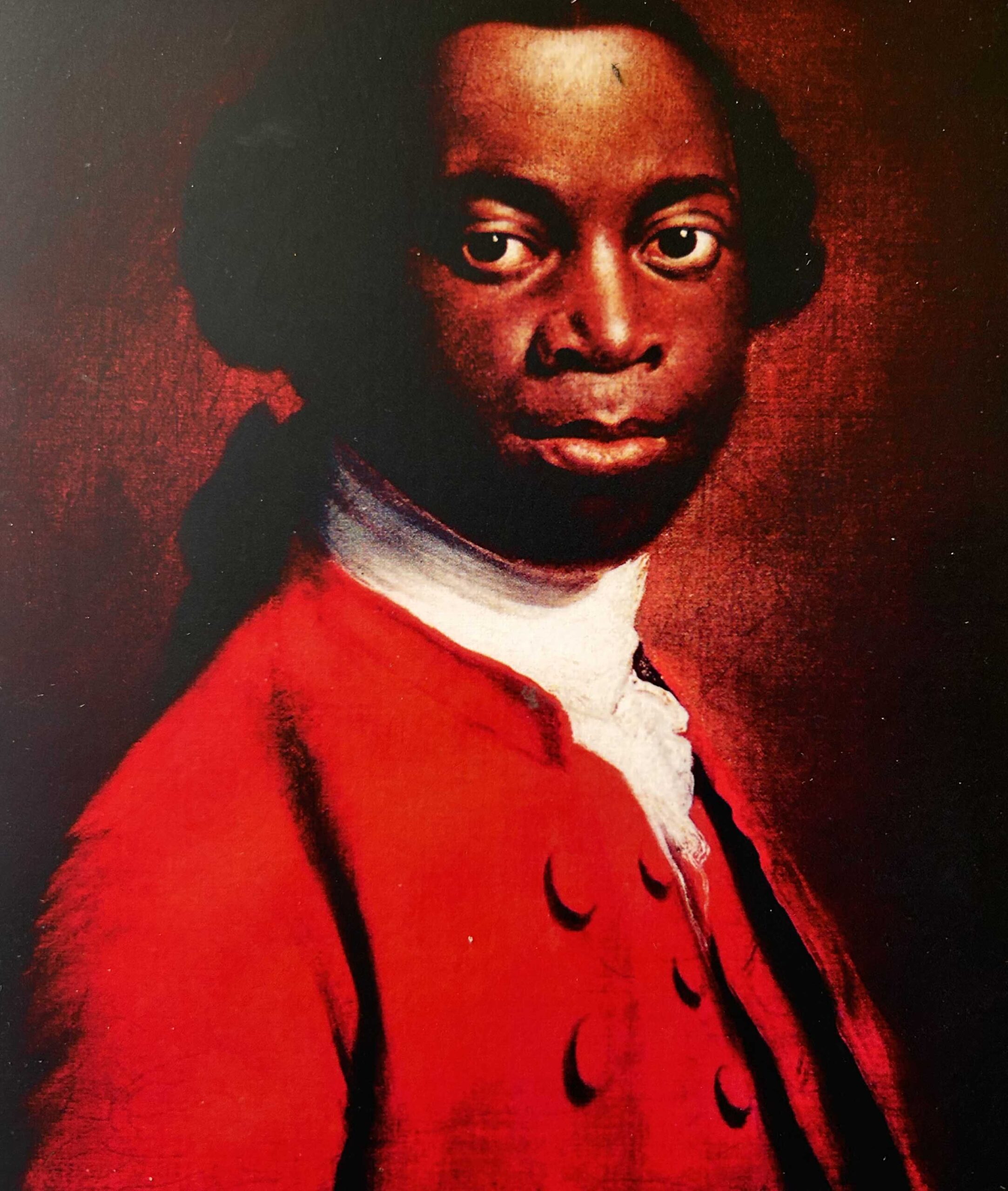
Whilst preparing to attend a lecture course, I’ve started reading a book written by an 18th century freed slave; it’s called ‘The Interesting Narrative of the Life of Olaudah Equiano, written by himself’. Born into the Igbo tribe, he lived on the Guinea Coast, until he was kidnapped into slavery at the age of 11 and was trafficked to the Americas in a slave ship, a journey in filthy and cramped conditions which few survived. Fortunately Equiano was then bought by a benevolent naval officer and came to London; at the age of 14 he was baptised a Christian at St Margaret’s Westminster. He served in the navy and was able to purchase his freedom, returning to settle in London in 1766.
It was another 23 years before he published his book. During that time he had become respected for his business skills, learned to read and write fluently in English and been accepted into Society. The purpose of his autobiography was to expose the evils of slavery. Equiano had been moving in Abolitionist circles and was able to persuade 311 of the great and good to subscribe to publication of his book.
The dedication to the ‘Lords Spiritual and Temporal, and the Commons of the Parliament of Great Britain’ reads: ‘May the God of heaven inspire your hearts with peculiar benevolence on that important day when Abolition is to be discussed, when thousands, in consequence of your Determination, are to look for Happiness or Misery!’ He is aiming high and his overriding aim is to persuade others of the truth.
Equiano’s remarkable achievements against the odds, set me thinking about why I’m writing a book. He’s an example of a writer who survived the brutalities of the Middle Passage and was therefore dedicated to ending slavery. He had an overwhelming reason to want to write. I ask myself whether I have the persistence to keep writing till I can get my truth in print. I need to believe absolutely in what I’m doing.
Equiano was the son of an Igbo chief and seems to have been blessed with a basic sense of confidence in his own identity. But he could not have known that he would travel far from his home, would come to shine in a very different culture to his own and change the lives of those who came after him for good. Enslavement in Britain was prohibited by a court ruling in 1772, but Equiano’s book proved a best seller in 1889 and was then hugely instrumental in ending the global slave trade.
He is unafraid as he looks out of his portrait. This letter includes a collection of facts about Equiano, but I feel the need to go deeper. I’m curious about the processes that shaped his persona. So next time I write, I hope to be able to tell you I’ve finished reading his ‘Interesting Narrative’.
Maybe the garden will then be green again!
With love
Christine
Christine Cleave enjoys walking round her garden in the morning, painting, choral singing and writing about the journey into a deeper spiritual life. She is still working on a book about John’s Gospel and recently fulfilled a dream to go to the Greek Island of Patmos to visit the cave where John received his revelation.

