
I’m writing this on Sunday, on the eve of PM Boris’s announcement about possible lockdown measures. By the time you read this, you will know what is being proposed.
During the first lockdown, it wasn’t only Joe Wicks who appeared on our computer screens with lots of useful exercises. Writing courses and prompts rose up everywhere. In theory we had a lot more time to write, but many writers reported the opposite. Maybe they were juggling children not at school or struggling to reorganise and relocate their own (non-writing) working lives and offices into their kitchens. Additionally, we were all distracted by stress, wondering what would happen next, not going to church (except online), shopping for goods which had disappeared off the supermarket shelves, not seeing the people we loved, wondering if we or our family members would become ill, and generally adjusting to the ‘unusual times’.
But we’re better at all this now, aren’t we? Oh yes? Oh no?
Before March I was in a routine which included visits to family, church, work and – remember these? – holidays. Over the last six months, I have developed a new routine. This has needed to take into account my neck strain and headaches, which indisputably arise through computer use. It goes like this:
- Morning, write, using computer.
- Afternoon, do something else. Probably go for a walk and/or do some cooking.
- Evening, read. Plan for future: do some hand-writing, rough drafts of new stories, to be transcribed on to computer later.
Except for church (Sunday mornings and Wednesday evenings), Pilates classes (as scheduled) and paid work (whenever).
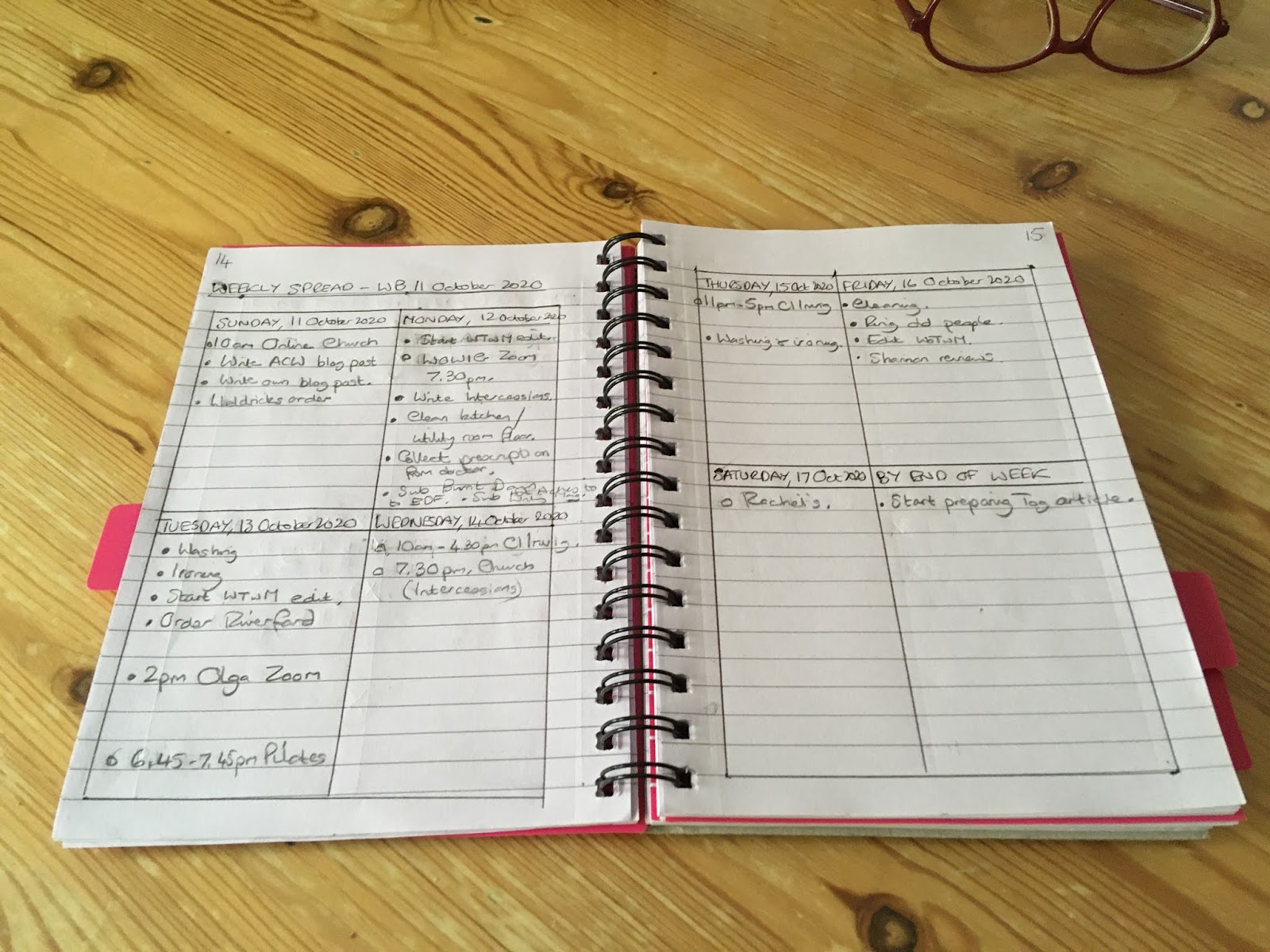
So, what works for you? How are you going to write in more restricted times? I’d love to hear.
Rosemary Johnson has had many short stories published, in print and online, amongst other places, Cafe Lit, Scribble, The Copperfield Review, Fiction on the Web and 101 Words. She has also contributed to Together magazine and Christian Writer. She has also written a historical novel, set in the Solidarity years in Poland. In real life, she is a retired IT lecturer, living in Suffolk with her husband and cat.

