
If you want to get a point across, try not to baffle your
readers.
Challenge, by all means. Inspire to think, certainly.
But leaving readers frowning because they don’t know what
that phrase means will only hamper them.
that phrase means will only hamper them.
Of course, sometimes things are ‘hidden’ in our
writing. We do it all the time in stories
and analogies. Jesus did it with
parables.
writing. We do it all the time in stories
and analogies. Jesus did it with
parables.
But we want to give our readers a chance to see it.
There is a secret there to be found, if readers dare to
explore, to reflect, to ruminate. But sometimes we veil meaning with jargon, obfuscating the
obvious.
explore, to reflect, to ruminate. But sometimes we veil meaning with jargon, obfuscating the
obvious.
We must also be aware of who is most likely to be reading,
and how our words can help them understand. Jargon, technical language and even
what might be just termed as ‘long words’ can be problematic (I would not, in all
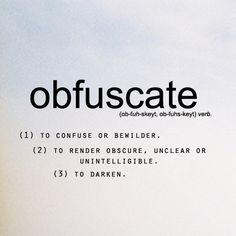
circumstances, use ‘obfuscate’, for example!).
and how our words can help them understand. Jargon, technical language and even
what might be just termed as ‘long words’ can be problematic (I would not, in all
circumstances, use ‘obfuscate’, for example!).
Recently, I was editing an article (written by someone else)
where a certain phrase completely stumped me.
It was written by an academic, so I floated it past some other ‘academics’.
They were equally bemused. Sometimes we
get so engrossed in the things we understand,
we neglect to realise that others may not have come across them before. Yet we don’t see any need for explanation.
I embrace the
philosophy that it’s better to ‘ask a stupid question’ than it is to agonise in
ignorance.
philosophy that it’s better to ‘ask a stupid question’ than it is to agonise in
ignorance.
But I don’t want to cause my readers agonies of ignorance. I
don’t want to place a needless block in front of them.
Yes, there are times my writing goes deep, but in those
cases it is my job to present the topic as simply as possible. Simplicity can lead to deeper understanding,
because it doesn’t clutter the way with unnecessary barriers and stumbling
stones. If your topic is already challenging and needs effort to grasp, don’t add extra hurdles to it!
cases it is my job to present the topic as simply as possible. Simplicity can lead to deeper understanding,
because it doesn’t clutter the way with unnecessary barriers and stumbling
stones. If your topic is already challenging and needs effort to grasp, don’t add extra hurdles to it!
Are your words stepping stones or stumbling stones? Are you so impressed with your own grasp of
language, or so taken with a new jargon, that what you are saying gets
completely lost?
language, or so taken with a new jargon, that what you are saying gets
completely lost?
Sometimes it’s not even complexity that’s the problem, but
vaguery. Just as there are obscure
phrases that make so sense to us, there are often ‘buzzwords’ floating around, ‘in-phrases’
that crop up everywhere. But their very trendiness
empties them of meaning. Yes, maybe they are ‘on trend’, but what do they
actually mean, and – ahem – does anybody
know? Or have we used the word so much that it’s become a parody of
itself? Do we need to find a new way of
saying it?
Is there a word you always use, fling about, almost as your ‘badge’? What does it mean? Does it still mean what you thought it meant? Words are funny things, always collecting extra baggage. Just as they can take on other meanings, they can also lose meaning.
I’m not talking about patronising our readers or making
things too basic. I’m not talking about ‘telling’
rather than ‘showing’. What I am talking about is using language to illuminate, to draw our readers to discover and be excited by their discovery.
things too basic. I’m not talking about ‘telling’
rather than ‘showing’. What I am talking about is using language to illuminate, to draw our readers to discover and be excited by their discovery.
Depth is found in simplicity. If we make our writing too complicated ‘just because we can’, it
becomes all about itself. The thing that is supposed to point to meaning has
become its own end – and is, therefore, meaningless.
***

Lucy Mills
Lucy’s first book, Forgetful Heart: remembering God in a distracted world, was published in 2014 by Darton, Longman and Todd (DLT). She’s written articles, poetry and prayers for various publications and is an editor at magnet magazine.
www.lucy-mills.com
- Using the Time You Have (April 2016)
- Resurrection Day (March 2016)
- Words in the Darkness (February 2016)
- Memories of a (Washing) Machine (January 2016)
- The God of every place (December 2015)
- A way with words (November 2015)
- Know yourself (October 2015)
- When a writer walks down a wall (September 2015)
- The power of the backstory (August 2015)
- The long way round (July 2015)
- Taming the tentacles (June 2015)
- Tracing the journey (May 2015)
- Why a bit of polish matters (April 2015)
Originally written by Lucy Mills

