
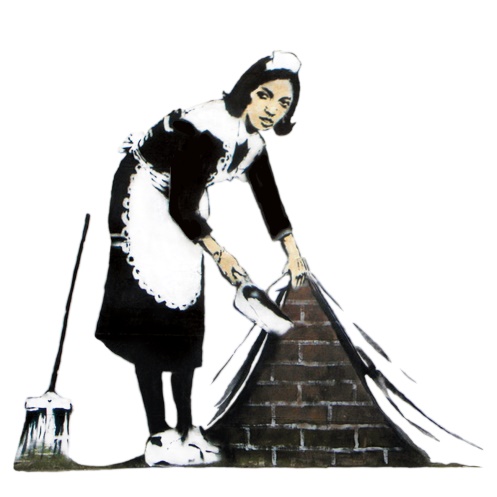
Banksy have in common? They both decided to keep their true identity a secret,
and yet both have successful international reputations, one as a writer and the
other an artist.
The efforts to find out who they
are have been extraordinary. Maths, criminology and geographic profiling have
been used to ‘out’ Banksy, whose name is now apparently known. Elena Ferrante
explains via her publisher:
“If the book is worth something,
it should be enough. I will not participate in debates and conferences, if I am
invited. I will not go to accept prizes, if I am given any. I will never
promote the book, above all on television, in Italy or, should the need arise,
abroad. I will only participate through writing, but I will also try to keep
this to the bare minimum.”
The question is, if we did know
their names, what would it give us that we want so badly? Would it bring us
closer to them? Would their genius rub off on us? Would we discover the secret
of their success? Or is this the forbidden fruit that we can’t keep our hands
off?
Nineteenth-century female
novelists sometimes kept their names secret for reasons of discretion, and at a
practical level to keep their relatives from interfering. Some gave themselves
a male pseudonym, which helped them compete in a male-dominated world by
allowing their work to be judged on merit.
How did Jesus maintain a public
ministry and yet a sense of private self? In John Chapter 7, his brothers tried
to persuade him it would be good for his ministry to showcase his miraculous
powers in Jerusalem. ‘No-one who wants to become a public figure acts in
secret,’ they said to him. But Jesus went to Jerusalem in his own time and on
his own terms. He was following his agenda not theirs. He did not wear a
‘Me…ssiah!’ t-shirt, but carefully guarded his identity because he knew it
would be easily misinterpreted. Who he was and why he was there were revealed
in his actions and his teaching. Even these he tried at times to keep secret.
This can also be seen in his
personal life. He maintained a strong intimate relationship with his heavenly
Father in prayer. He had a few close friends with whom he shared more than with
the others. He did not always answer questions, and he kept some things to
himself. It seems that privacy was an essential part of his identity and for
keeping on course in his ministry.
In our age of social media, this
becomes a live issue. If publicity is going to work in our favour, of course we
have to give something away of ourselves. But where do we draw the line? What
bits of our lives should we shout from the rooftops and what bit is the
precious pearl we should keep safe from being trampled underfoot? Discuss!

