
I lost the will to live. This was mainly because, yet again, I didn’t have time
to write my novel. A house full of people with conflicting needs – a recovering
relative (bless him), a stressed A’Level student (bless her), a late-sermon
writer (bless it) – is not particularly conducive. To say nothing of thirty
annual reports and certain paid writing jobs that have to take precedence.
I always do at such times. I went for a walk. And a pray. It was one of those
blue and white days with birdsong and tree-sighing secrets in balmy air. It was also the Infant School Dino-tastic Summer Fair so I kept passing Flintstone-like children clutching paper cones filled with
sweets or tiny plastic animals. The sight of their sticky faces made me wistful
– they have their whole lives ahead of them to write novels, build sky-scrapers
or dig to Australia (you can tell the kind of mood). I reminded God about the
novel-thing and the fact that I’d thought writing had been something he wanted me to
do, and that, not being rude or anything, he seemed to have overlooked this one
fact – I needed time to actually write it. Also the more time I have, the less
money I earn, and we actually need to live too. So what was this gift for exactly?
As always I had my phone with me in case I
wanted to take photos. I like to snap images that take my fancy. Even in
suburbia there is beauty – trees, poppies, a flower pushing through paving. The
first thing that caught my eye was a pattern of light and shade on the road. I took
a photo, and as I walked through it, although I heard the question, “What would
you write?” I didn’t need to think about the words. They were already floating in my
head.
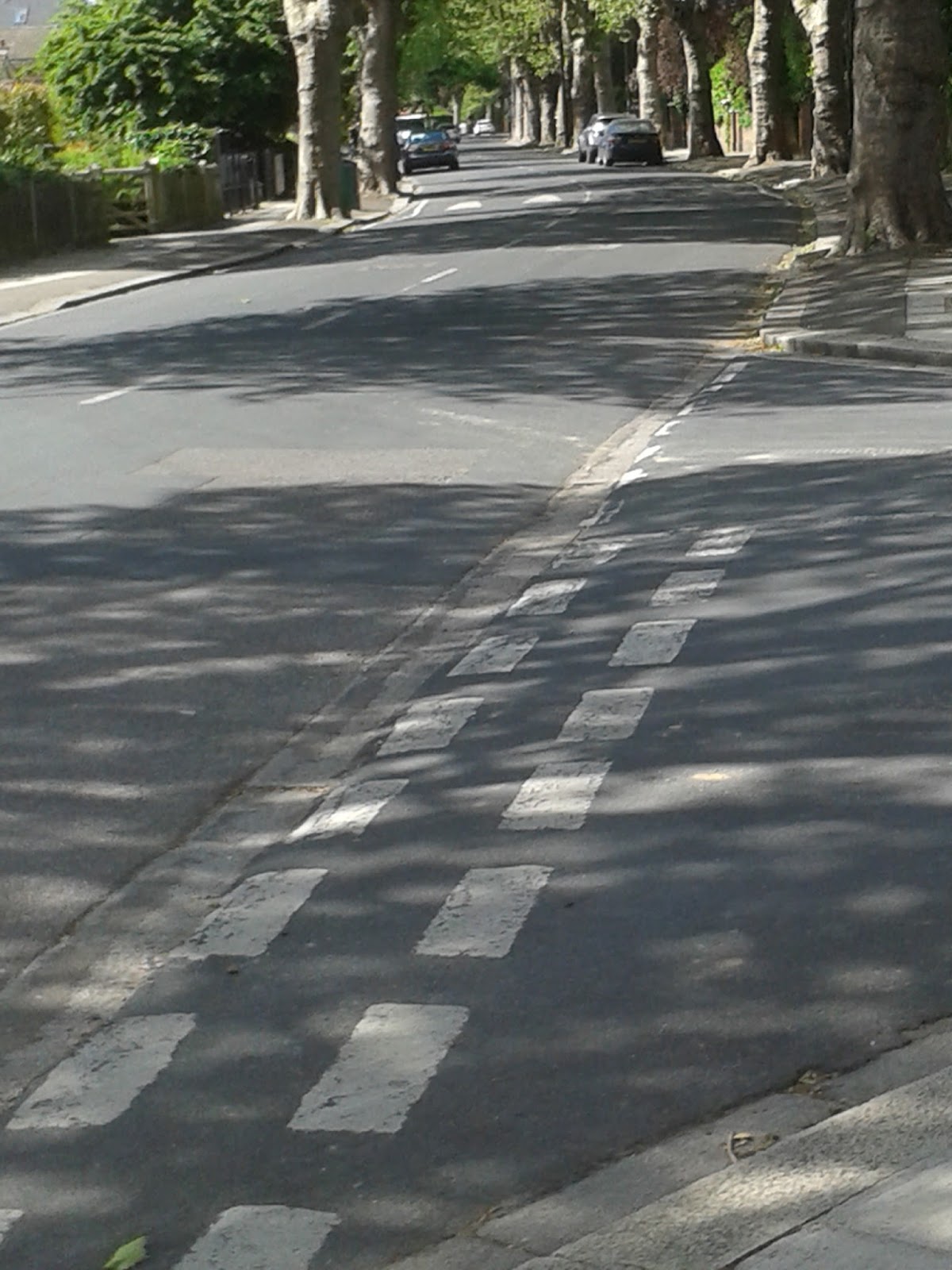
The road ahead frilled with light and shade.
It occurred to me that my main character does quite a lot of driving. It’s a link with her past and it symbolises her search for something stable, something permanent in her life.
The road snaked through trees, frilled with light and shade. Like her life really. After all she’d been through – losing a child, finding another, then losing her too – there were still moments of pleasure slicing through darkness. Life, with all its bleakness and uncertainty, still seemed paradoxically, to allow it, this bubbling up… of contentment, of hope.
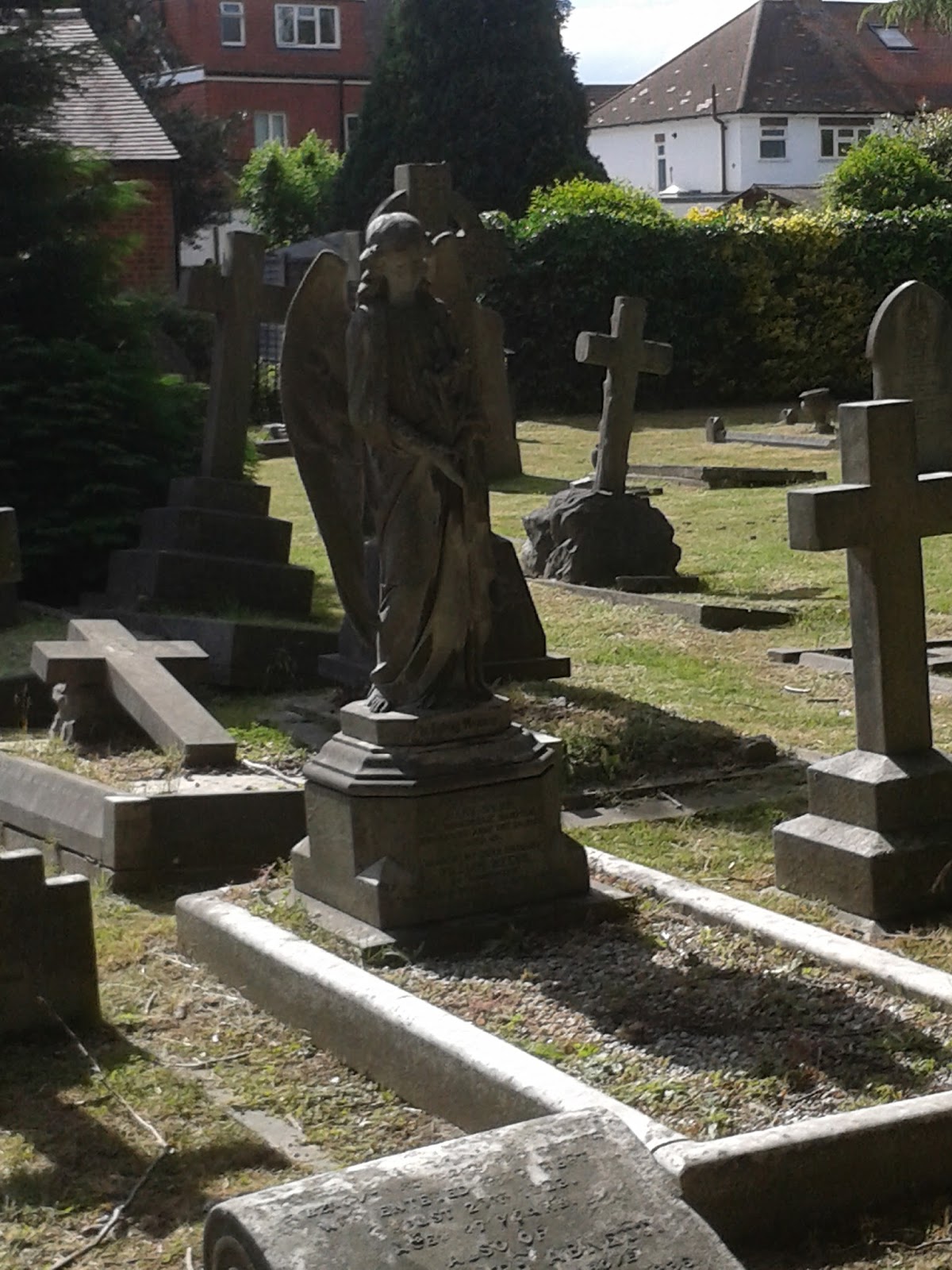
My walks always involve the graveyard. It never fails, weirdly, to cheer me up. Maybe because however bad things get,I’m not in it yet, and also because it’s so peaceful there. I pass this impressive grave guarded by a stone angel and wonder what it’s like to sleep at her feet.
My main character, Daisy, travels back to London to visit her daughter’s grave. This could be it.
To her dismay, the angel, whose smooth face and folded wings had oozed protection and peace, was now looking battered. Once her eyes had been open and tender as they gazed down at the child in the earth. Now they looked empty. And her nose was chipped. Daisy slumped down at the graveside. Somehow she should have stopped this happening. It seemed that not only had she let her daughter down in life, but also in death. This was surely a maternal fail beyond belief.
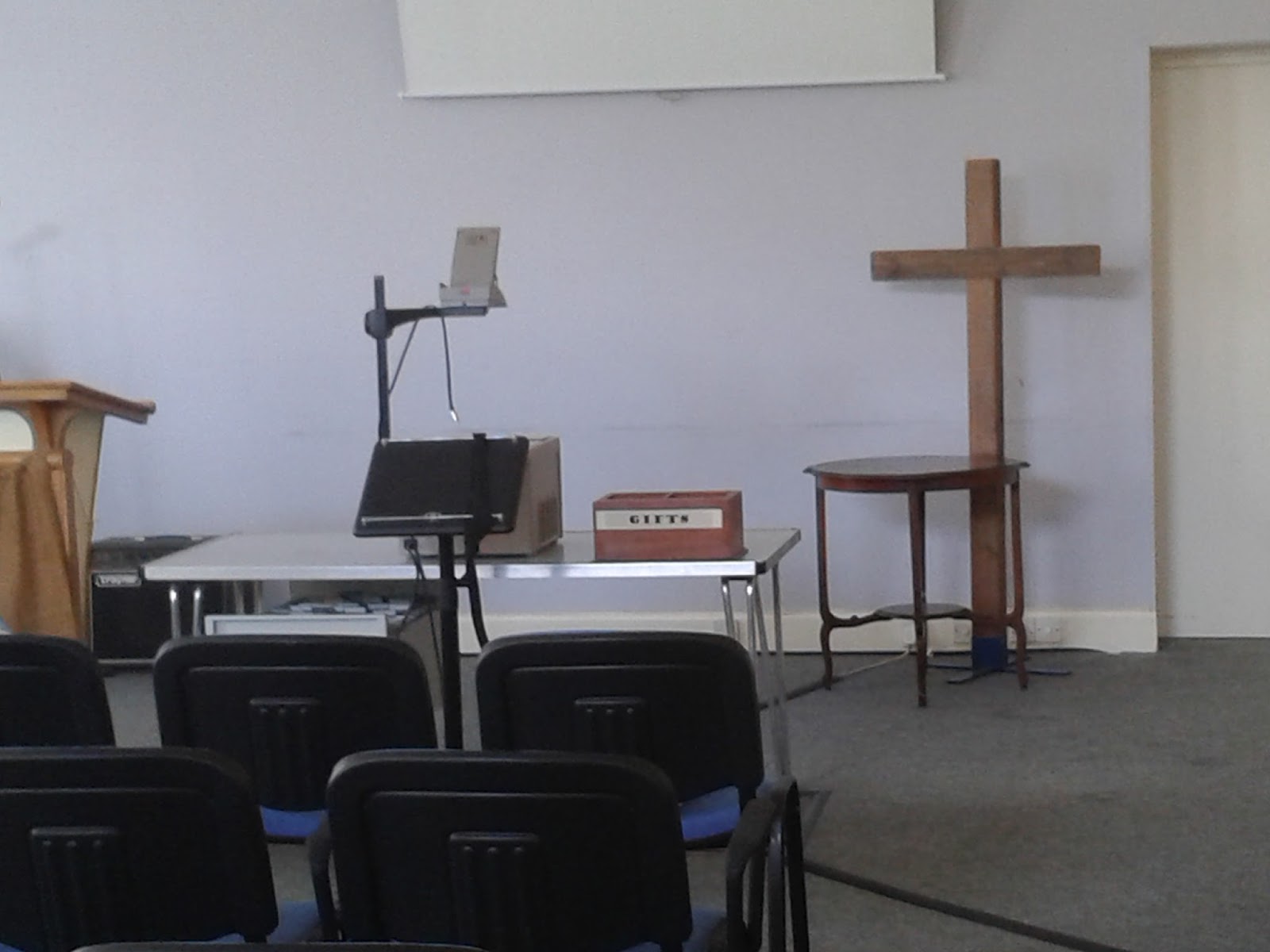
My final stop was at the church. I had to check the rota for something. I let myself in quietly not wanting to fracture the silence. I checked the noticeboard then sat for a while on the back row.
She knew, had always known, that however bad things got, there was this place to run to. This thin place, safe as a womb. She saw the simple cross, the box marked “Gifts”. And once again, slowly, deliberately, she put hers in the box.
How do you cope with the frustration of not writing?
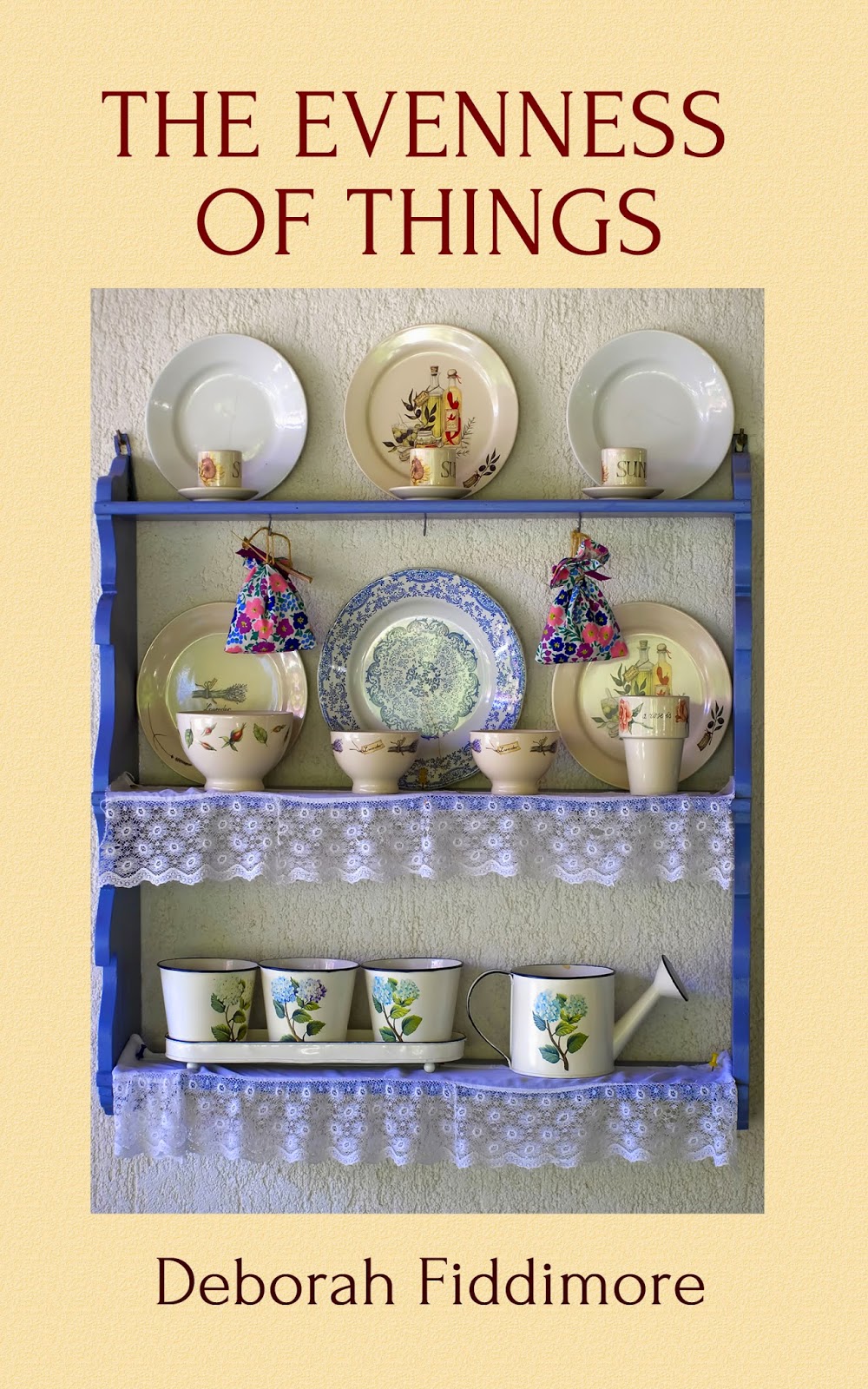
Click here to see this book on Amazon
Deborah Jenkins is a primary school teacher and freelance writer who has written articles, devotional notes and short stories. She has recently completed a novella, The Evenness of Things, available as an Amazon e-book and is currently working on a full length novel.. Deborah loves hats, trees and small children. After years overseas with her family, she now lives in south-west London with her husband, a Baptist minister, and a cat called Oliver.

