
There’s a
reason why Jesus told stories. He knew that a compelling story is so much more
powerful than endless rules and regulations. So what can as writers and story
tellers, learn from Jesus?
reason why Jesus told stories. He knew that a compelling story is so much more
powerful than endless rules and regulations. So what can as writers and story
tellers, learn from Jesus?
I want to
use the Prodigal Son to give you some answers to this question. I’d encourage
you to read the story first, you can find the story here
use the Prodigal Son to give you some answers to this question. I’d encourage
you to read the story first, you can find the story here
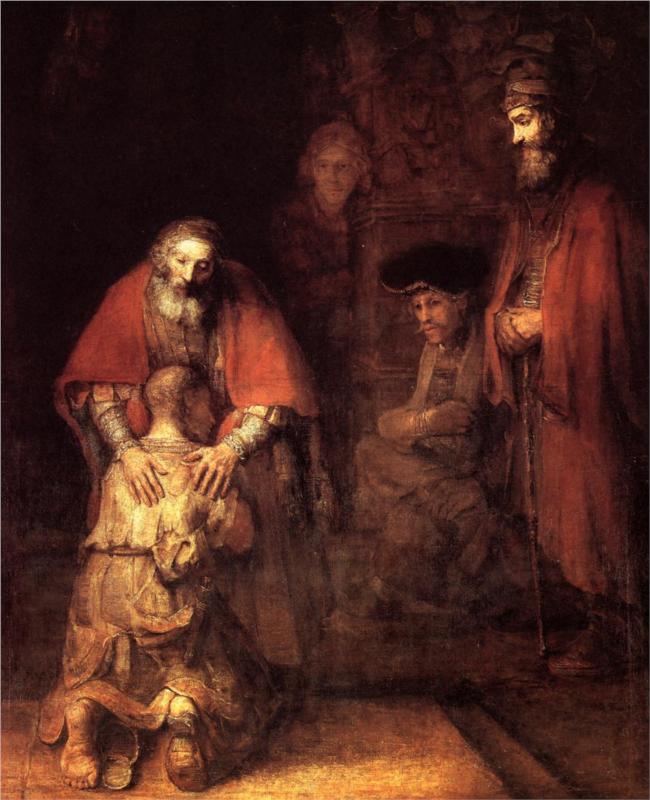 |
| The Return of the Prodigal Son by Rembrandt |
So what can
we learn from this story? Here are just three lessons:
we learn from this story? Here are just three lessons:
1. Authentic characters make the story.
When I read
this story I am struck by the fact that with almost no introduction the
characters seem real. We ‘know’ who they are immediately. Why is that? One
reason is because we are all familiar with the context. We all grew up in a
family of some sort, and even if we never had siblings we are familiar with
sibling and family rivalry, jealousy, and hopefully reconciliation. We all know
what it is to do something stupid and regret it, and we can all understand from
real life experience or through our imagination how a parent might feel when
they see their long lost child.
We can also
empathise with the older brother, as both he and his father choose their own
words to reflect his feelings. To the brother the prodigal is “this son of
yours”, to the father he is “this brother of yours”. We can imagine them saying
these very words. So, we learn that it is the authenticity of the characters
that give this story its power.
2. Show it, don’t tell it.
It’s one of
the first lessons we learn as creative writers. And this story is such a great
example. You won’t find any overt reference to the lessons Jesus is trying to
convey. We are never told how any of the characters feel, or what they think.
Why? Because we don’t need to be told, it’s there in the story. We can infer everything
we need to know from what is presented.
3. Use the senses.
Look at this
story again in the context of the senses. The prodigal isn’t just poor he is hungry. The father doesn’t just wait for
his son he sees him while he is still far
off. Then there are some tactile images – the father throws his arms around his son and kisses him. When he arrives home, the Prodigal is not just given a
meal, there is a feast. As the older
brother approaches the house another sense comes into play, he hears music and dancing – Jesus is showing us
that this is a celebration. This is all achieved with sensory language. It
enlivens a story, and helps to make the images real and vibrant.
These are
just three lessons from the great story teller. I hope to show you more of them
in the months to come.
just three lessons from the great story teller. I hope to show you more of them
in the months to come.
Andrew J Chamberlain is a writer, speaker, and
creative writing tutor. He is the presenter of The Creative Writer’s Toolbelt
a podcast that offers practical, accessible advice on the craft. Andrew has
worked on a number of ghost-writing collaborations for Authentic Media,
including the bestselling ‘Once an Addict’ with Barry Woodward. He has also
self-published a number of science fiction short stories. Andrew will be
speaking at the First Page Writing Course this November.
Originally written by Andrew J Chamberlain

