
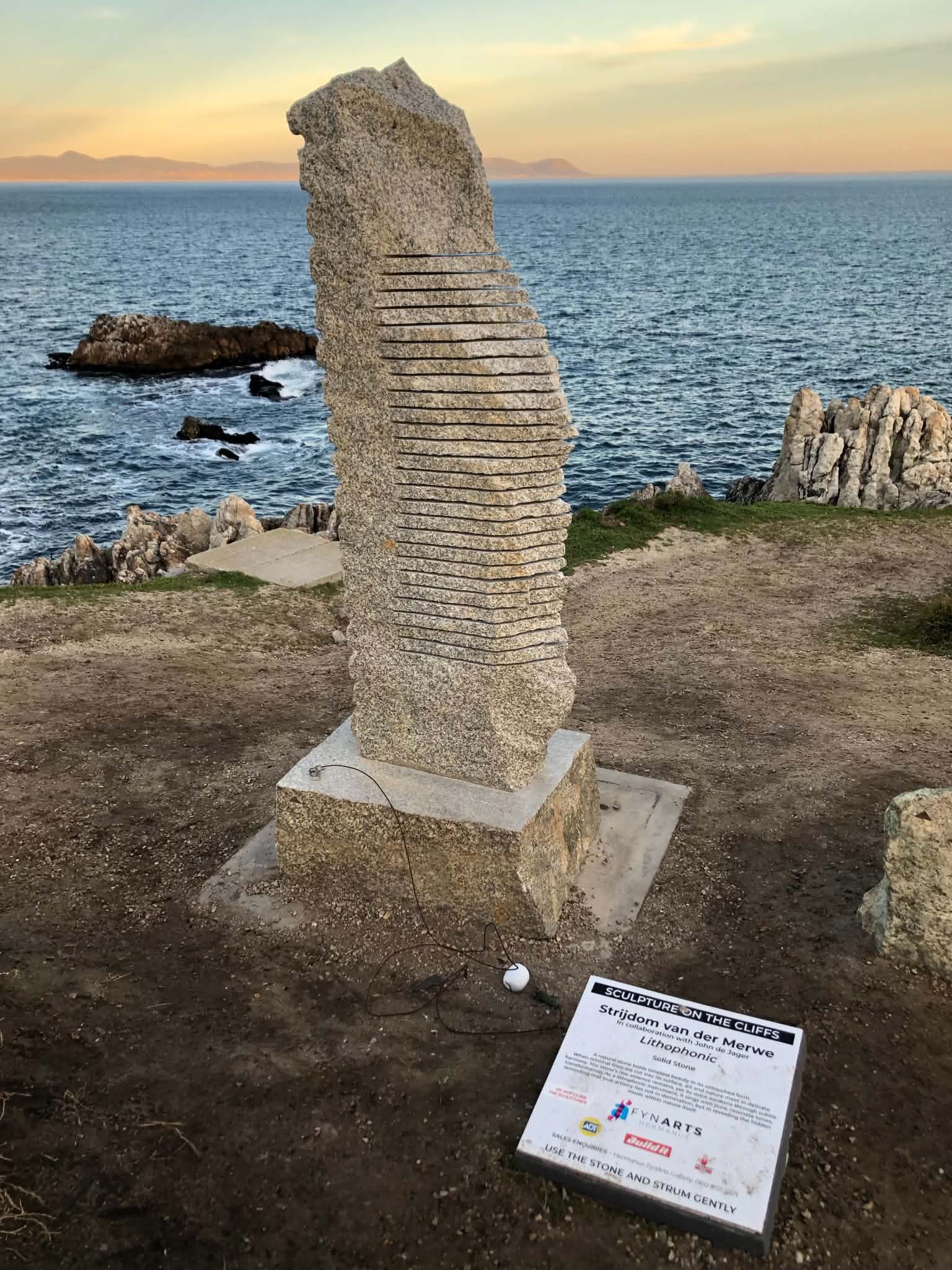
Not so long ago, I took a trip to the coast for some fresh air and whale watching in South Africa. Hermanus is a popular spot which lends itself to the display of sculptures which adorn the walkways by the viewing platform.
I’ve written about sculptures here before, including a picture of an exhibit that consisted of computer keys fashioned into clothing (march 2026: Wearing our Words). The message was very clear.
On this occasion, I was intrigued by some new installations. Two bulky rocks had been erected alongside one another. So far, so dull, right? But into each, someone had laboriously and, I suspect patiently, sawn a series of lines: vertical in one and horizontal in the other. Whether it was the sculptor Strijdom van Der Merwe, his collaborator, John de Jager or a worker who was directed by them, I don’t know but the unwavering straightness of each line pointed towards a hefty machine at work. Fascinating, but apparently pointless except that both of them had been cleverly turned into a musical instrument. A small pebble was attached to each rock by a wire fixed through a hole drilled into them. The general public can now take the pebble and run it across the pleasing lines hewn into the rock. I certainly did.
The sound these unlikely instruments generate is unique. It’s not as tinny as a glockenspiel nor as woody as a xylophone; they each have their own particular pitch and tone.
I think our writing is a bit like this.
Sometimes, when we do get a chance to put pen to paper, or fingers to keyboards, we produce some average, or unpromising, material. At other times, words fly from our minds and take their shape in a piece we’re generally happy with, and even happier once it’s had a chance to marinade and go through tour rigorous (I hope) editing and improving phases.
If you’re feeling a bit stuck right now – more clumsy rock than musical genius – take a look at these sculptures again. Even something as unlikely as a lump of granite can be moulded by an artisan and shaped to create a pleasing melody. It stand to reason then that our amazing creator can use His skills to bring out something beautiful from the hodge-podge sum of our much lesser skills. It may involve some cutting. John 15 tells us that vines that bear good fruit and vines that don’t both need pruning, so let’s not shy away from that..
Whatever melody you’re crafting with words right now, allow God to hone your character even as you develop your skills and you may be surprised where that takes you.
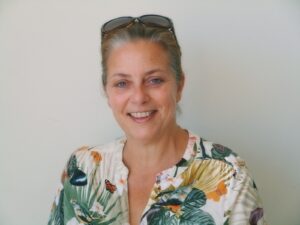
Jenny Sanders has spent the last fourteen years living between the UK and South Africa. She writes faith-inspired non-fiction: Spiritual Feasting (2020) asks how we can ‘feast’ when life serves unpalatable menus; Polished Arrows (2024), explores the allegory of God shaping us to be fired effectively into our culture and contexts.
Jenny also has two published collections of humorous short stories for Key Stage 2 children: The Magnificent Moustache and other stories, and, Charlie Peach’s Pumpkins and other stories. She is available for author visits and creative writing sessions in primary schools. She loves walking in nature, preferably by a river, and has a visceral loathing for offal, pineapple and incorrect use of car indicators on roundabouts.

