I have just released my latest book, the fourth and final (I think) book in my Somerset Mystery series. And I don’t know how many drafts it’s been through!
When I was a beginning writer, aeons ago, I wrote a thing and that was it. My first job was as a trainee reporter on my local newspaper (The John O’Groat Journal), a weekly that came out on a Friday. If we were short of copy, the printer’s junior would stand at my shoulder as I typed furiously on pieces of paper the size of postcards and as each one was completed, he would grab it and race to the print room where it would be set, given a swift read, and printed. No room for second thoughts – or second drafts!
That meant I needed to think my way through the story before I set a finger to keys. Having a solid basic structure like the Inverted Pyramid so beloved of newspapers was a great help. Who and what is the story about? That goes in the headline and the first sentence. What’s the most important fact after that? Down it went… and so on to the end, with the least important information which could be cut if the story outran the available space. All very pragmatic.
So you’d think I’d be a plotter when it comes to my novels. Not so. I am very much a pantser, following the ideas and the characters to see where they take me. And since crime novels need to be plotted rather tightly, that means lots of drafts are needed. The first draft is simply the story telling me the story. The characters introducing themselves. I write this very fast – very short chapters and mainly dialogue and action.
Then it needs a rest – as do I! After a week or two, it’s time to read what I’ve got and decide what to do with it. I am simply incapable of reading without a pen in my hand so this part of the process results in scrawls all over those pristine printed-out pages! And then it’s time to take it back to the keyboard and wrangle it into shape.
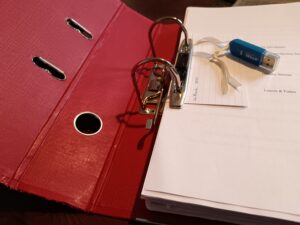
Somewhere along the line, I decide I need a sub-plot. Or the person I’ve chosen to be the villain just won’t do. Major changes require more than post-it notes in the margin and I’ll find myself ditching a draft half-way through and starting again.
At some stage, the draft becomes ‘New Book Final’ – and then ‘New Book Final Final’ – not to mention ‘New Book Final Final 1’ and ‘New Book Final Final 2’ as new ideas and material get incorporated. I keep every draft. I print out every page (using the back of previous versions to save paper). And so often I’m glad I do as I may decide I prefer an earlier version of a chapter.
We writers are so fortunate – we can, thanks to modern technology, replace pages we’ve cut out previously. Pity the poor sculptor who has just hacked off a lump of marble that he later wishes he hadn’t!
And just like the sculptor, our first drafts are always going to be the rough, unpolished versions of the final product. So how many drafts do you need? As many as you need. And if you have a leaning towards perfectionism, then having a trusted reader/ beta-reader or a fixed deadline is a great help!
Dorothy Courtis writes crime fiction with a Christian ethos under the pen-name Dorothy Stewart. She has completed her four-book Somerset Mystery Series and though tempted to give one of the minor characters a story of her own, the next planned project is a cosy crime series set in East Anglia.