
There are those who would declare that a Christian should not (or even cannot) suffer with depression. They would maintain that a prayerful relationship with God and a well-disciplined life make depression either impossible or else, evidence of hidden sins.
In answer to that I would disagree, as would many of the well-honoured mystics throughout the long history of the Christian faith. St John of the Cross would answer that not only is the deep, dark depression he dubbed the dark night of the soul, an inevitable consequence of a deepening and maturing faith, it may also be one of the most profound and difficult gifts that God can give us. It doesn’t come with bright wrapping paper, ribbons, bows or glitter, and you can’t take it back to John Lewis for a refund if you don’t like it. But it’s still a pearl beyond price, even if it didn’t arrive in a Tiffany box.
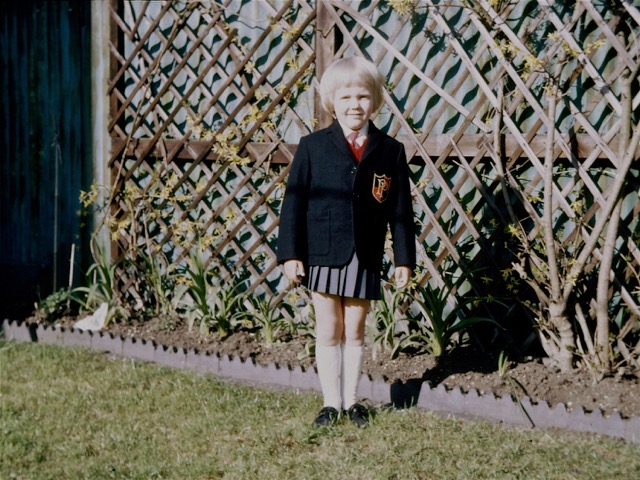
The dark night of the soul is hard to explain. I believe that many forms of clinical depression are versions of this spiritual experience. There are both degrees and shades of the darkness that comes and perhaps the hardest thing for a person of faith to understand is that the darkness itself is not evil. It’s neutral. It’s simply the absence of the light and the warmth we are used to. Nor is the dark night an absence of God. God does not turn his face from you, or stop loving you, any more than my mother stopped loving me when she left me at the school gates on my first day of infants’ school. It was an essential part of my development as a child – to be able to move forward in life without a parent holding my hand the whole time. Becoming independent of your parents never means you no longer need them. It means you are an adult in your own right.
The process of the dark night can be short and hideously intense, or it can go on for years. While not all depressive episodes fall into this category, I believe that for me, they are related. God never withdraws entirely, but He does stand back out of sight. It feels like a complete loss of faith, yet in some ways, the process is potentially the most strengthening one. Just as I, as a five year old, knew my mother would return for me at half past three, I have learned that my awareness of the divine presence will also return. Until it does, I know that I must continue to act “as if” that awareness were fully intact. This does not preclude doing a good deal of thinking and exploring during that dark time, and what we discover about ourselves and the world beyond this known one, are a vital part of the process. At the end, you go back to exactly how you were before, and yet it has radically changed you at some level. You will never be the same, and this is a good thing. Whatever some mothers may feel, trying to keep your children as helpless babies their whole lives is a dreadful, damaging thing.
About the Author
Vivienne Tuffnell is a writer, a poet and a seeker who jokingly describes herself as an explorer and mystic. She currently lives in darkest Norfolk. Her most recent book is a collection of essays from her blog, exploring depression and mental health and is entitled Depression and The Art of Tightrope Walking.
Her blog can be found at: http://zenandtheartoftightropewalking.wordpress.com
She tweets as @guineapig66
Her books are available from Amazon: http://www.amazon.co.uk/Vivienne-Tuffnell/e/B00766135C/ref=ntt_athr_dp_pel_1

