
Let me challenge you to a quiz. We all love quizzes, don’t we? And, let’s face it, there’s still not much other excitement in our lives and probably won’t be for a while yet!

1. “Let me not to the marriage of true minds admit impediments…”
2. “How do I love thee? Let me count the ways…”
3. “She walks in beauty, like the night, Of cloudless climes and starry skies…”
Did you get those ones? Reasonably famous, I think. How about these?
4. “Not a red rose, or a satin heart. / I give you an onion.”
5. “I am very bothered when I think of all the bad things I’ve done in my life…”
6. “I wanna be your vacuum cleaner, breathing in your dust…”
7. “On Waterloo bridge, where we said our goodbyes, / The weather conditions bring tears to my eyes…”

I am not a huge fan of Valentine’s Day myself, but, with romance in the air, this week, it did get me thinking about love poetry, and, more specifically, the challenge of writing about love without being clichéd. What is considered clichéd changes over time, of course (as an A-Level English teacher, I have had the enjoyment of teaching a Unit called “Love Through the Ages,” to my students – a fascinating undertaking) – and it is the challenge of the writer to find new and fresh ways to express this overwhelming, universal-yet-unique-to-the-individual emotion.
The writer of Ecclesiastes proclaims that “there is nothing new under the sun,” (Ecclesiastes 1 v 9) and this is a real problem for poets and writers seeking fresh expression in this genre. Carol Ann Duffy goes some way to exploring this, poetically, in “The Love Poem,” from her 2005 collection, “Rapture.” If you enjoyed my quiz, read “The Love Poem,” here and see how many allusions you can spot. She makes the point well, I think, that it’s hard to find new words to express age-old concepts.

It’s not just a problem for writers of Romance. How do we, as Christian writers, portray God’s love in our writing without becoming cheesy or clichéd? How can we pass on what we have experienced in our own lives, to others, who may have never have thought to associate God with love at all? I admire writers in this group like Angela Hobday, Fiona Veitch-Smith, K.A. Hitchins and Sue Russell who weave glimpses of that love, compassion, forgiveness and grace into their fiction, without being preachy or clichéd.
QUIZ ANSWERS – no cheating! ????
1. Sonnet 116 – Shakespeare (2 marks)
2. Sonnet 43 – Elizabeth Barrett-Browning (2 marks)
3. She Walks in Beauty – Lord Byron (2 marks)
4. Valentine – Carol Ann Duffy (2 marks)
5. I Am Very Bothered – Simon Armitage (2 marks)
6. I Wanna Be Yours – John Cooper Clarke (2 marks)
7. After the Lunch – Wendy Cope. (2 marks)
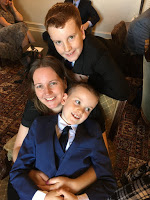
Georgie
Tennant is a secondary school English teacher in a Norfolk Comprehensive.
She is married, with two sons, aged 12 and 10 who keep her exceptionally busy. She writes for the ACW ‘Christian Writer’ magazine
occasionally, and is a contributor to the ACW-Published ‘New Life: Reflections
for Lent,’ and ‘Merry Christmas, Everyone,’ and, more recently, has contributed
to a phonics series, out later this year. She writes the ‘Thought for the Week’
for the local newspaper from time to time and also muses about life and loss on
her blog: www.somepoemsbygeorgie.blogspot.co.uk

