
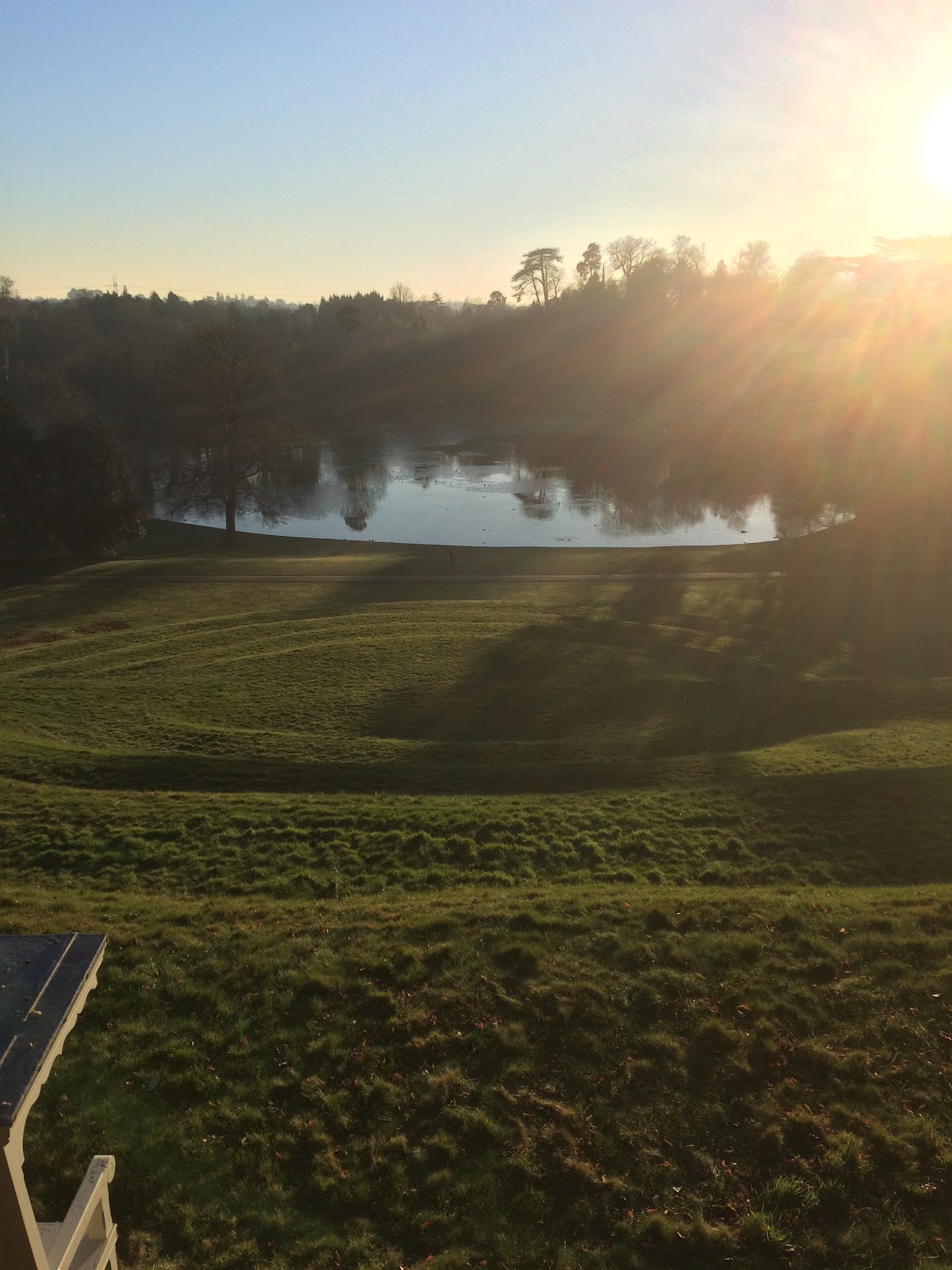
Yesterday afternoon, I took a photo from a high point in Claremont Landscaped Gardens, Surrey. From where I stood I looked down at the rolling lawn shaped into an outdoor amphitheatre, to the lake beyond. Beautiful man-shaped gardens, once used as a playground for the child who was to become Queen Victoria now stretched before me, looking perfect.
It hadn’t been quite so perfect reaching the viewpoint – a little muddy and quite a steep walk uphill for someone who lives in Norfolk, where low hills rise gracefully and gradually.
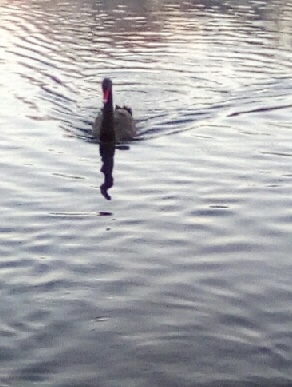
After taking the photo, walking down revealed an area that needed work, where bushes and trees had been cut down and the area cordoned off, encircling the place to be replanted. Passing this, I followed a walk through tall pines in the wooded area. A stroll around the lake revealed more detail than the vista from the viewpoint: a variety of ducks on shimmering water, a large black swan, geese overhead, a grotto on the bank and an island.
I thought about the feeling of being on top of the world when I had struggled to write, rewrite and finally complete the ‘final draft’ of my newest novel. Then it was time to stand back satisfied and set it aside for a while, before starting to read through and examine the detail there. When I looked closely, some of my writing needed striking out, some rewritten and more details added. Paragraphs were circled round, awaiting attention. Other areas passed scrutiny. But everything new or corrected needed to enhance the overall shape and story of the whole novel.
Am I the only one who enjoys the refining process? I won’t call it ‘editing’, which sounds like hard work, but consider it to be honing my writing to form a complete work of art. I’ll never make it perfect, but at some stage will have to stop, stand back and declare it ready to find a publisher. If it is accepted, experts will be called in to do a final polish, but once the piece of writing is published I can call it finished.
Which is where we writers have the advantage over landscape gardeners. Once our piece of work is published it won’t grow and change. There is no more pruning, cutting and shaping.
Our work is done.
Annie Try is a retired Clinical Psychologist who writes contemporary novels. As Angela Hobday she has co-written books on using creativity in therapy with children/young adults and published many journal articles. Her most recent novels are based around clients receiving therapy from Dr Mike Lewis, who unravel mysteries along the way. The novels are published by Instant Apostle.

