
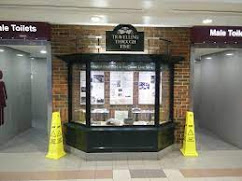
What do you expect when calling at a motorway service
station? The vast majority of people who
call at Clacket Lane on the M25 have only one purpose: to spend a penny. Imagine then my surprise at finding a display
board, situated between the ‘Male Toilets’ and ‘Female Toilets’, about an
archaeological dig and photographs of Roman finds on the Clacket Lane site. It was a stopping off place for Romans travelling between London and Canterbury
– so no change of use then.
So why am I writing about a
motorway service station on a Christian blog?
Bear with me. I will make the
connection in a minute.
Think now about our church
buildings. Church buildings are very
important to those who don’t attend church, not least because they are always
there, a prop and a comfort. Residents
of the community know and sense that people are worshipping, that these people
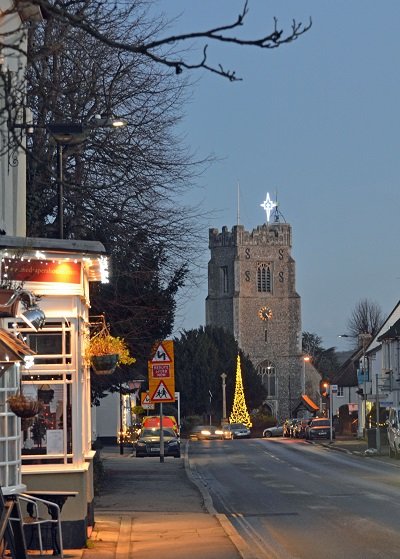
believe. At our church, every Advent
Sunday Nat – who rarely attends church otherwise – mounts an illuminated star
on our church tower. It’s visible for
miles across the flat Essex countryside, reminding people going about their
Christmas busyness in one of the larger Essex villages that God is here and in
charge.
On our journey home from
Seville, where we had spent Christmas with our son, both my husband and I
looked out for that star on the church tower and felt blessed by it. In Spain, they don’t do Christmas decorations
as we do them. With just a few dull red
banners wishing us Feliz Navidad hanging from windows of a few houses
and flats, we felt ourselves to be in a very secular environment. Yet, in the city centre on Boxing Day,
amongst jolly and merry gatherings of families and friends frenetically shopping
and drinking, we suddenly came across a Living Crib. Living Cribs are a Sevillian tradition, large
installations set up outside churches, of the Nativity stable, with life-sized
models of Mary and Joseph, shepherds and wise men. We stopped and stared in
wonder at seeing God in the high street. We only saw one but we had to queue to see it properly
– because the citizens of Seville wanted to see it too.
A display board about
archaeological finds in a museum, I might not pay much attention to, nor a star
or a crib scene inside a church – because this is where you would expect to see
them. But coming across them out of
context made me stop and think.
So how does this impinge
on we writers? It affects us very much if we write mainstream or genre fiction,
because we have the opportunity to fit in a little bit of God into the not
specifically Godly, when the readers are not expecting it. Not a good idea to labour it, just a few
sentences, then move on. This is surely the best way to spread our Gospel.

a historical novel set during the Solidarity years in Poland and of many short stories
and flash. Rosemary is also the ACW Webmaster.
In real life, she is a retired IT
lecturer, living in Essex with her husband.

