
As a secondary school teacher, phonics wasn’t
something I knew a great deal about until recently. Children arrive in my
classroom, aged 11, on the whole, being able to decode the sentences and
paragraphs put in front of them.
When a local publishing company I had had some contact
with, got in touch and asked if I would be interested in doing some freelance phonics
writing for a new reading scheme, I was reticent. Egged on, though, by some of
you lovely lot – “you’ll get the hang of it quickly…eat microwave meals if time
is short!” – I soon accepted their offer of work.
And here they are, in their full, published glory.
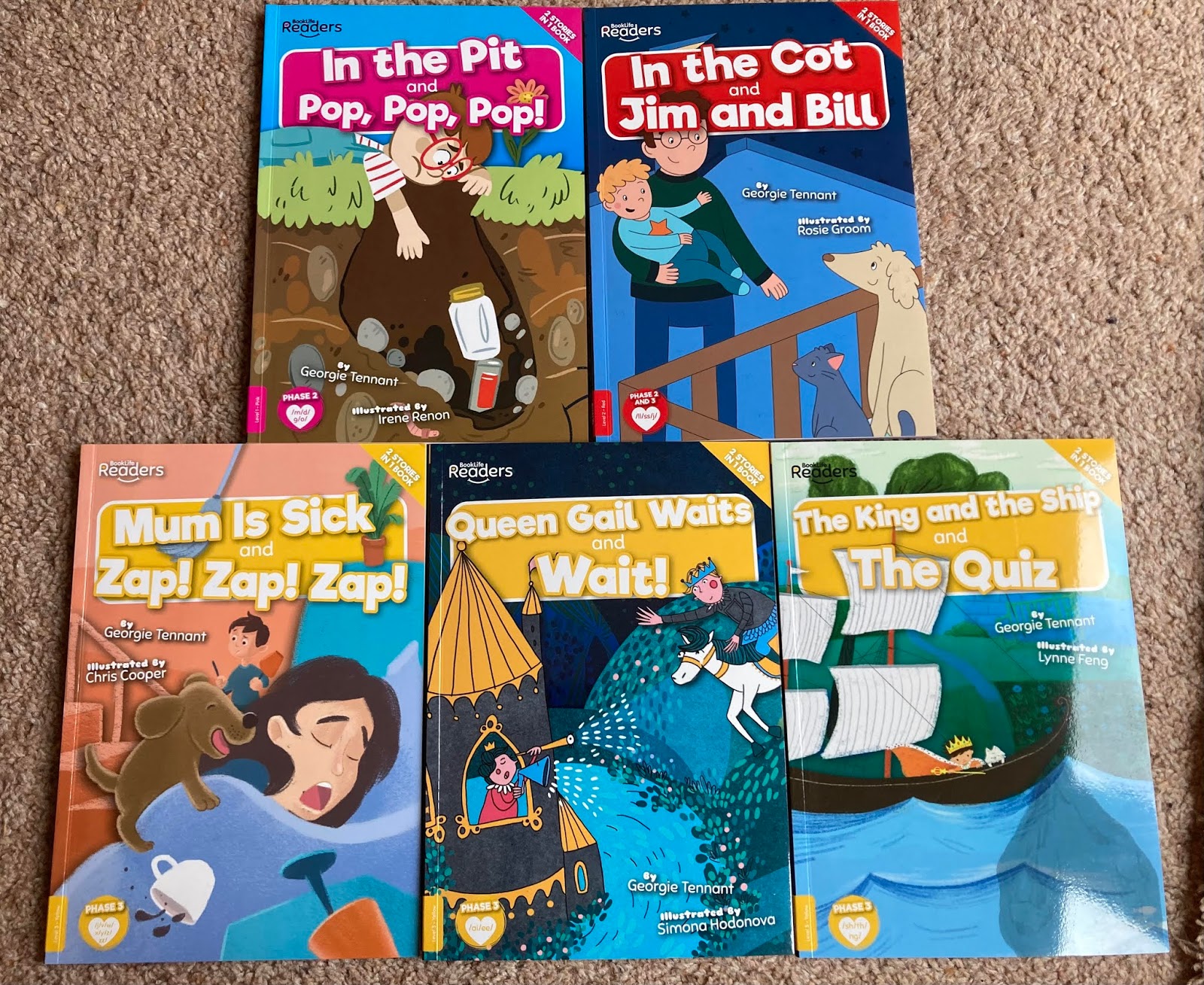
With Covid restrictions and hold-ups, they were a long time in the making, but
how wonderful it felt, a few weeks ago, when these arrived on my doorstep, with
my name on the cover as the author. I always felt that the first thing I had
published with my name on it would carry a little more gravitas than a
collection of stories about harassed Dads and feeble princes rescuing feisty
queens, all told in 100 words or less but we all have to start somewhere,
right?!
My Facebook announcement of the arrival of my book
babies provoked a kind flurry of interest and congratulation, so I thought I’d
write this month, about how these phonics readers came to be birthed.
How
did the opportunity arise?
I was in touch with a local publishing company,
BookLife, who knew I was interested in some freelance work. The reading scheme they were working on was a
big project and they needed extra writers to take on some of the work.
How
did they pay me?
I recorded the hours I worked and there was a guide
for how long each book should roughly take to write and it was pretty accurate.
They paid me an hourly rate.
How
did I know what to write?
The books were written to a very strict pattern of
phonics, relating to the phases taught in primary schools. I had to spend a lot
of time on phonics websites such as this one, swatting up on what was allowed
in each phase: http://www.letters-and-sounds.com/phase-2-resources.html
The leader of the team I was working with, would
assign me a particular book at a particular level (the scheme is split into
coloured bands) and it would then be my job to come up with two stories to
include in that particular book.
Which
bands did I write?
The books I wrote were in the Pink, Red and Yellow
bands. The guidance for these was as follows:
Pink: 12 pages per story, 3-5 words per page, mainly monosyllabic words, CVC
(which, for those not in the know, is Consonant, Vowel, Consonant words, such
as pop, pip, sit etc).
Red: 12 pages per story, 5-7 words per page, mainly monosyllabic words, CVC,
plus lots of repetition from the Pink band words.
Yellow: 12 pages per story, 7-10 words per page, mainly monosyllabic words,
introducing some polysyllabic, such as CVCC (e.g buzz, fizz, naps, pops).
Each book in a band focused on a particular set of
sounds within that phonics phase. My “red” book, for instance had to include a
lot of ll/ss/j words.
How
did I go about writing the stories?
Honestly, it was a lot harder than it looks! We probably all have memories of reading
mind-numbingly dull early readers with our little charges and one of the briefs
was to try to make it fresh and interesting – a huge challenge with hardly any
words at my disposal!
Additionally, the words available for use really were
limited. Children at this stage of reading haven’t yet encountered pronouns he,
she, they, or the past tense (-ed) or words with -ing on the end and certainly
not “the,” “that” or other words we use with high frequency, such as “was” and
“were,” – though the odd one of those was allowed, listed as a “tricky word” in
the book for the relevant phase.
What I ended up doing, was entering the letters I was
allowed into a scrabble word finder and writing them across a page of my
notepad. I then perused the words
carefully to see if any particular themes or stories sprung to mind. To the
delight of my two boys, Ben and Sam, their names, both worked as names in the
Yellow books, so I was able to write two stories featuring my very own children.
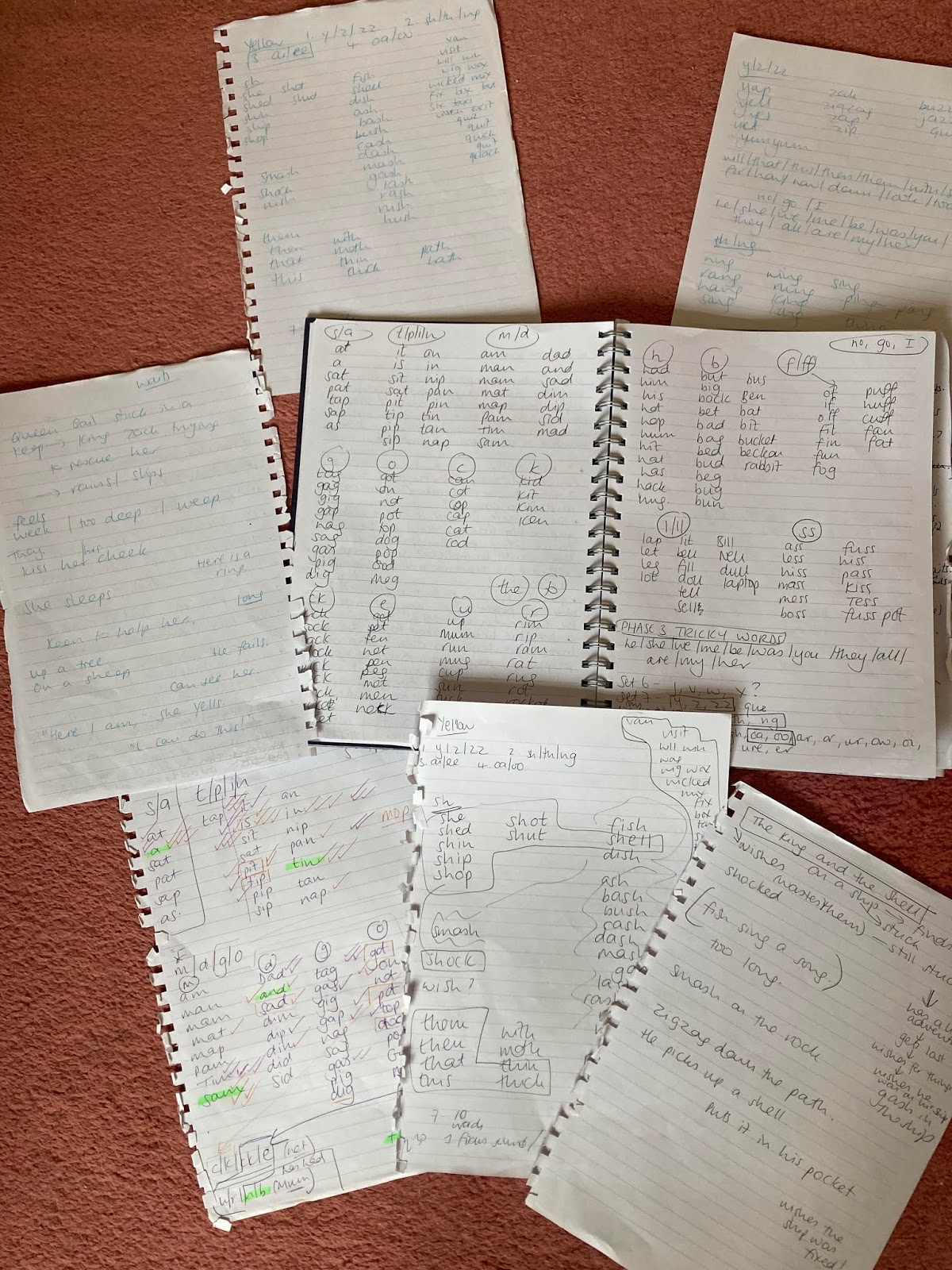
Once I had a basic story, I typed it up, checking the
word count and had to write illustration suggestions for each page, that would
help carry the essence of the story that so few words were struggling to convey.
What
did I write about?
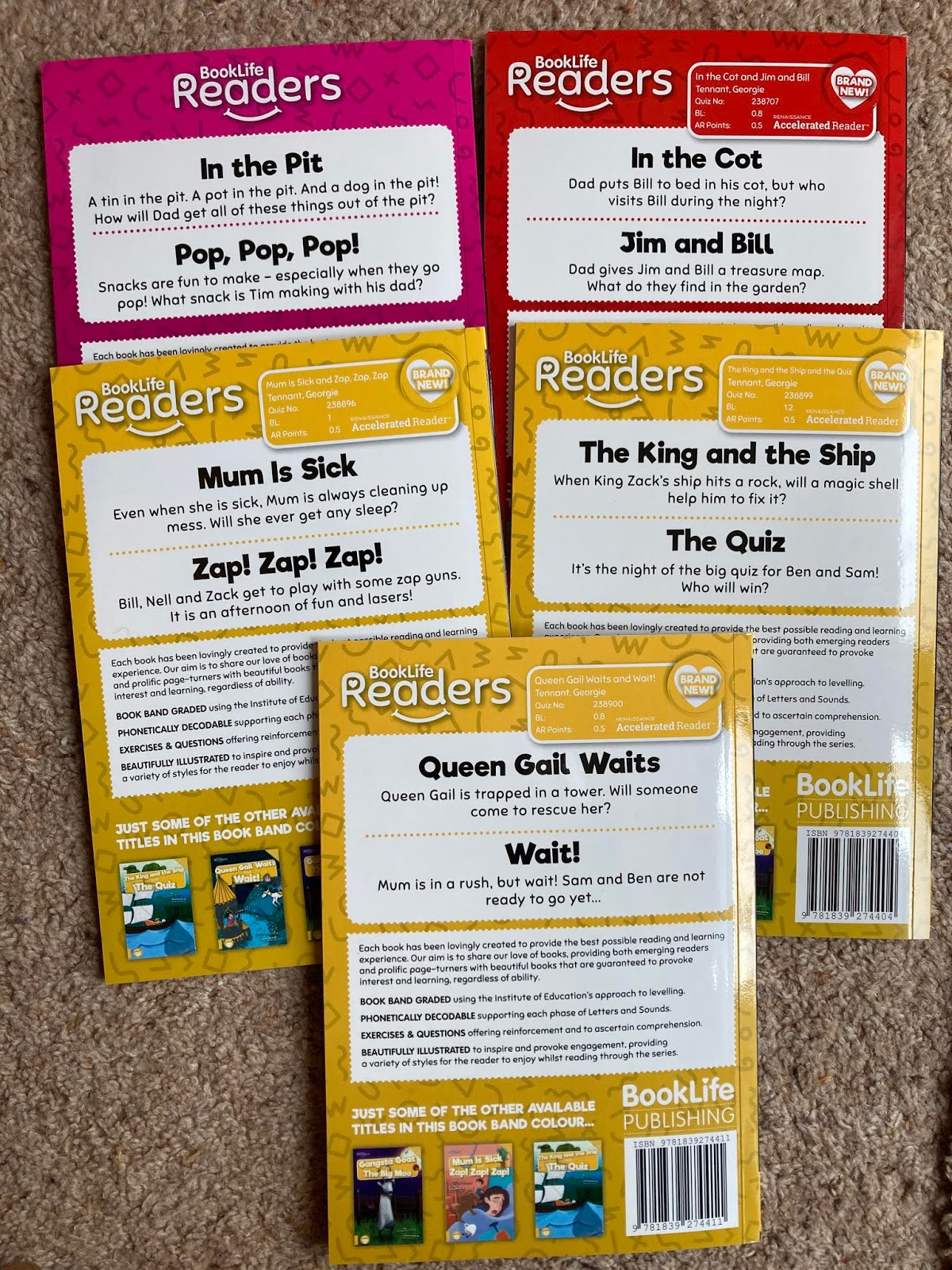
I had so much fun writing these stories. Highlights for me, included my Yellow band
book, which was focused on “ee” and “ai” sounds. I called it “Wait,” and, in
it, my two boys, Ben and Sam keep holding me up from going on a shopping trip
through various means. When they are finally ready to go, “Mum needs a wee!”
Anyone who knows me well, will know that this book is as close to
autobiographical as a phonics reader can get! My other favourite is my Red band reader,
focusing on ll/ss/j sounds, which contains two stories of a Dad who will go to
great lengths to get 5 minutes peace and a warm cup of tea.
I aimed, throughout, for stories that would make
adults chuckle and recognise familiar scenes in the books, as well as be
enjoyable for fledgling readers.
Would
I do similar work in the future?
Absolutely! I
loved it. It was something entirely different to anything I had ever contemplated
writing before, but I consider it a valuable addition to my writing CV, it was
great fun and I am proud to have been published at last – even if not in a way
I ever dreamed of.
Where
can you get hold of these books?
If you are a primary school teacher or know one, do
have a look at the Book Life website: https://www.booklife.co.uk/collections/reading-schemes.
Or individual copies of books can be bought from most places books are sold.
Thank you for encouraging me and celebrating my
slightly off-piste achievement with me! I couldn’t have done it without you
all.
Georgie Tennant is a secondary school English teacher in a Norfolk Comprehensive. She is married, with two sons, aged 12 and 10 who keep her exceptionally busy. She writes for the ACW ‘Christian Writer’ magazine occasionally, and is a contributor to the ACW-Published ‘New Life: Reflections for Lent,’ and ‘Merry Christmas, Everyone,’ and, more recently, has contributed to a phonics series, BookLife Readers. She writes the ‘Thought for the Week’ for the local newspaper from time to time and also muses about life and loss on her blog: www.somepoemsbygeorgie.blogspot.co.uk

