
There
is an ongoing debate in Christian writing circles about how appropriate it is
to consciously have a ‘message’ to communicate through fictional stories. Some
writers of overtly Christian Fiction readily admit they write in order to share
God’s love and to hopefully lead readers to salvation. Then there are writers
of Christian Fiction who want to write stories for other Christians that
reflect Biblical values and standards that aren’t found in ‘secular’ novels.
Further along
the spectrum are authors like me* who prefer to describe ourselves as writing
general fiction from a ‘Christian worldview,’ where themes of forgiveness and
redemption are subtly woven into the plot but are never the main point of the
story, and the thought of proselytizing our readers is not something we are
comfortable with. Then there are writers who are Christians who write
completely secular novels and their lives – not their books – are their
witness. (*This relates to my adult books. My children’s books are stories from
the Bible so by definition overtly Christian).
The question I’d like to ask is: is
it wrong to start writing a book with a conscious message in mind?
it wrong to start writing a book with a conscious message in mind?
A few months
ago I spent a lovely weekend at the Harrogate Crime Writing Festival, listening
to ‘big name’ crime authors being interviewed. I was struck by how many of them
had no qualms in saying they were trying to say this or that through their
books. Others said they hadn’t decided on what their next book would be, not
because they didn’t have an idea for a plot, but because they didn’t yet have
‘anything to say’ through it.
A panel of authors who wrote legal
thrillers – all of them former lawyers – were unanimous that they wrote novels
because they wanted to say something about injustice or the failings of the
criminal justice system. None of them seemed to get their knickers in a knot
about whether or not it was ‘right’ to have a message in their books.
In addition, those of us who studied
English Literature at school or university will remember writing essays on ‘themes’
and asking the question ‘what is the author trying to say?’ There is a reason
love stories like Jane Eyre are set works for academic study whereas
Mills & Boon novels are not – the former are trying to say something about
society or the human condition and the latter generally are not trying to say
much beyond: finding someone to love and love you back makes your life better.
This does not mean Mills & Boon novels don’t perform a function and that
it’s wrong to enjoy them, but there would not be much scope to write an A Level
paper on the deeper meaning of one of them. So, hopefully you accept my point
that many books DO have messages and themes consciously written into them and
that it is perfectly acceptable to do so.
The question I believe is not
whether we SHOULD have a message, but if we do, how do we weave it into the
narrative? I would like to suggest three things:
whether we SHOULD have a message, but if we do, how do we weave it into the
narrative? I would like to suggest three things:
- Story
first, message second. The story must always be fore-grounded. Allow
the story to entertain and be true to itself. If the message gets in the
way of the story, chuck it out or find a more subtle way to tell it. - Don’t
have your characters ‘telling’ the reader what the message of the book is in
dialogue or internal monologue. Allow their actions to ‘live out’ the
message. - Don’t
write ‘on the nose’. When I did my MA in Creative Writing 12 years ago, my tutor was an
atheist. My final submission was a theatre play. The play wasn’t
‘Christian’ but it did have spiritual themes and it helped me no end when
my tutor wrote ‘OTN’ in the margin. He meant ‘on the nose’ and he did so
when he felt I was being too preachy or overt in the ‘message’ of the
play. With his help I eventually got a distinction.
So now, with anything I write, I always ask myself:
is this too OTN? Or better still I ask my editor or a non-Christian friend to
read it and tell me if they think I’ve laid it on too thick. What tips do you
have about not writing too ‘on the nose’? Feel free to add them to the comments
section below.
is this too OTN? Or better still I ask my editor or a non-Christian friend to
read it and tell me if they think I’ve laid it on too thick. What tips do you
have about not writing too ‘on the nose’? Feel free to add them to the comments
section below.
Fiona Veitch Smith is a
writer and writing tutor, based inNewcastle upon Tyne .. Her mystery novel The Jazz Files,
the first in the Poppy Denby Investigates Series (Lion Fiction) was shortlisted
for the CWA Historical Dagger award in 2016. The second book, The
Kill Fee was a finalist for the Foreword Review
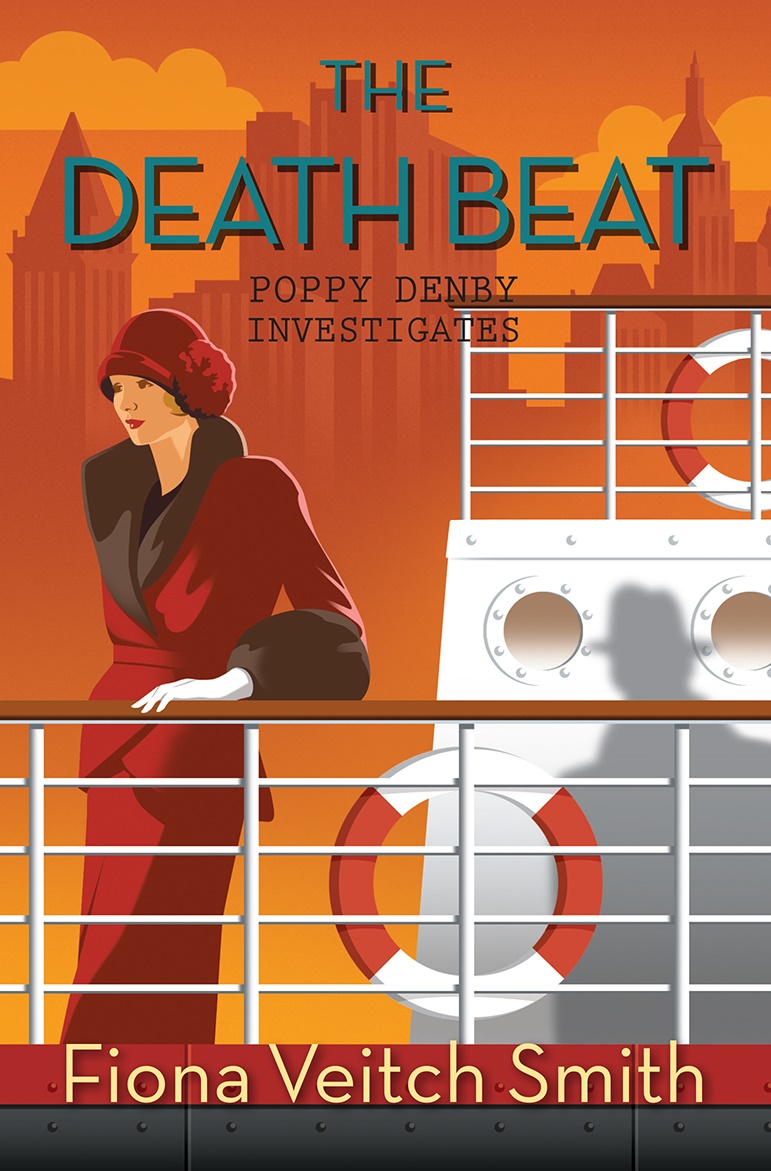
mystery novel of the year 2016/17, and the third, The
Death Beat, is out now. Her novel Pilate’s Daughter a historical love story set in Roman
Palestine, is published by Endeavour Press and her coming-of-age literary
thriller about apartheidSouth Africa
Peace Garden, is self-published under the Crafty Publishing imprint.
Her children’s books The
Young David Series and the Young
Joseph Series are published by
SPCK.
writer and writing tutor, based in
the first in the Poppy Denby Investigates Series (Lion Fiction) was shortlisted
for the CWA Historical Dagger award in 2016. The second book, The
Kill Fee was a finalist for the Foreword Review
mystery novel of the year 2016/17, and the third, The
Death Beat, is out now. Her novel Pilate’s Daughter a historical love story set in Roman
Palestine, is published by Endeavour Press and her coming-of-age literary
thriller about apartheid
Peace Garden, is self-published under the Crafty Publishing imprint.
Her children’s books The
Young David Series and the Young
Joseph Series are published by
SPCK.
Originally written by ACW Blogger

