
Happy New Year for tomorrow! Or, as people have started saying recently,
Happy New Year’s. Who does this
New Year belong to? Or is it Happy New
Years? How many of them are we
celebrating?
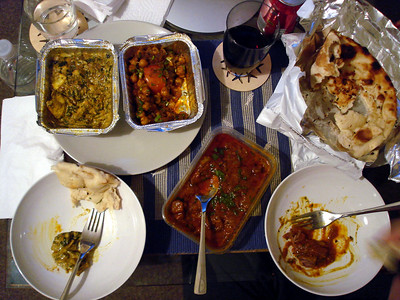
Maybe you intend to celebrate with a take-away, or,
as I hear more and more, a take-out?
Me, I love a good curry, sitting in front of the log-fire at home, but
this was not what was meant by the awarding body for whom I was doing online
training a few weeks ago. No, no, no, not even in business-speak should a ‘take-away’ be
a something you need to make a note of (even though it’s shorter). The 1662 Prayer Book asks us, from time to
time, to ‘read, mark and inwardly digest’ – more poetic.
‘Holidays’ is another word whose meaning has shifted, and
for we Christians this stinks. A couple
of years ago I was reading a writing craft post on procrastination by an American writer, in which she told us she had deferred inscribing ‘holiday cards’
in order to do ‘proper writing’. Holiday cards!?
You and I are happy to send CHRISTMAS
cards, either postally or electronically.

‘Loved One’, a term beloved of BBC reporters, also grates,
as in ‘People will be concerned for loved ones affected by this tragedy’. Yuk, sentimental. If the reporters mean friends and relatives,
let them say so. Evelyn Waugh wrote a short,
satirical novel on the funeral business entitled The Loved One, in which
the ‘loved ones’ in question were the deceased.
Alexander McCall Smith, in The First Ladies’ Detective Agency
series, describes someone who has died as being ‘late’, which is nicer. I’m told this is common African usage. (Thank you, Nicky Wilkinson.)
Of course, language metamorphoses, absorbing new influences
from our shared experiences, links with other cultures and, in large part, from
the technology we use, but we must monitor how our language changes. In France, the Académie Française keeps a
close control on French language usage, defending it from anglicisms, in
particular. In the UK, a large part of
the problem is language creep from across the pond, particularly from films and
television. As writers (and film-makers
if any are reading this) we have a responsibility, not to push away all neologisms,
but take what is good and cast out what is sloppy. Yes, we might use some of the words and
phrases above in dialogue, to establish a character’s age and setting, but we
should not be using them in narrative and in correspondence, especially in
social media. And, of course, we should always stay clear of clichés.
Above all, as Christian writers, we must avoid those words
and expressions which seek to cut God and our Christian faith from our readers’
everyday lives.

