
 |
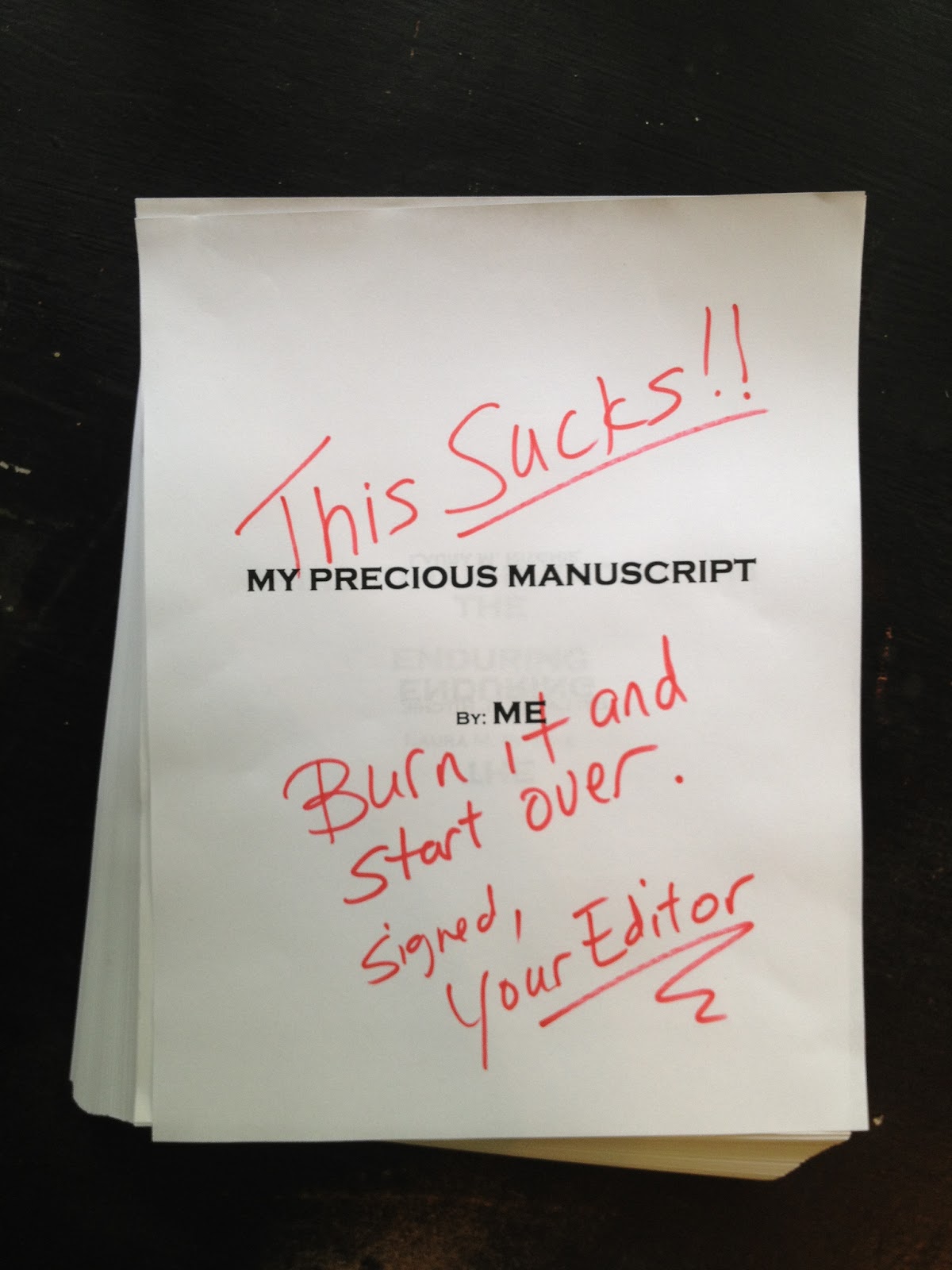
| Photo: Laura Ritchie, “After the Edit,” Flickr |
As writers, we pour out our hearts onto the page. We
open a vein and bleed as we put ourselves out there for criticism. We wonder
why oh why do we do this; why couldn’t we work in a bank or maybe get a job in
marketing? But we can’t not write. We have to; it’s part of who we are and what
we do. It’s how we share what we know. How we are known.
open a vein and bleed as we put ourselves out there for criticism. We wonder
why oh why do we do this; why couldn’t we work in a bank or maybe get a job in
marketing? But we can’t not write. We have to; it’s part of who we are and what
we do. It’s how we share what we know. How we are known.
As we’re working on the big projects – usually a book
– we often hit a wall in our writing. Perhaps it’s as with a marathon and it’s
the twentieth mile. We’ve done our %^$^% first draft and wait for comments from
our editor/agent/reviewers.
– we often hit a wall in our writing. Perhaps it’s as with a marathon and it’s
the twentieth mile. We’ve done our %^$^% first draft and wait for comments from
our editor/agent/reviewers.
We open the email and take a deep breath, quickly
scanning for anything positive to shore up our energy in order to face the
criticism. For at this point our book-baby feels so embryonic and tiny; we’re
not sure if it can take the criticism, or if we will be tempted to abort. With
the goal in mind – the birth one day of this project – we hunker down to read
the full extent of the critique.
We may have to lie down afterwards. To recover we may
turn to wine/chocolate/a mindless rom com or action film. We may complain and
whine to those closest to us, but we’re careful not to alienate our editor/agent/reviewers,
for especially in the case of our agents and editors, they are our advocates
and champions.
turn to wine/chocolate/a mindless rom com or action film. We may complain and
whine to those closest to us, but we’re careful not to alienate our editor/agent/reviewers,
for especially in the case of our agents and editors, they are our advocates
and champions.
And then after a time to lick our wounds, whether a
couple of days or a couple of weeks, we roll up our sleeves and attack the
rewrite. But soon we become overwhelmed, for we feel it’s too hard, and our
editor/agent/reviewer asks too much from us. We’ve hit the murky middle and so
much inside us wants to pull the plug. We feel crippled at the extent of the
rewrites, for when we submitted that first draft, although we knew it wasn’t
perfect, we thought it was a lot better than it turned out to be. We didn’t
anticipate the amount of rewriting that would face us. The levels we’d have to
plumb to uncover our voice – our opinions, our thoughts, our creativity. We
feel unable to face those words – our words – again. We feel we are defacing
our baby with cruel barbarity.
 |
| Photo: openDemocracy, hourglass_cropped, Flickr |
But this, writing friends, this is our moment. This is
the time to rise, for if we don’t dig deeply, our book may be still-born. If
so, later on we’ll look back and admit that although it contains some good
passages, with hints of brilliance here and there, it wasn’t our best creation.
We weren’t forced to look deep within; we weren’t forced to kill our darlings;
we now cringe at the places where we weren’t challenged.
Yet when we press through the murky middle, putting to
one side our squeaky inner voice that protests about cutting that passage or thinking that surely
everyone knows this and why do I have
to explain, we can find gold and diamonds. Here is where we find the riches –
the things we were trying to say or the things we thought we were saying. Here
is where we can connect with our reader, forming that glorious conversation
that can transcend time and geography as we influence, entertain, and inspire.
This is the price of a good piece of writing, which
yes, might be the price of blood. But for those of us who were made to write, we
find satisfaction in nothing less.
yes, might be the price of blood. But for those of us who were made to write, we
find satisfaction in nothing less.
Have you faced the murky middle in a project? If so,
how did you handle it? (I did with Finding
Myself in Britain – read my reaction here
to the wonderful and insightful 13-page critique.)
how did you handle it? (I did with Finding
Myself in Britain – read my reaction here
to the wonderful and insightful 13-page critique.)
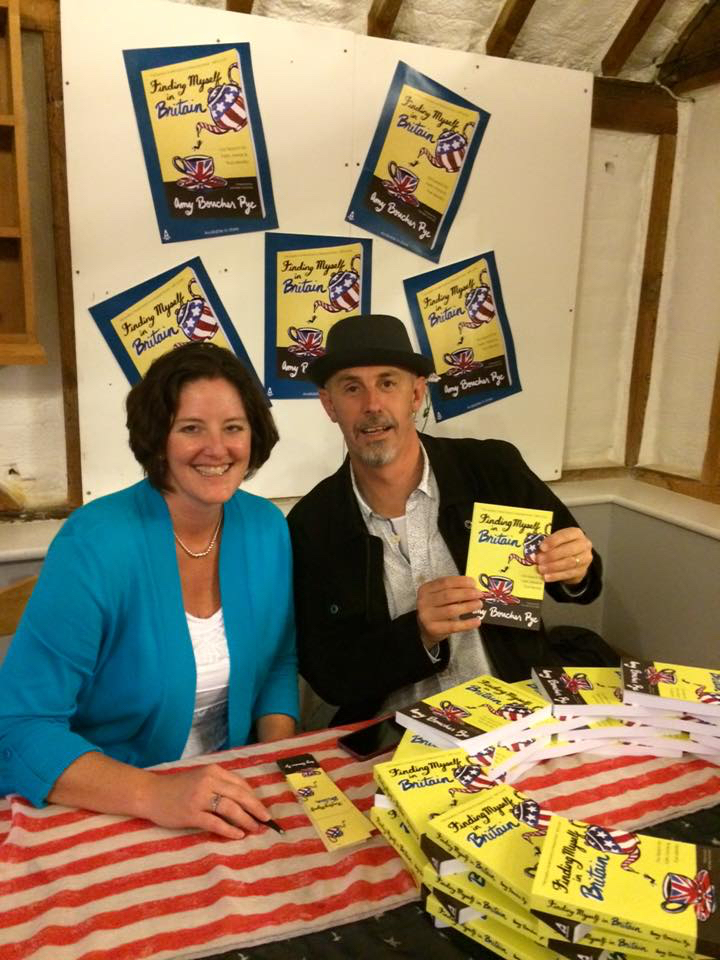
Amy Boucher Pye worked in Christian publishing for two (plus) decades before launching into the writing/speaking life. She runs the Woman Alive book club and loves writing devotional thoughts. Her first book is Finding Myself in Britain: Our Search for Faith, Home & True Identity (Authentic Media, 2015). She blogs at amyboucherpye.com and tweets at @AmyBoucherPye.
Originally written by Amy Boucher Pye

