
As April 02nd this year
falls on Palm Sunday and with it the start of Holy Week, I wanted to share with
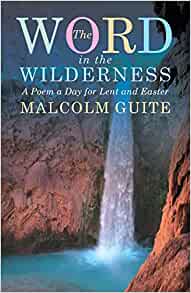
you my reflections which will also be part of a worship service I am leading on the same day. Taken from a collection of poems written by Priest and Poet, Malcolm Guite[1] (whose work some of you may be familiar with), it is a wonderful resource not only for celebrating the uniqueness about the events of Holy Week, but an opportunity for us as individuals to use poetry to reflect more deeply on the central tenet of our faith; the life, death and resurrection of our Lord Jesus Christ.
Palm Sunday
Now to the gate of my Jerusalem,
The seething holy city of my heart,
The Saviour comes. But will I welcome him?
Oh crowds of easy feelings make a start;
They raise their hands, get caught up in the singing,
And think the battle won. Too soon they’ll find
The challenge, the reversal he is bringing
Changes their tune. I know what lies behind
The surface flourish that so quickly fades;
Self-interest, and fearful guardedness,
The hardness of the heart, its barricades,
And at the core, the dreadful emptiness
Of a perverted temple. Jesus, come
Break my resistance and make me your home.
Imagine being part of the crowd that Palm Sunday being prepared to welcome Jesus on his triumphal approach to Jerusalem, that seething melting pot of humanity symbolising the centre of the Jewish faith traditions. Firstly, the gate symbolises the physical gate that Jesus passed through which then led to the turmoil of the following week culminating in the resurrection. But Jesus entry is also his entry into our hearts and minds and are we still prepared to welcome him?
The message of Palm Sunday is the welcoming of our Saviour at the start of the journey to his destiny, what has long been envisaged by the earlier prophets as well as by himself. Here he is being greeted like we greet the rock stars and footballers of today, this promised Messiah who promises liberty. Yet the reality is, that Jesus is not bringing violent political liberation but a liberation of the spirit. His kingdom is a different kind, one based on love and mercy for all and preferential treatment of the poor and marginalised. To turn the established order on its head.
Harold Wilson once said, “A week is a long time in politics”, and for the Apostles it certainly seemed that way. Once we realise that our expectations will not be fulfilled our enthusiasm quickly fades, our own self-interest becomes paramount once more and we put up the psychological as well as the physical barricades to Jesus’ message of loving service to others. The vision that Jesus was bringing directly confronted the vested interests of the Pharisees and the other Jewish elite. His attack on the money lenders in the Temple was a direct challenge to their authority. Jesus saw the elitist corruption, the dire poverty of the poorest and practices and rituals of the law which were against God’s teachings as told by the prophets and decided to make a stand against them.
In his poem, Guite calls the temple perverted, where Jesus too predicted its eventual destruction for its rejecting of God’s commandments. Such a metaphor is equally applicable today, where we worship the gods of capitalism and consumerism, where wealth and power are revered and only the strongest survive. Where are we in this perverted temple? We still have wars and conflicts, social injustice, a media failing to hold those in power to account and those in power, whose rhetoric rarely translates into hoped-for action. Where we seem to worship the superficial over the substantial.
Jesus arrival into Jerusalem was meant to herald the start of a new beginning, but not the one wanted by those with power and influence. Therefore they had to find a way to separate him from the people he so inspired. History is full of examples of how the powerful seek to deal with those who challenge their vested interests. This is a concept as old as humanity itself and still goes on today. Yet we still seem helpless to challenge this concept in any meaningful way.
The final lines of the poem “Jesus, come break my resistance and make me your home” are arguably the most challenging. Even those of us who profess Christian faith and will use that as the inspiration for many of life’s activities including the written – and occasionally – spoken word, may wonder where our loyalty lies in the middle of such an uncertain world.
On this Palm Sunday, let us reflect perhaps more prayerfully than before: Are we still able to welcome Jesus into all that?
Michael Cronogue
originally from London now resides in Walsall in West Midlands region of UK. Methodist Local Preacher, writer and blogger discussing matters of faith and theology on his website www.michaelcronogue.com
[1] Malcolm Guite, The Word in the Wilderness, A poem a
day for Lent and Easter (Norwich: Canterbury Press, 2014)

