
This month has been a lean one for writing as I’ve not been too well, and both my brain speed and inspiration have been extremely lacking (if you are interested in learning more about living with bipolar, do have a look at my blog). In the interest of just ‘getting something down’, I repeated to myself that old adage: write what you know. One idea loomed large: composer/lyricist/genius Stephen Sondheim.
Now I know – Sondheim is a completely different kettle of fish for ACW, but I still think he has things to teach us about writing. I’ve always loved Sondheim’s music, but it’s learning about his approach to lyrics that has made me realise just how perfect his writing advice is.
It is described thus:
“There are only three principles necessary (that) underlie everything:
Content dictates form;
Less is more;
God* is in the details –
all in the service of Clarity, without which nothing else matters.”
Sondheim teaching at 80 years old

Firstly, content dictates form. For Sondheim, this relates as much to musical style as anything – you don’t write a pop rock song for a show based in eighteenth century France. For me, this has meant remembering what I’m writing for. If I am writing an article, scant background is necessary – in a novel the opposite may be true. An example from my own work – in using ‘real-life’ examples in a non-fiction book about self-harm, my tendency was to try and write beautifully flowing stories, where what was really needed was a specific, illustrative experience. It might have been wonderful writing, but the wrong form for what the content demanded.
Secondly, Less is More. Some of the best advice I’ve ever had when writing memoir/fiction is to take a passage and cut the word count by half. It’s a hugely difficult task, but it brings into focus what is important – and what isn’t. Do we need to talk about big, blue, glistening, close-set eyes, or is it enough to say ‘wistful’? Let’s no write for the sake of boosting a word count. Write what is important to say, no more.**
The third rule exists in some tension with the second: God is in the details. Good writing is always pleasing to read, but it is those tiny things that can make a piece of writing zing. Writing that leaves a lasting impression on me nearly always revolves around the details. I’m sure I’ve read of many breakups in numerous books, but the one that sticks is the one describing the fading imprints of coffee steam on a window. The details are what builds the picture in our mind, and when we have a picture, we have emotion.
Which brings us to Clarity. If we aren’t writing what we are intending to say, something is wrong. The rules are important, but, above all, writing has to speak, conveying the message we are so desperate to share that we write about it.
I hope you’ve enjoyed my self-indulgent foray into musical theatre! Sondheim, as well as being a musical genius, is an incredible teacher. I’m looking forward to sharing more of his wisdom next month….
* probably unnecessary to clarify, but the ‘god’ referred to here is not our Almighty, triune God.
** A good example of less is more: my original first paragraph of this blog was three times as long!


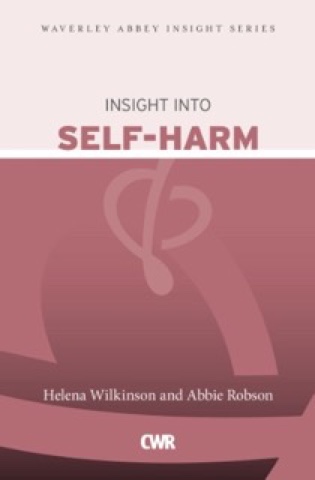
Abbie has been writing every since she could hold a pencil – her first self-published work was a short story about a magic key, which was displayed on the fridge. After struggling with self harm and eating disorders for a number of years she went on to write a memoir ‘Secret Scars’ published by Authentic in 2007, and later ‘Insight Into Self-Harm’ published by CWR in 2014. In 2007 she launched Adullam Ministries, an information and support website and forum on self-harm and related issues. She blogs at Pink and Blue Mummyland, tweets as @AbbieRobson and @AdullamSelfHarm, and is currently working on a book about mental health and the church. She lives in Rugby with husband John, two demanding children, and two even more demanding cats.

Originally written by Abbie

