
For long periods in the past two years, many of us have been confined to our homes. Recently, I have been thinking about what psychological effect that has had upon us. Because of the Covid pandemic we have been living with the knowledge that we can invite few people into our homes. This must have been particularly painful for those who love giving hospitality. As we moved towards the final months of 2021 we hoped life would become freer for us, and now a new fear has emerged: a new variant. Some of us are more risk-averse than others, and have been cancelling social plans: but many may feel their top priority is to live their lives. As Fiona Lloyd says in the latest edition of Christian Writer magazine, ‘God created us for relationship.’
Not long ago I visited a friend who is more reliant than ever on the good will and friendship and loyalty of others, coming into her house to visit her and care for her, since her poor health has totally changed her life and confined her to her home.
I read this in a blog: What is on my heart is that I want my home to be a warm and cozy home where people feel loved and feel comfortable, a place of fun and a place that brings glory to my Lord. I want to be wise in it and it is in keeping with my Father’s Word that says “a wise woman builds her home.”
This led me on to think about how much our living environments can express our internal selves. Some have great difficulty in letting go of things: others love de-cluttering, while a select group espouse the principles of ‘minimalism.’ I greatly admire this group. For many, though, I believe our possessions have a strong emotional hold over us, and even act as ‘horcruxes’ (that wonderful concept created by JK Rowling: a horcrux is an object that conceals a fragment of an individual’s soul). We keep them with us, almost as if they were magic talismans. I admit I am like that about some of my old books. No matter how tatty, I keep them on my top shelf: books I loved as a child, the books I discovered and devoured at university. there they sit, scruffy and yellowing, and I have never made the decision to let them go.
Some of us care about our environments because the opinions of others matter to us. How many of us can say we are free from
the opinions of others? If you do receive visitors, do you ever find yourself apologising for the appearance of your home or
for the state you live in? I remember going on a mission once, door to door with another church member when I lived in London, and one gentleman we visited kept saying, “You will have to forgive me… you will have to forgive me…” It was all about the state of his home, and how he thought we would judge him.
What stage do we have to reach before all unnecessary concerns fall away, and we focus on what truly matters? Can that be when we are not long for this world, and know it in our hearts? Letting go of others’ opinions about us, and our living environments, will be strangely liberating: for then we will be beyond
the judgements of the world.
Perhaps our homes should be a restful refuge from the world. But
people have different ideas of what constitutes a refuge. For some, the refuge may be an art gallery around them, with candles, lights, scents
and sculptures, or with a treasury of framed original artwork. This is what
they make of the world. This is their retreat from it: an ordered, tasteful, designed, creative environment: everything the world isn’t. For others the refuge is a cave or labyrinth
in which the walls are piles of objects: items, papers, books, bags, baskets,
glasses, tissues, boxes and equipment all around us. It may be a bit like a Tracy
Emin installation or an art construction at a psychotherapy retreat
or a junk sculpture at the Eden Project.
It is as if we all live in changing rooms, with sliding doors,
moving hallways and corridors, houses of distorting mirrors and illusions. Are
we defined by our possessions? I think the objects that surround us are like
living parables, in the middle of which we dwell. They may demonstrate or reflect the things that live inside us. For some it may be that the extra level of anarchy we introduce to our household is strangely
calming and reduces our anxiety.
If I go into a cluttered house, I can feel strangely reassured. Here is someone more disorganised than me, more chaotic, and yet
persisting in the world and surviving. I can relax. What other people expect doesn’t matter.
All expectations melt, fade away, become as nothing. I’m in the
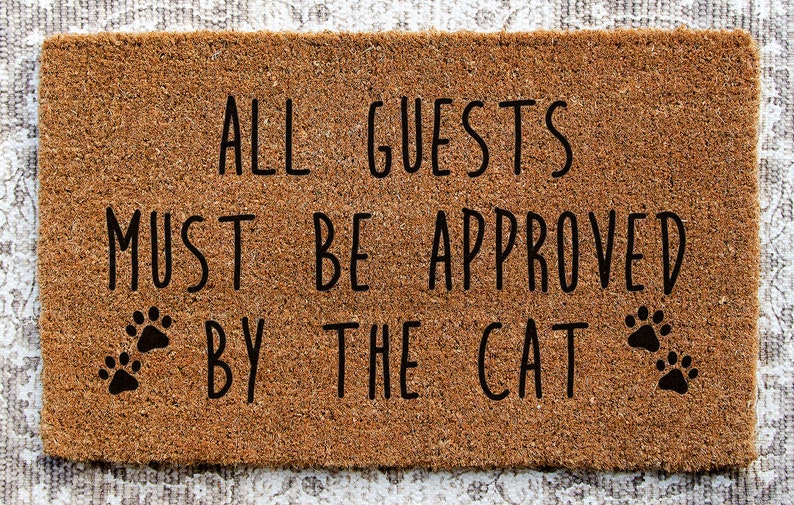
presence of somebody who values none of these things. Perhaps that is the true reason why so many of us love to have a dog or a cat in our homes with us!
So what do you think? What do you surround yourself with? Will visitors feel perfectly relaxed and will you be happy for them to find you just the way you are?
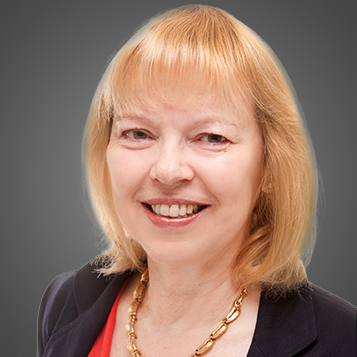
SC Skillman is the author of Mystical Circles, A Passionate Spirit, Perilous Path and Paranormal Warwickshire. Her next book, Illustrated Tales of Warwickshire, will be released by Amberley Publishing in April 2022. She is currently writing the second book in a new fiction series.

