
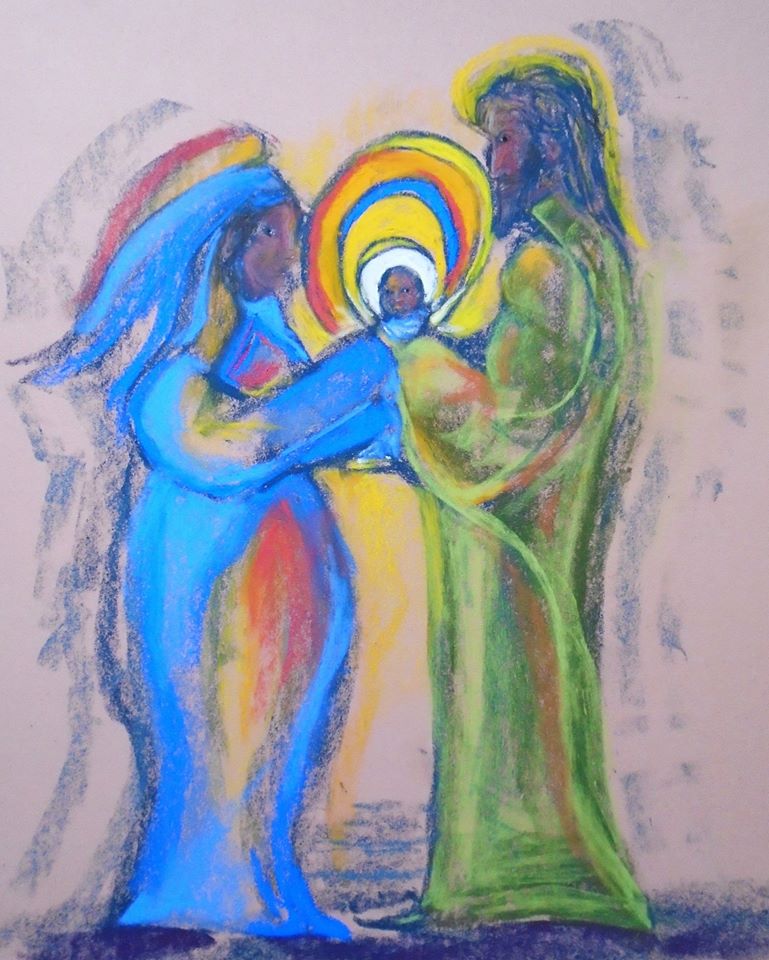
Advent is when we Christians practice waiting. We wait, with
Mary, for the coming of the Christ child. We wait with her and Joseph,
wondering what a baby conceived by the Holy Spirit will be like. We wait with
the wise men as they plot their star charts and plan their journey. We hold
these things in our hearts and ponder them (Luke 2:19), because three to four
weeks (or 40 days if you hold with Celtic Christianity) of supermarket carols
and mince pies on special offer is a long time. It can seem like nine months.
Heck, the queues can seem like nine months.
As Christian writers, we laugh in the face of all this
waiting. Sort of. We scoff at lines and guffaw at pharmacy numbers. Because waiting is
probably the thing we do most of, other than procrastinating. We wait for
ourselves, mostly, to get in gear and finish the book/article/pamphlet/review/epic
poem. We learn to be patient with our writerly selves, because early on we find
that as people who sit indoors a lot we don’t generally have the athleticism
needed to kick ourselves in the posterior.
So that’s done. And now the world is ready for our genius.
No, wait, first we need to edit. And then edit some more. And then a polish.
Okay, now it’s time for the world to meet the next Booker Prize winner! Nope.
Now we scour the Writers’ Handbook and the interwebs to find the right agent or
publisher to approach. Then there’s the writing of that pesky pitch. The
endless submission emails. Changing the formatting of the manuscript each time.
Copying and pasting bits of it into new documents for each attempt, until your
hard drive is in serious need of a feng shui master.
And then, oh the interminable waiting. Unless of course a
rejection pings back so fast you are left reeling. Most professionals will ask
you to wait twelve weeks or so before you can safely assume they aren’t
interested. Sometimes they will dangle you on a hook of a possibility for a
while, though I’m assured this is not to make us suffer. What we are convinced
is a masterpiece may just not fit with their brand, or it might simply be the
wrong time.
Most of our waiting will be unrewarded. But just once every
so often, after the first few decades or so, there will be enough maybes and
even the odd yes, to help us keep the faith. And as we do so, we can remember Mary’s
obedient waiting, not just through pregnancy, but through the next thirty-three
years too, waiting to see God’s words come to be through his Word.
Artwork by yours truly.
Keren
Dibbens-Wyatt is a disabled writer
and artist with a passion for poetry, mysticism, story and colour. Her writing
features regularly on spiritual blogs and in literary journals. Her full-length
publications include Garden of God’s Heart and Whale Song: Choosing Life with
Jonah. She has a new book, Recital of Love, coming out with Paraclete Press in
June 2020. Keren lives in South East England and is mainly housebound by her
illness.
Originally written by Keren Dibbens-Wyatt

