
Having been brought up to go to Sunday school and later to
Church, I was used to The Bible, or better still The Holy Bible, being regarded
as a sacred text. As a student I noticed
a book on a library shelf. It was
entitled The Bible to be Read as Literature.
Church, I was used to The Bible, or better still The Holy Bible, being regarded
as a sacred text. As a student I noticed
a book on a library shelf. It was
entitled The Bible to be Read as Literature.
Quite honestly, I was horrified!
I felt that this was an attempt to undermine the respect with
which earlier generations had viewed the Bible.
The linguistic root of literature is surely anything consisting of
letters. We use it in the title of
examinations such as English Literature.
We also use it about information from showrooms about various products.
which earlier generations had viewed the Bible.
The linguistic root of literature is surely anything consisting of
letters. We use it in the title of
examinations such as English Literature.
We also use it about information from showrooms about various products.
Nowadays, considering the trend towards secularism, I’d be
glad to find someone reading The Bible to be Read as Literature. Even in a different form it surely still has
the power of the original to turn the hearts and minds of people towards
God. (I have to admit that I never
touched this book, let alone looked inside it to see how it was presented.)
glad to find someone reading The Bible to be Read as Literature. Even in a different form it surely still has
the power of the original to turn the hearts and minds of people towards
God. (I have to admit that I never
touched this book, let alone looked inside it to see how it was presented.)
I wonder how much it contributed to the rise of
secularism. The title still seems
disrespectful. Perhaps it was just a
symptom of a trend which had already begun.
secularism. The title still seems
disrespectful. Perhaps it was just a
symptom of a trend which had already begun.
So, how should the Bible be read?
There are lots of books and dated (i.e. with a date on, not
old-fashioned) helps for Bible reading. Most people, who read it regularly,
would agree that a beginner should not start at the beginning in the hope of
working their way to the end. Not many get
to the end of Leviticus, the third book of the Old Testament.
old-fashioned) helps for Bible reading. Most people, who read it regularly,
would agree that a beginner should not start at the beginning in the hope of
working their way to the end. Not many get
to the end of Leviticus, the third book of the Old Testament.
Joining a study group is a good way of staying motivated to
read the Bible regularly. There are a number of courses, which are designed to
help.
read the Bible regularly. There are a number of courses, which are designed to
help.
I have no formal qualifications in Bible study. Religious
Education (RE) was not offered as an exam subject at the school I
attended. However, I began using Bible
Reading Fellowship (BRF) notes as a child. I didn’t find that they provided
enough depth. When a teacher of RE sold some of us Scripture Union notes, I
found those more helpful.
Education (RE) was not offered as an exam subject at the school I
attended. However, I began using Bible
Reading Fellowship (BRF) notes as a child. I didn’t find that they provided
enough depth. When a teacher of RE sold some of us Scripture Union notes, I
found those more helpful.
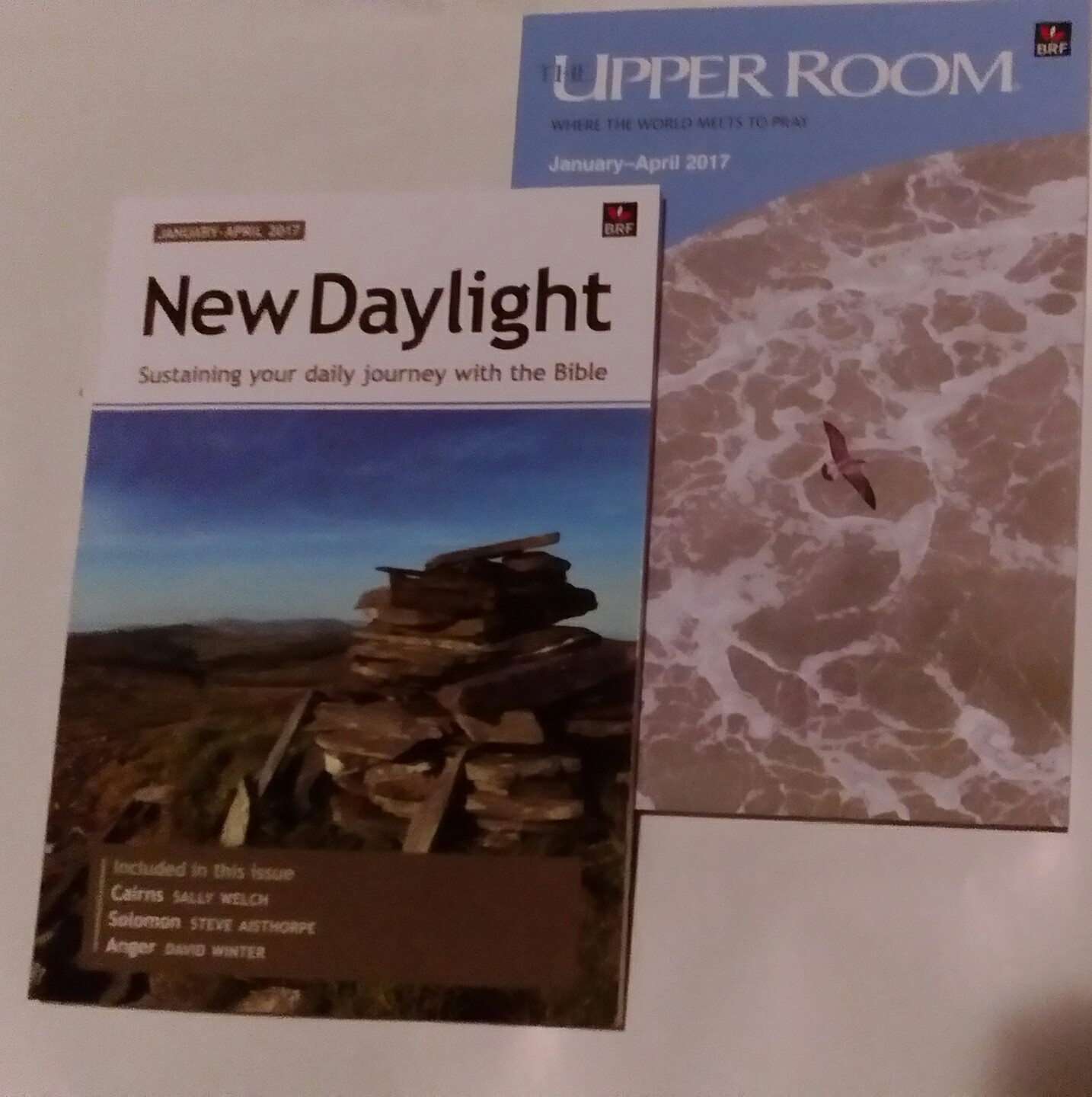 |
| The BRF notes mentioned here |
I haven’t always made Bible reading a daily habit.
There have been long spells in my life, when I haven’t attempted this. However
for the last twenty-odd years it has been a habit. I have tried other notes
such as Every Day with Jesus, but I have come full circle and use BRF
notes. Currently I use two different
publications, New Daylight and The Upper Room, which focuses on prayer and is
written by its readers. (Two occasional
contributors are members of both ACW and the writing group I attend.)
In my view the Bible should be read prayerfully, thoughtfully
and regularly. Reading it out loud can also help both the understanding and the
memory. I have some personal preferences about translations, but I just long
for people to be exposed to the scriptures in whatever translation speaks to them
best.
and regularly. Reading it out loud can also help both the understanding and the
memory. I have some personal preferences about translations, but I just long
for people to be exposed to the scriptures in whatever translation speaks to them
best.
How do you read the Bible?
By Susan Sanderson

