
Celebrating 74 Years of Independence

Yom haAtzmaut, Israel Independence Day, begin tomorrow evening, 4th
May, marking 74 years since the formation of the State of Israel (and yes, that’s me, celebrating above, a few years back). This brought
to an end almost 2000 years of exile from the Jewish ancestral homeland.
A Love for
Israel
My Jewish
background has instilled in me a great love for Eretz Yisrael, the Land
of Israel. This has blossomed all the more since I have been called to faith in
Jesus—which happened to me in a Jerusalem church where I thought I wasn’t supposed to be.
My husband and I became olim, immigrants,
in 2010. When we lived there, I found myself imagining Jesus in every
landscape, coming towards me over every hill brow, standing by me at every
stall in the souk…
The Jews were exiled from their Land in AD70 by the Romans, after the sack of Jerusalem and relocated as pocket populations to an assortment of countries around the Mediterranean.
The Romans were responding to unremitting Zionist rebellion. It was gory. The Historian Josephus tells how the streets ran with Jewish
blood. The glorious Temple— Jesus’ ‘Father’s house’ (Lu 2:49)— was razed, just
as Jesus foresaw it would be, (Mat 24:2/Mk 13:2).
Genealogical
Records
The genealogical
records held there were lost, rendering it impossible for anyone since to
substantiate a claim to be the Messiah, since no one could any longer establish bona fide credentials to being descendants of King David, from the line of Judah. Luke, however, had the opportunity to research
those records before their destruction, (Acts 21-27). He establishes Jesus’
credentials in his genealogy in his gospel.
The sacking and expulsion happened within
barely a generation of Jesus’ death and resurrection. It would take almost two millennia
of antisemitism, crusades, banishments, Inquisitions, pogroms and the like, before
worldwide disgust at the carnage of the Nazi Holocaust would secure for the
Jews the right of return to their Land.
British
Mandate
Prior to the
United Nations’ vote in favour of the creation of a Jewish State in Israel in
1947, the Jews had nowhere they could flee from persecution, no land they could
call their own. The State of Israel was born the following year, 1948. Its
haunting national anthem Ha Tikvah—‘The Hope’—expresses the Jewish hope
of 2000 years, ‘to be a free people in our own land.’
Many people do not
realise that the Israeli regime did not topple a Palestinian government as it ‘waltzed’ into the Land. The Israeli Government actually succeeded a British Mandate,
in place since 1917, that took over from the Ottoman Empire under which Palestine
had languished for 300 years.
It invited Arabs to remain, although many chose to leave.
Israel’s 2 million
Arabs, roughly 21% of the present population, is a statistic that surprises
some. Arabic is officially the country’s second language, after Hebrew. Arab Israelis
have voting rights, Knesset representation, full access to education and excellent
Israeli health care.
Our neighbours were Christian
Arabs when we lived in Haifa and our doctor was a lovely, young Arab woman.
Besotted?
Given that all my
books are about Israel and partly or wholly set in Israel— including my latest work
in progress, Messiah’s Mother, which takes place in the time of Jesus—and
given that I am clearly besotted with the place, why am I not still living
there?

The reason is
that, calked over the wonderful, atmospheric, colourful land that evokes our
Lord at every turn is the modern State, which faces many challenges. Some involve
security, some are reputational, unfairly and sometimes fairly gained. The government
can be hard-headed and, on occasion, draconian.
I have heard
former President Netanyahu boast that Israel offers religious tolerance and
freedom of faith for all. There is one exception, however, and it is Jews who,
like me, are traitors; for Jews who become Christians are considered to have
crossed an unacceptable line.
That was what led
to my creeping around in Israel like a criminal. In spite of all the things I
love there, this is why I left.
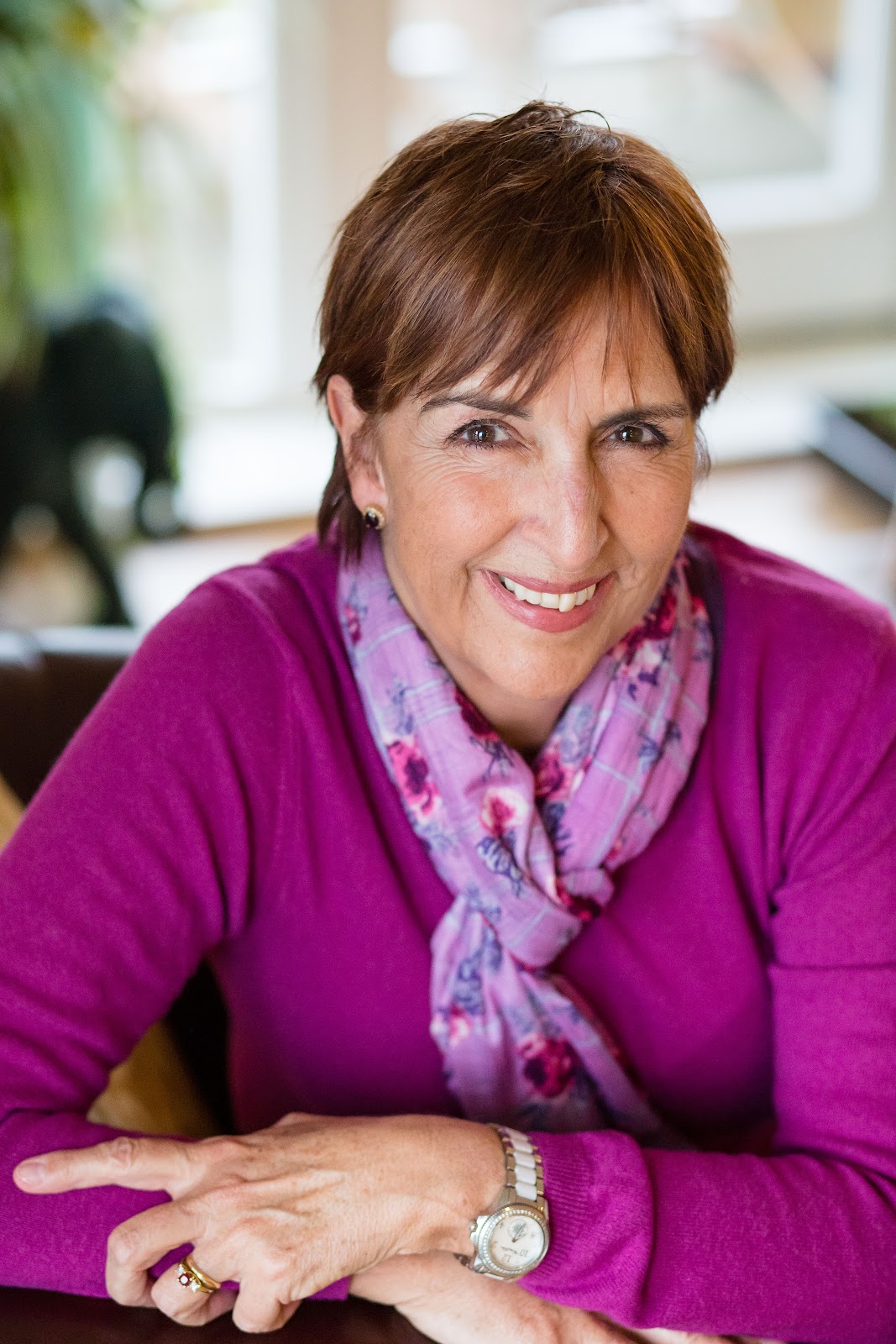
Bobbie Ann Cole is
the author of two memoirs about Israel, both Amazon no.1 bestsellers. SheDoes Not Fear the Snow is her coming to faith story, echoing that of
biblical Ruth. It was short-listed for the 2012 Munce Prize.
Love Triangles, Discovering Jesus the Jew in Today’s Israel, charts
the joys and challenges of living in Israel as a Jewish believer.
Her novel BeingLena Levi, set in 1950, mainly on a kibbutz in newly formed Israel, follows
a teen’s quest to find her identify after meeting an unsuspected Holocaust
survivor mother. It was shortlisted for the 2019 Eyelands Book Award.
Bobbie is
currently writing Messiah’s Mother, charting Mary’s biblical journey to become
a disciple.

