
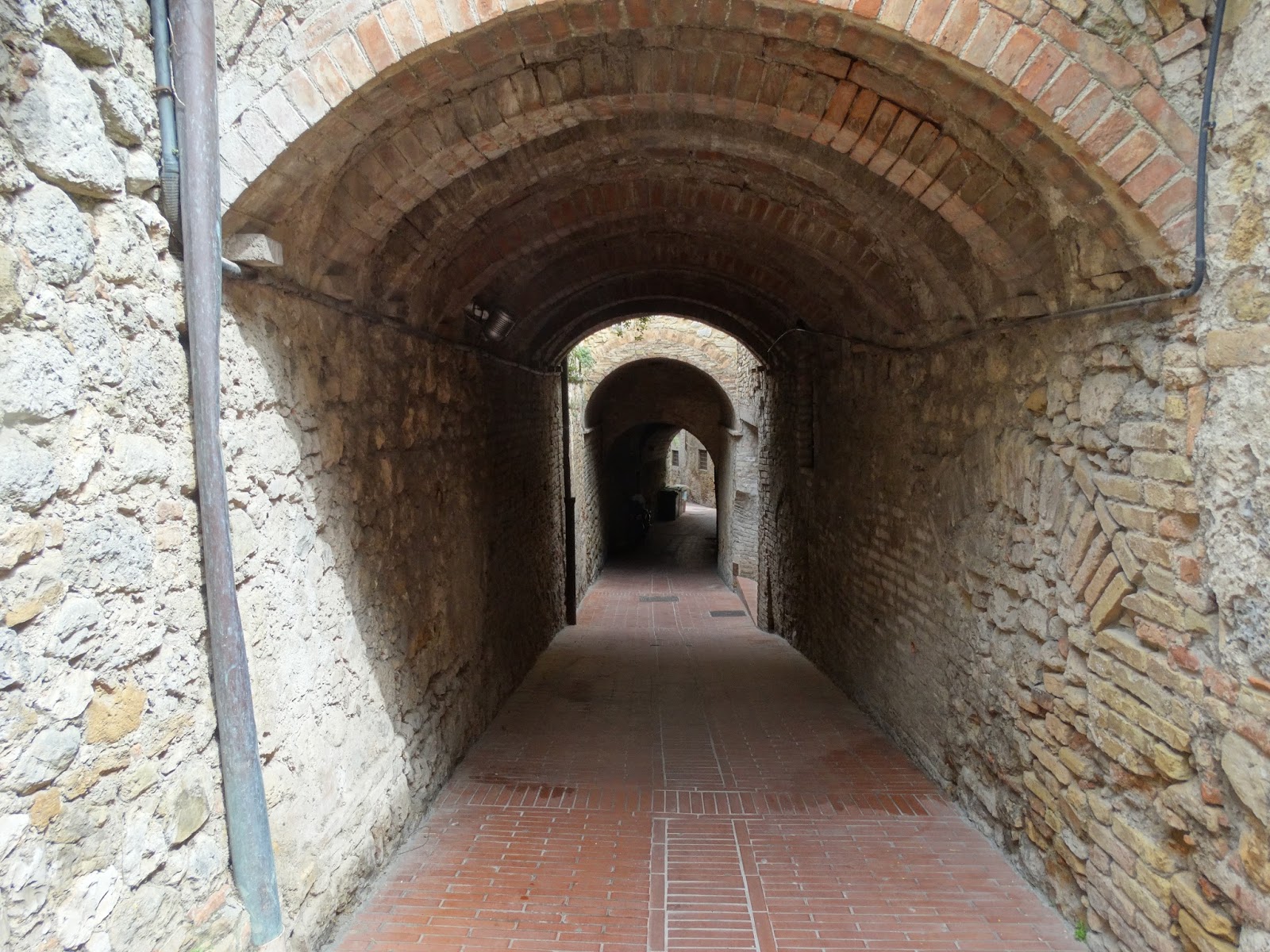
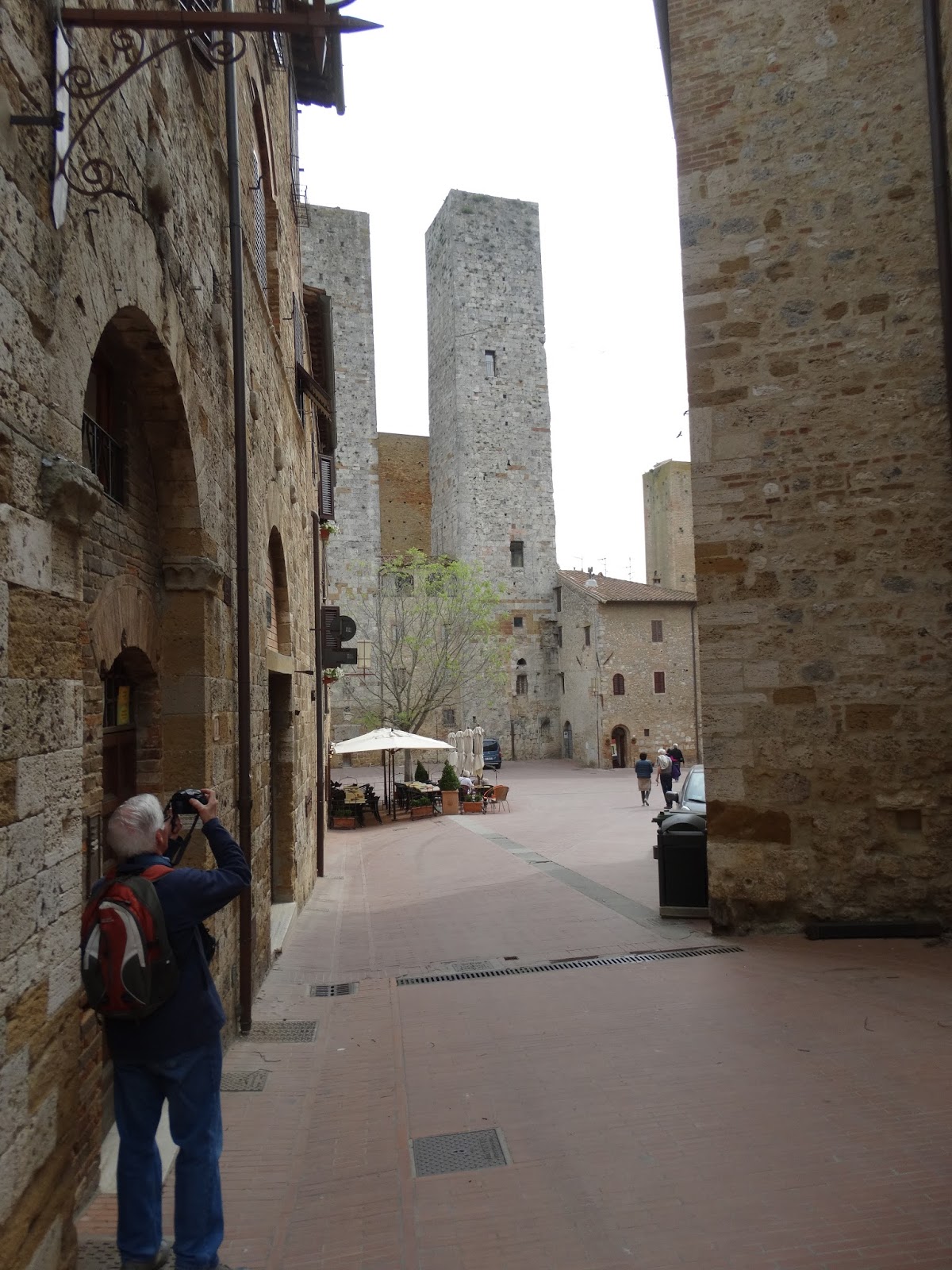
One sunny Tuesday in April, we drove into the tiny city of San Gimignano in Tuscany. Cars are only allowed in to drop and collect because most streets are narrow with the old buildings only a metre from the sides of the car – sometimes less. It is a truly beautiful place, set on a hill, with lovely churches and busy squares where people-watching is impossible to avoid when sitting at a rickety café table, sipping cappuccino. There are viewpoints where the scene over the fields surrounding the town is amazing. San Gimignano is famous for its towers which were built as follies to show off family wealth. Once there were 72 in this small place, but now only fourteen remain.
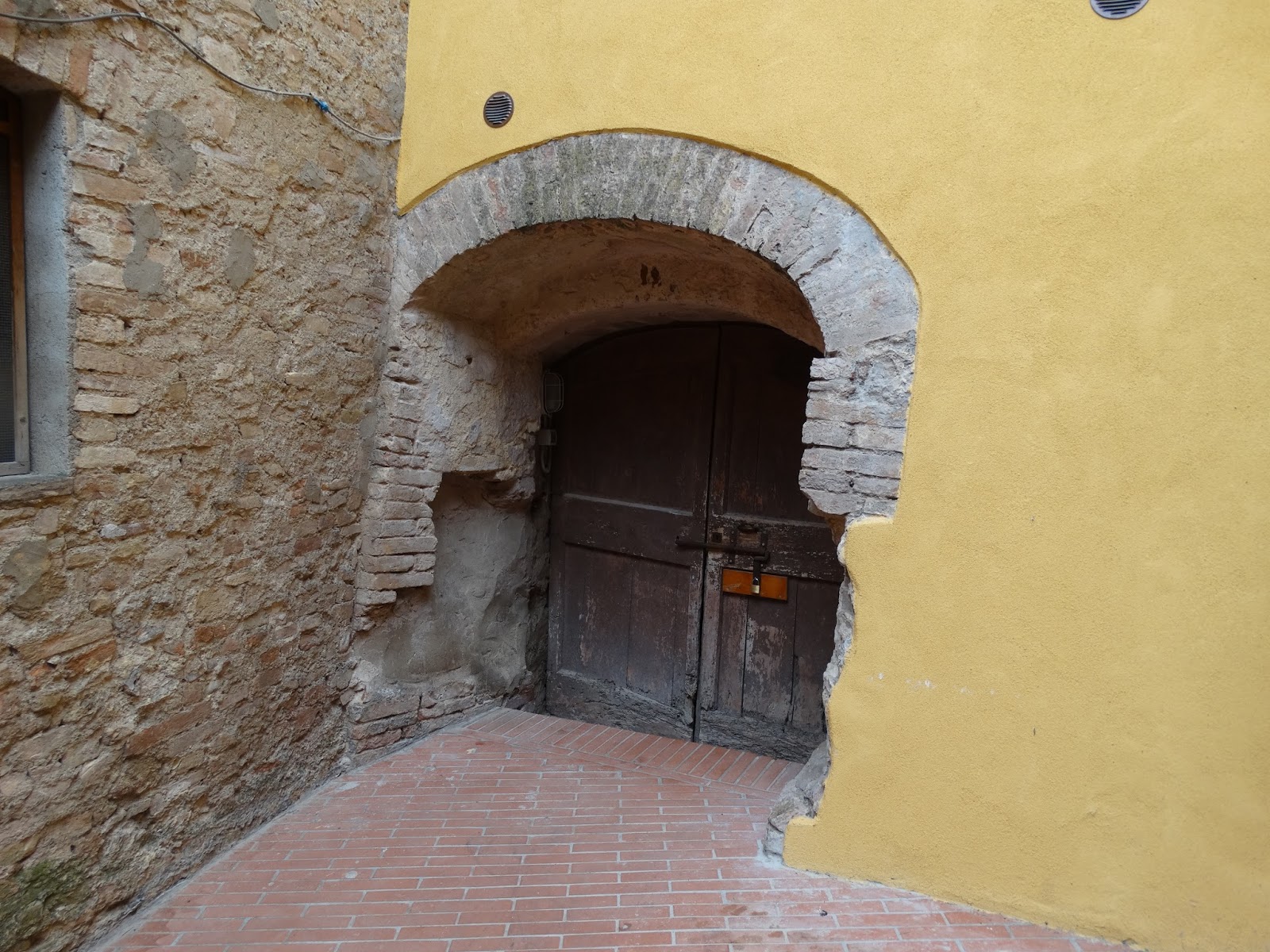
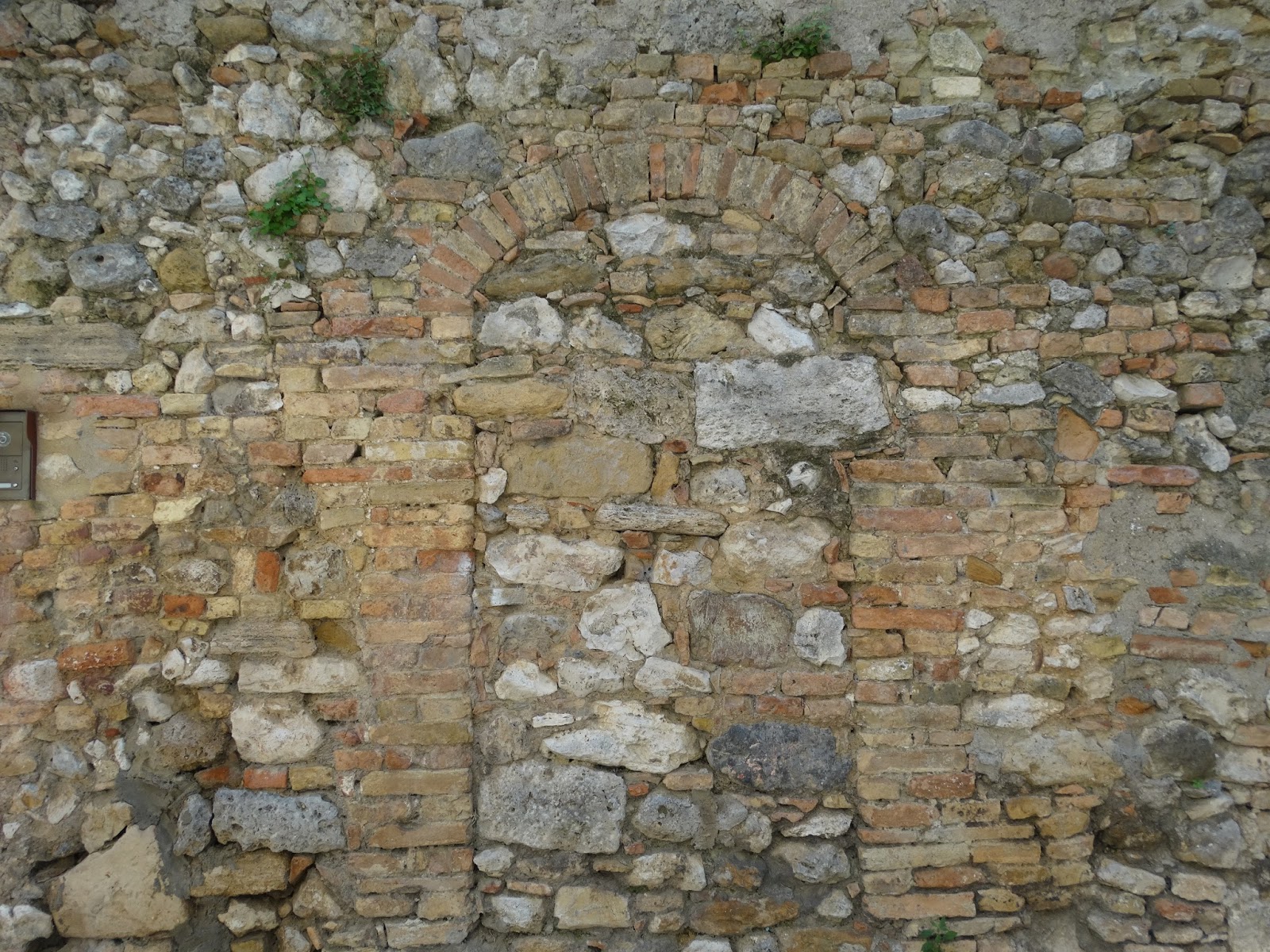 But I began to notice the doors and doorways. Many have been blocked up, some disappearing into the ground at half-height. There are doors that have been made into windows, or are hardly crafted at all – just a few old boards hammered together and a bright padlock keeping such a frail barricade in place. A small door to a little shop concealed large rooms behind, filled with pottery. An unobtrusive door contained a small museum with a model of San Gimignano in the Middle Ages complete with most of its 72 towers; each of the houses and buildings having doors in miniature. The door to our end-of-corridor room, once opened, revealed a large room full of light, with the most magnificent and uplifting views across the Tuscan countryside when the shuttered windows were flung open.
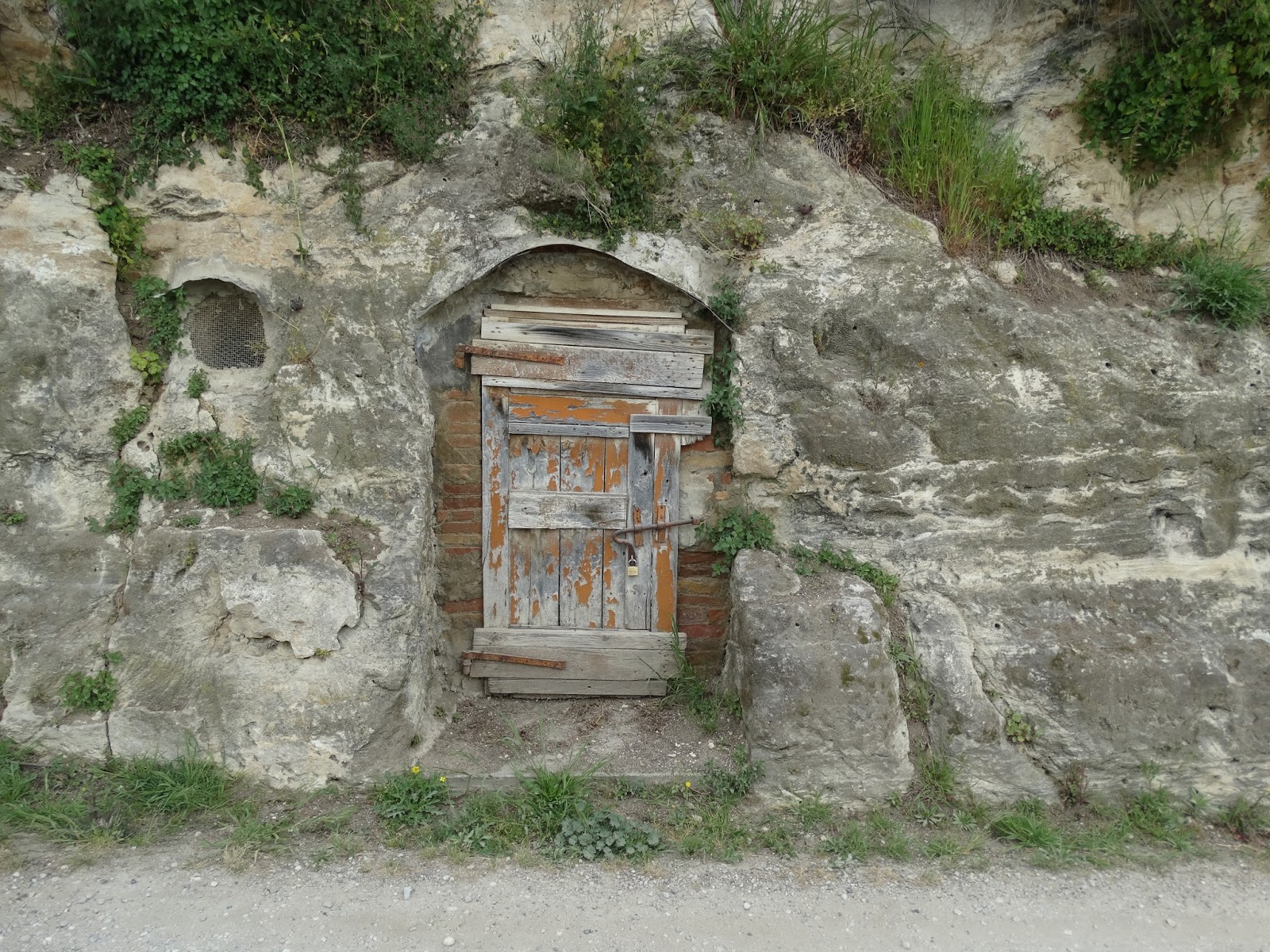 Who would have thought that the humble door would prove to be such a fertile subject for a writer. It is so easy to neglect these various entrances in our writing. Stepping through a door to find out what’s behind it can be life-changing. Let’s do it!
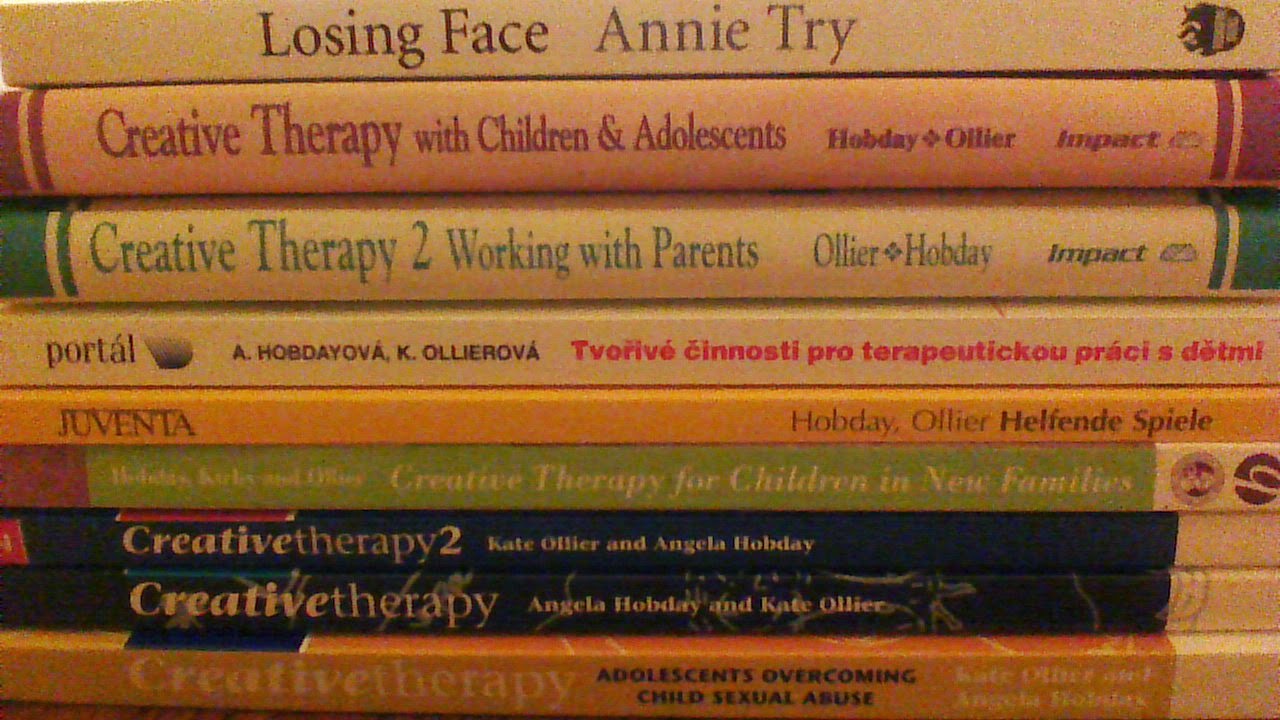 Annie Try’s published novel, Losing Face, is a tale of teenage friendship and overcoming adversity. Her next novel, Trying to Fly, is due to be published by Instant Apostle next January. As Angela Hobday she has co-written several books on working therapeutically with children and is also the Chair of the Association of Christian Writers..

