
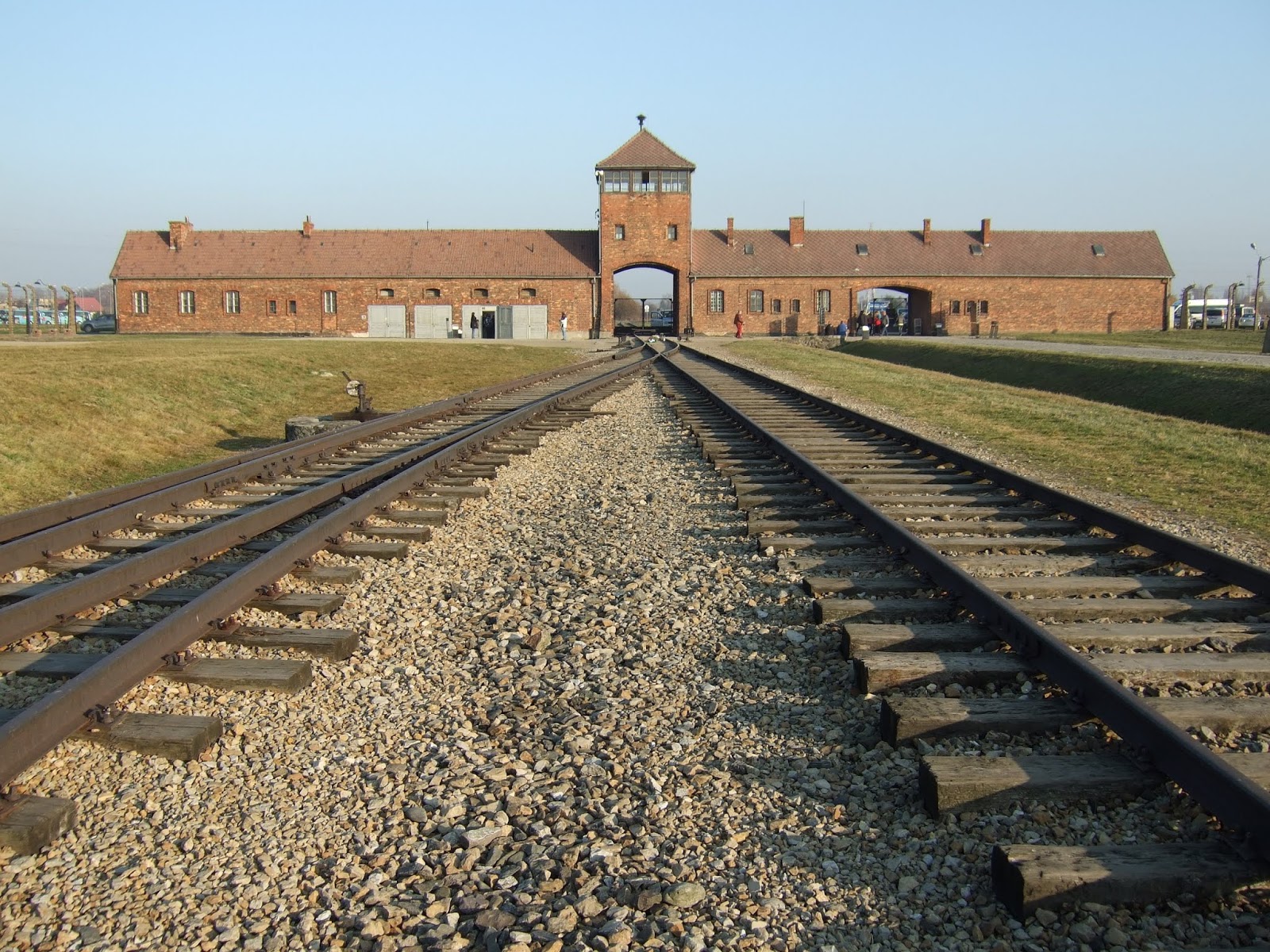
I meant to keep a journal on the 2011 trip to Poland but words wouldn’t come. Then our guide suggested we try to see it all in colour. What did he mean?
I thought of Schindler’s List with its 2-dimensional monochrome approach – except for the little girl who appeared in red until she emerged one last time, faded and dead on a cart, lost among a tangle of bodies.
No, not for me the clamouring nightmares, the vivid playbacks that still bedevil survivors. I was more comfortable with discussion, ideas, opinions because to experience what happened in colour is unbearable.
But seven decades on, the stones still cry out in mute testimony, their naked messages ready for those with courage to receive. I had to make a conscious decision to create space, enter into the silence and work out the colours.
The full colour palette of autumn was upon us when we visited the picture postcard woodlands of Zbylitowska Gora, site of the cold blooded slaughter of some 10,000 living beings. Evidence of the atrocity was blanketed by decades of fallen leaves. There were no voices. The trees had seen it all. They drooped their branches in ancient misery. The colour was red from oceans of blood that had not asked to be shed.
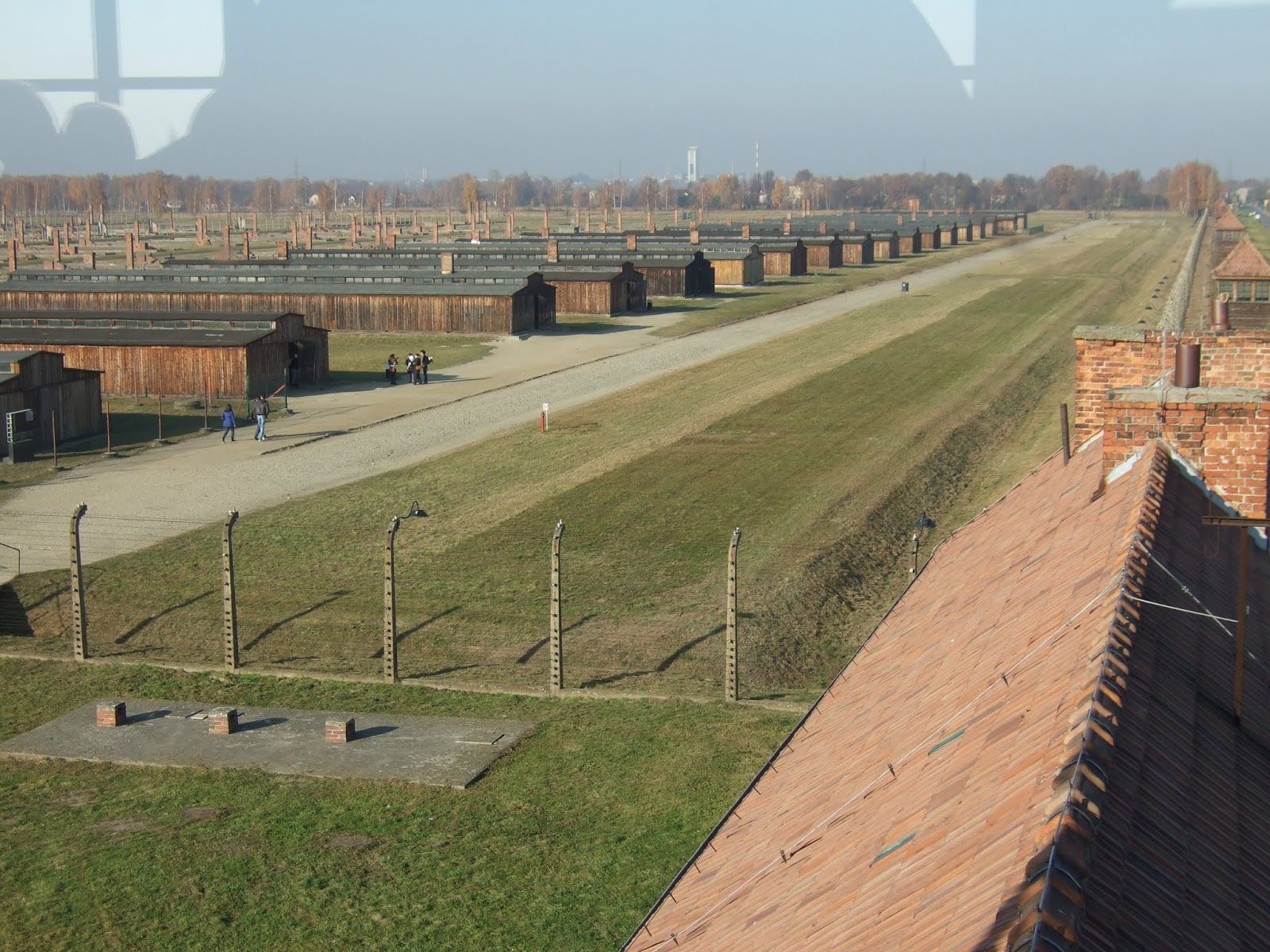 Next day, the gentle voice of Arek Hersh, an Auschwitz survivor, drew our attention to the colour green. The potentially beautiful site of Birkenau was covered in grass whilst the clear blue sky silhouetted distant trees shimmering with golden leaves. In 1944, said Arek, there had been no green – not a single patch of grass. Drought, we asked? Scars left by building works? No. Starving prisoners had eaten every blade.
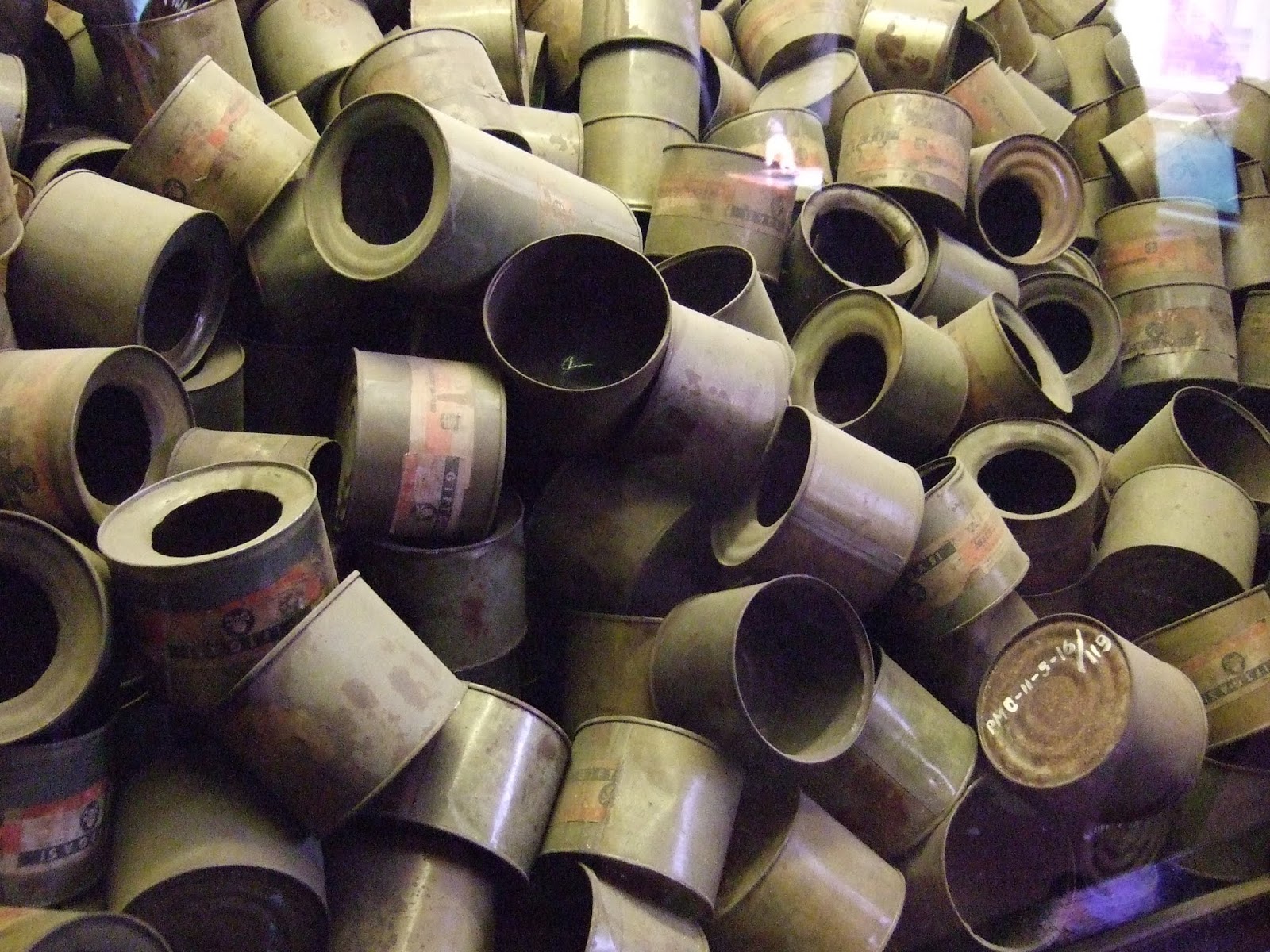 The blue-green crystals of Zyklon B (a cyanide based pesticide) looked harmless under glass in the Auschwitz museum. But in the gas chambers of Birkenau they proved lethal. Our quietly passionate guide, himself the great grandson of an Auschwitz survivor, described the camp as a ‘death factory’. We viewed 2 tons of human hair faded into a mousy brown over time. There were mountains of shoes, spectacles, brushes, toothpaste, kitchen utensils, suitcases, prayer shawls. Men, women and children were not able to leave us their thoughts because they did not know what was going to happen until too late. Here, the silence would explode if only it could be let out!
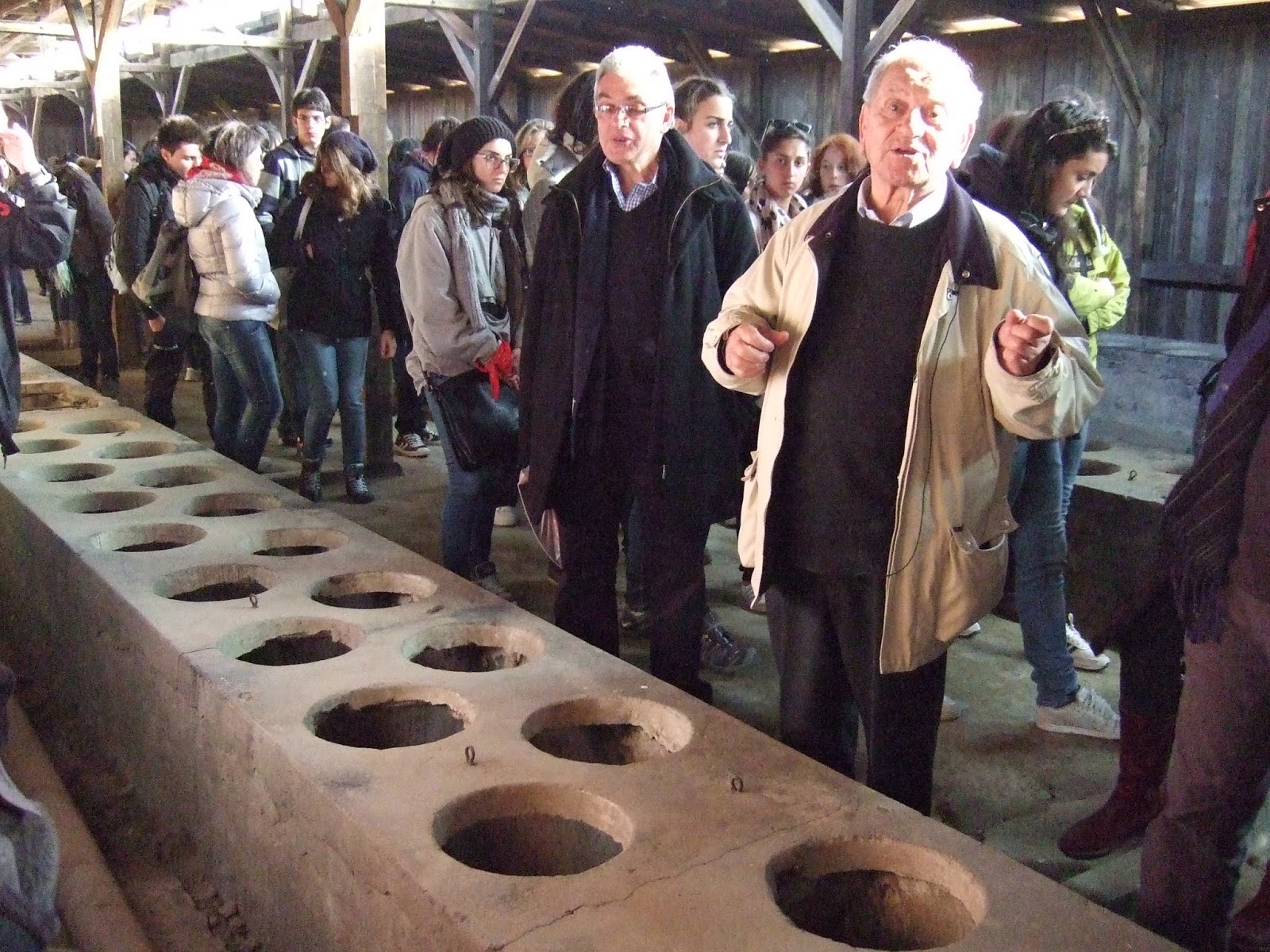 I had to bail out half way around Birkenau. Crowds, cameras, candles, flowers! What was I doing there? Was it just the latest ‘must do’ tourist thing? I felt guilty of voyeurism and had to find a quiet corner to reflect, weep and pray.
It happened in living memory in civilised Europe. How? Why? Many turned a blind eye, including large sections of the Christian church.
Halina Birenbaum urges us to ‘go and visit Treblinka’ where the ‘green, golden and white silence will tell you countless stories’. She talks of the ‘dead, thundering silence’.
Words aren’t enough. We must never forget.
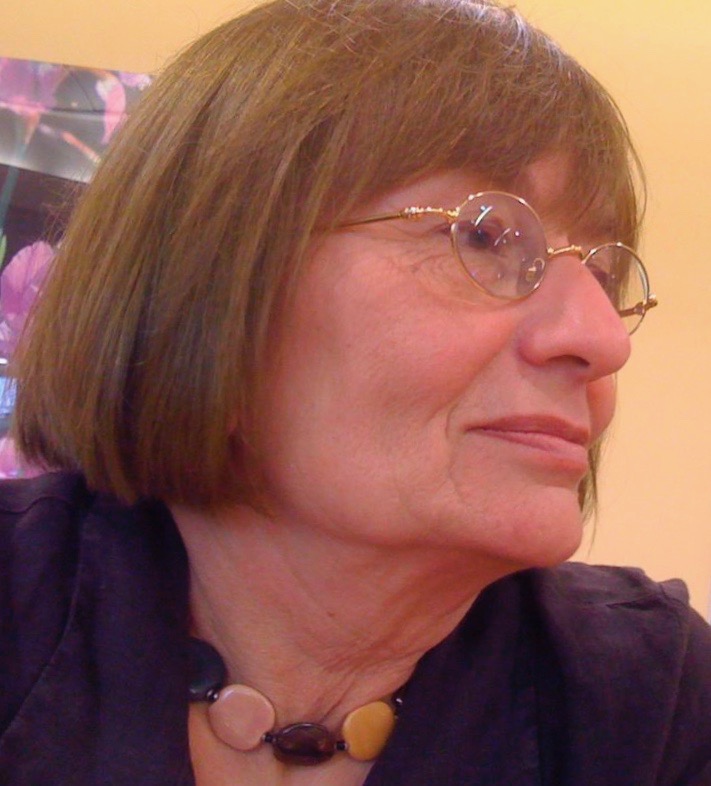
Eileen Padmore has retired from a life spent in health care and academia, having worked in Sierra Leone, Zambia, Eire and Northern Ireland (in the troubles) as well as inner city Birmingham and Leeds. She has had articles published in Woman Alive, Christian Writer and contributed to the popular ACW Lent Book – also claiming NaNo 2018 winner at first attempt. Married to a professional musician, the family includes a feisty springer spaniel and a large African tortoise.

