
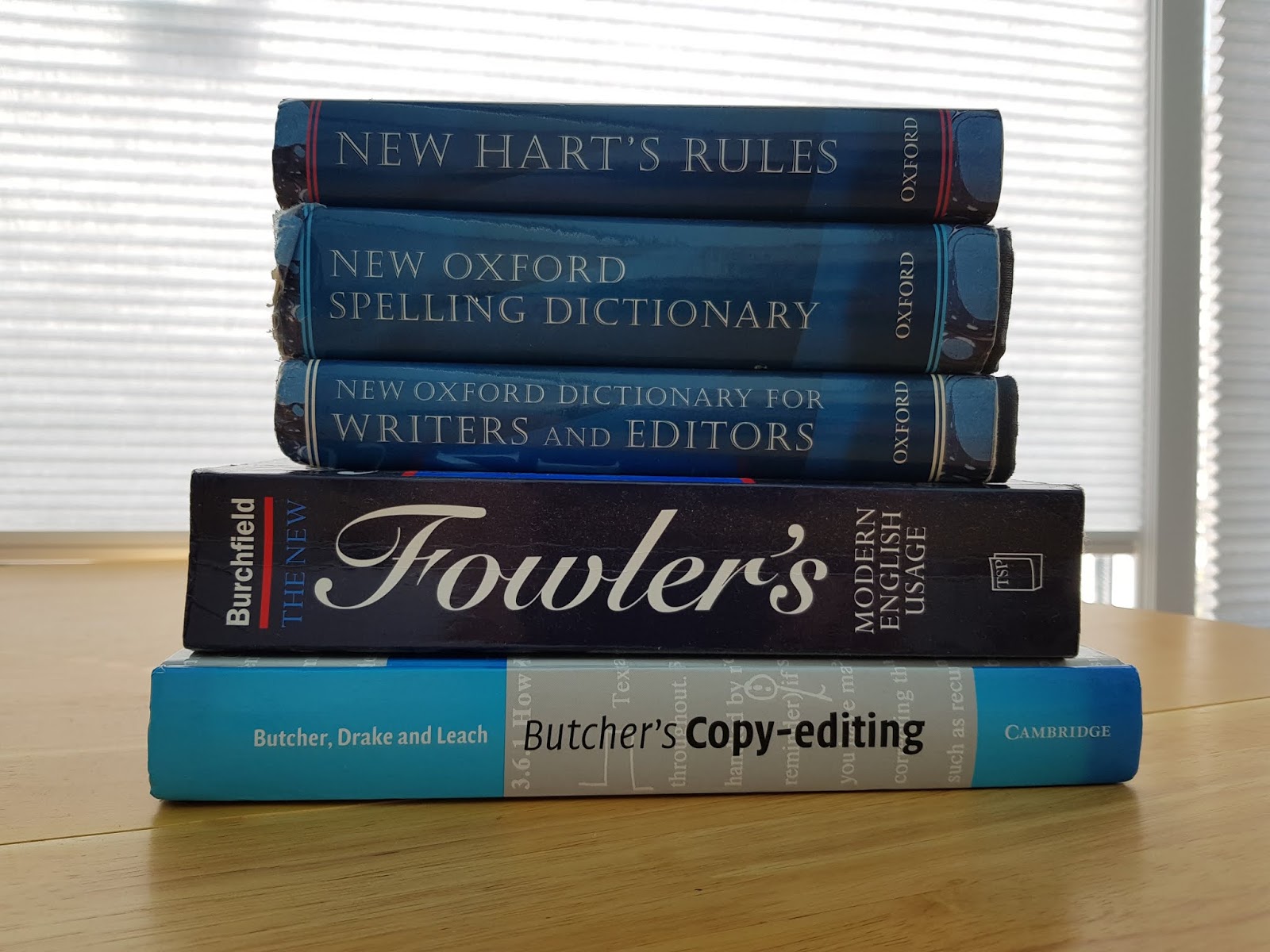
Words and grammar have always fascinated me. I remember when
I was doing my A levels, we studied a new module called ‘Varieties of English’,
which looked at different types and genres of writing, how accents and cultures
were represented, and so on. I think I was the only one in the class who looked
forward to these lessons!
So perhaps it was inevitable that I’d end up working with
words and grammar. Being a writer, editor and proofreader allows me to see
language from all angles – whether to convey my own message or to help others put
across their message in the clearest possible way.
So it’s my copy editor’s hat that I wear today (the one who
works on the nitty gritty of the text). In my work, I come across the same
issues on a regular basis. So I thought it might be helpful to explore some of
these. I hope it will be both interesting (there must be someone else out
there…?) and helpful.
I or me?
We all grew up being taught, ‘It’s not John and me; it’s
John and I.’ Well, often that’s true, but actually, sometimes ‘John and me’ is
correct. I won’t bore you with a long explanation, but the easiest way to work
out whether it should be ‘me’ or ‘I’ is to take John out of the picture (sorry,
John). So if you would normally say, ‘I am going to the shops,’ if you go with
John, you would say, ‘John and I are going to the shops.’ So far so good.
However, if you were to say, ‘She gave some chocolate to
John and I,’ that would be incorrect. Again, take John out of the picture (no
chocolate for you, John), and you wouldn’t say, ‘She gave some chocolate to I,’
but rather, ‘She gave some chocolate to me.’ Bring John back, and you get, ‘She
gave some chocolate to John and me.’
Practice or practise?
Which is the verb and which is the noun? Is there a
difference? And does it really matter?
In UK English, ‘practice’ is the noun and ‘practise’ is the
verb. (US English is different, but let’s not muddy the waters.) An easy way to
remember which is which is to think of ‘advice’ and ‘advise’. ‘Advice’, with a
hard S sound, is the noun, and ‘advise’, with a softer S sound is the verb.
Apply the same principle to practice/practise, and you’ve got it!
As well as … also
I see this one a lot. Basically, if you say something like,
‘As well as buying chocolate, she also bought cupcakes’ (I like chocolate – can
you tell?), you’re repeating yourself. You don’t need ‘also’ because you’ve
already said ‘as well as’. Other ways of saying ‘also’ are helpful to avoid
repeating the same word – furthermore, moreover, in addition – but we only need
one of them in the phrase.
I hope this is helpful. Do let me know in the comments – if
so, I’ll bring some more next month!

Nicki
Copeland is a freelance writer, speaker, copy editor and proofreader – and
loves anything to do with words. She is the author of Losing the Fig Leaf
and Less than Ordinary? She is also responsible for the day-to-day
running of Instant Apostle publishers. When she has the luxury of some free
time, she can invariably be found with a book in one hand and some chocolate in
the other.

