
 |
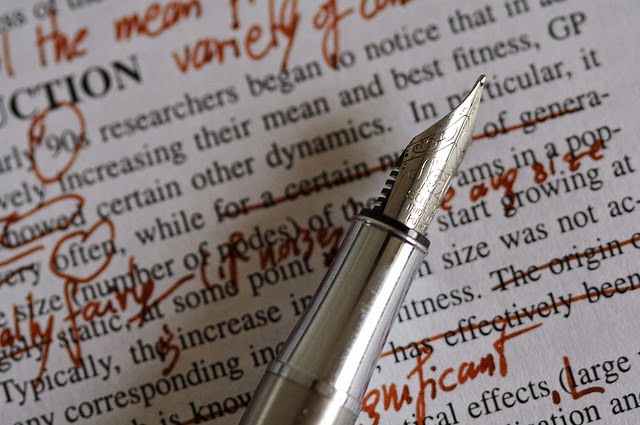
| Photo: Nic McPhee, flickr |
At Friday, 5pm, I met my deadline. Having pressed “send” to
my dozen reader reviewers with my manuscript, I was pleased to finish the first
draft. I’d done a fair bit of rewriting on the manuscript already, passing my chapters,
one by one, to my publisher for comment and critique. He unearthed hidden
agendas that needed axing and quirky ways of stating things that needed
rephrasing. Surely, I thought, the worst of the rewriting was over.
On Saturday at 3pm, I spotted an email from one of the
reviewers. As I opened it I glimpsed her warning for me to “buckle up,” for she
said she didn’t take a measured, British approach in her critiques but would be
straight with me – yet she thought my baby was beautiful and wanted it to fly.
I skim-read her thirteen pages of comments, the anxiety building in my gut, and
took myself to bed.
And yet from under the duvet, EditorAmy knew that WriterAmy
was merely suffering a typical first-time-author emotional reaction. It was my
turn to be on the receiving end of a critique – something I had dished out
countless times in the past. From my editorial experience I knew I didn’t want
to be an author who throws a conniption fit, spewing emotional garbage far and
wide – I had experienced that vomity stink a few times previously and knew how
damaging it would be not only to relationships but to my soul. So I thanked my
reviewer for her amazing speed and insights (which I knew rationally were there
even though my heart couldn’t see them) and squawked my pain only to my husband
and later, in measured tones, to my publisher.
My publisher read her critique and the others that followed,
commenting how amazing that even an editor-extraordinaire could feel the pain,
for he didn’t see anything suspect in their reviews. I agreed with him – a
month later, when the wave of emotions had returned to calm and I was ready to
hit the rewrite.
commenting how amazing that even an editor-extraordinaire could feel the pain,
for he didn’t see anything suspect in their reviews. I agreed with him – a
month later, when the wave of emotions had returned to calm and I was ready to
hit the rewrite.
For I may be an editor, but not when it comes to my own
work. Then I’m a writer, complete with feelings that can go wonky and a
stunning lack of objectivity. I can’t see in my words what’s muddled, or the
hidden themes, or even my pet phrases (“just” or “of course” anyone?). I need
the wisdom and grace of others who give me their feedback and opinions as they
help me shape my work.
My book will still have flaws when it’s published, and no
doubt I’ll spot a typo or mistake as I glance through the published product the
first time, as is so often the case. But wow, do ever I see the rewriting
process as a gift, producing what I hope is a tighter, deeper, and more
compelling book.
doubt I’ll spot a typo or mistake as I glance through the published product the
first time, as is so often the case. But wow, do ever I see the rewriting
process as a gift, producing what I hope is a tighter, deeper, and more
compelling book.
And that thirteen-page critique? My friend helped me so
much. Not only in spotting the places where I sounded patronizing or flippant,
but in naming my lack of confidence as a writer – how I was standing at the
door to the party, afraid to go in and sing my song, when I should be taking my
place on stage, belting out the melody that I was made to sing.
much. Not only in spotting the places where I sounded patronizing or flippant,
but in naming my lack of confidence as a writer – how I was standing at the
door to the party, afraid to go in and sing my song, when I should be taking my
place on stage, belting out the melody that I was made to sing.
Kill your darlings, friends; that they might live.
Over to you – do you agree that authors can have an over-the-top reaction to critiques? Have you any stories to share about a crushed ego or a rewrite that moved your work from good to excellent?
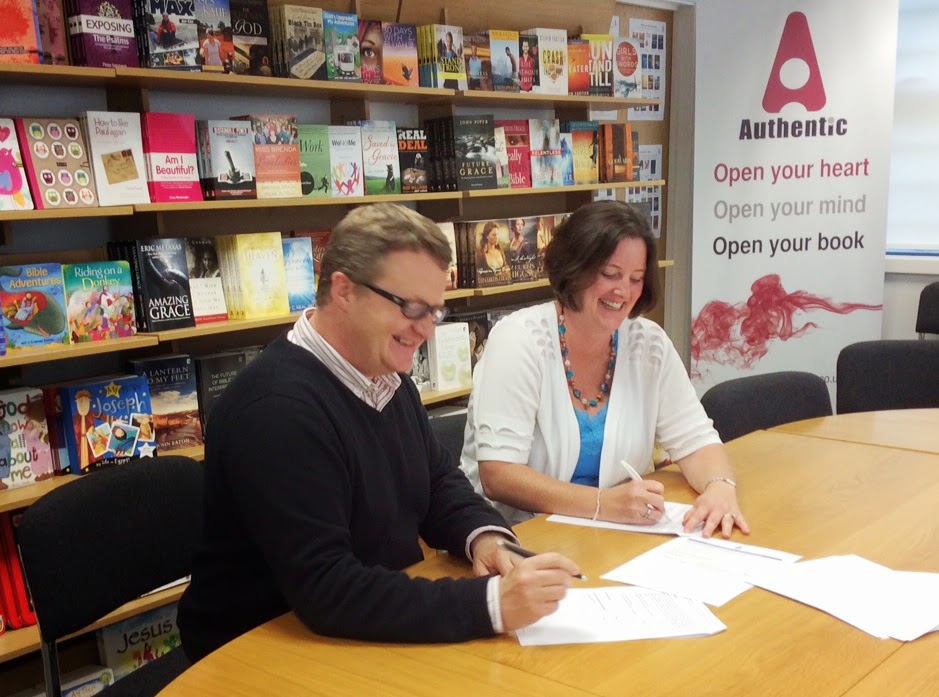 |
| The momentous day of signing the contract for my first book, with publisher Steve Mitchell. |
Amy Boucher Pye was a commissioning editor with HarperCollins and Zondervan when she worked with amazing authors such as Adrian Plass, Rob Lacey, Michele Guinness, and Jeff Lucas. She still dabbles with her first love of editorial work, commissioning for Authentic Media – her authors include Conrad Gempf, Chine Mbubaegbu, and Cathy Madavan. She blogs and tweets and would love to connect with you. Her first book will be published in October: Finding Myself in Britain: Our Search for Faith, Home & True Identity. She’s lost count of how many times she’s rewritten it but finally, yesterday, submitted it for proofing. Oh, except for the recipes, which still need rewriting.
Originally written by Amy Boucher Pye

