
How I admire historical fiction writers! It’s really only in recent years that I’ve become a keen reader of historical fiction and for several months now I’ve felt I might like to write historical fiction myself.
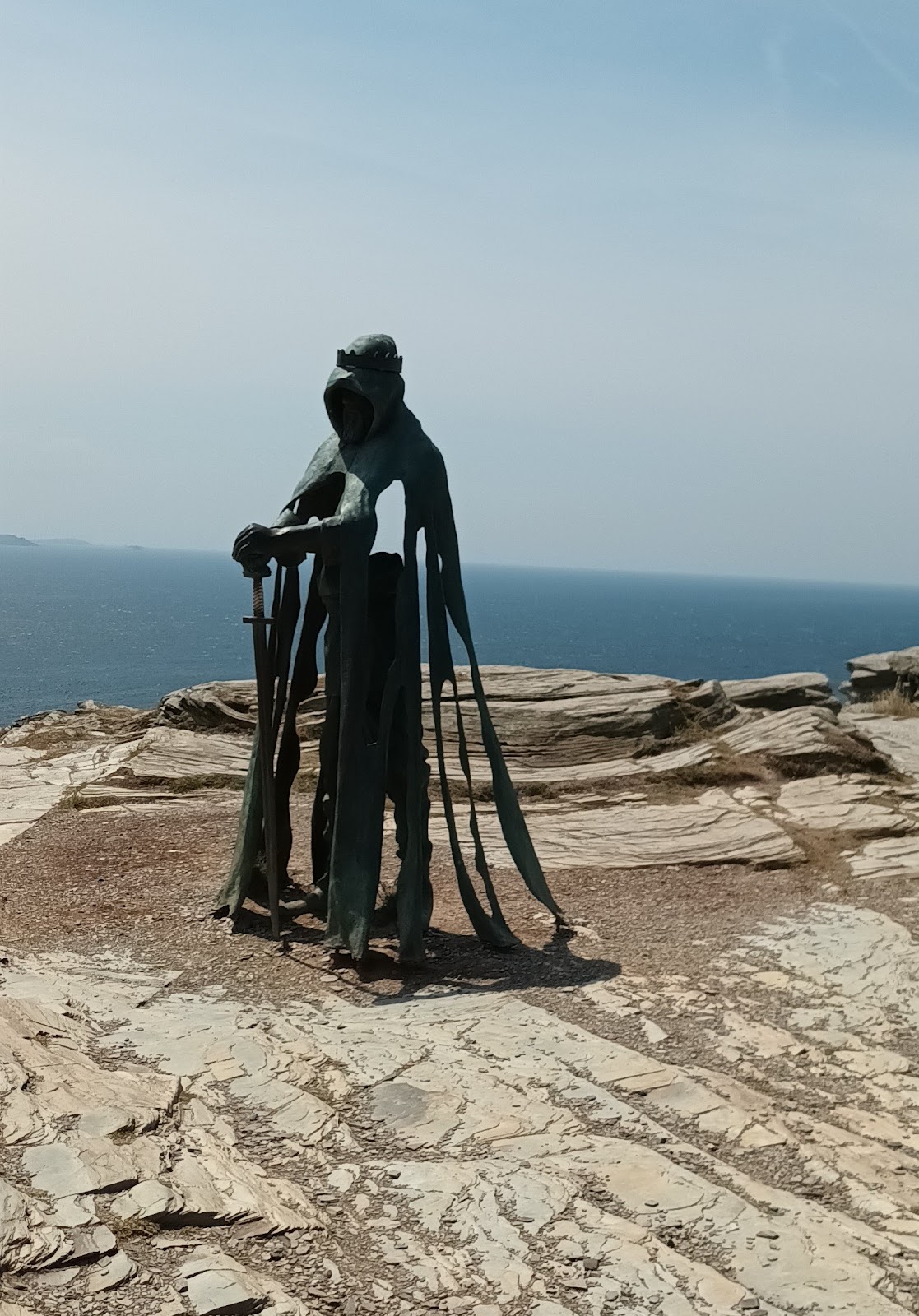 |
| A Kingly figure at Tintagel Castle |
Currently, alongside my nonfiction books on Warwickshire, I write mystery novels with a dash of paranormal and supernatural and a dose of the gothic. England’s history often comes into it – especially in my latest one, Director’s Cut, which I’m currently trying to place with a publisher. It’s set in a seventeenth century house whose inhabitants believe themselves locked into an intergenerational curse. I have read real life cases of this kind of thing, among families living in period properties, and it has a lot to do with the history of the house. In the case of my own story I make several references to the period of the English Civil War. My story has a contemporary setting, with many historical references.
But, when considering the possibility of writing historical fiction, the question always arises: which period should I choose? Obviously, I don’t want to settle on a period already over-represented in fiction, however fascinating I find it. The Tudors seem to be in top position at the moment, and have been for quite a while. That may be partly because decisions made in those times still have a significant impact on our lives today.
So what period to choose? And what about research? Well, you may say, why not choose a period that hardly anybody knows anything conclusive about, to challenge you with? What about…. the so-called Dark Ages?
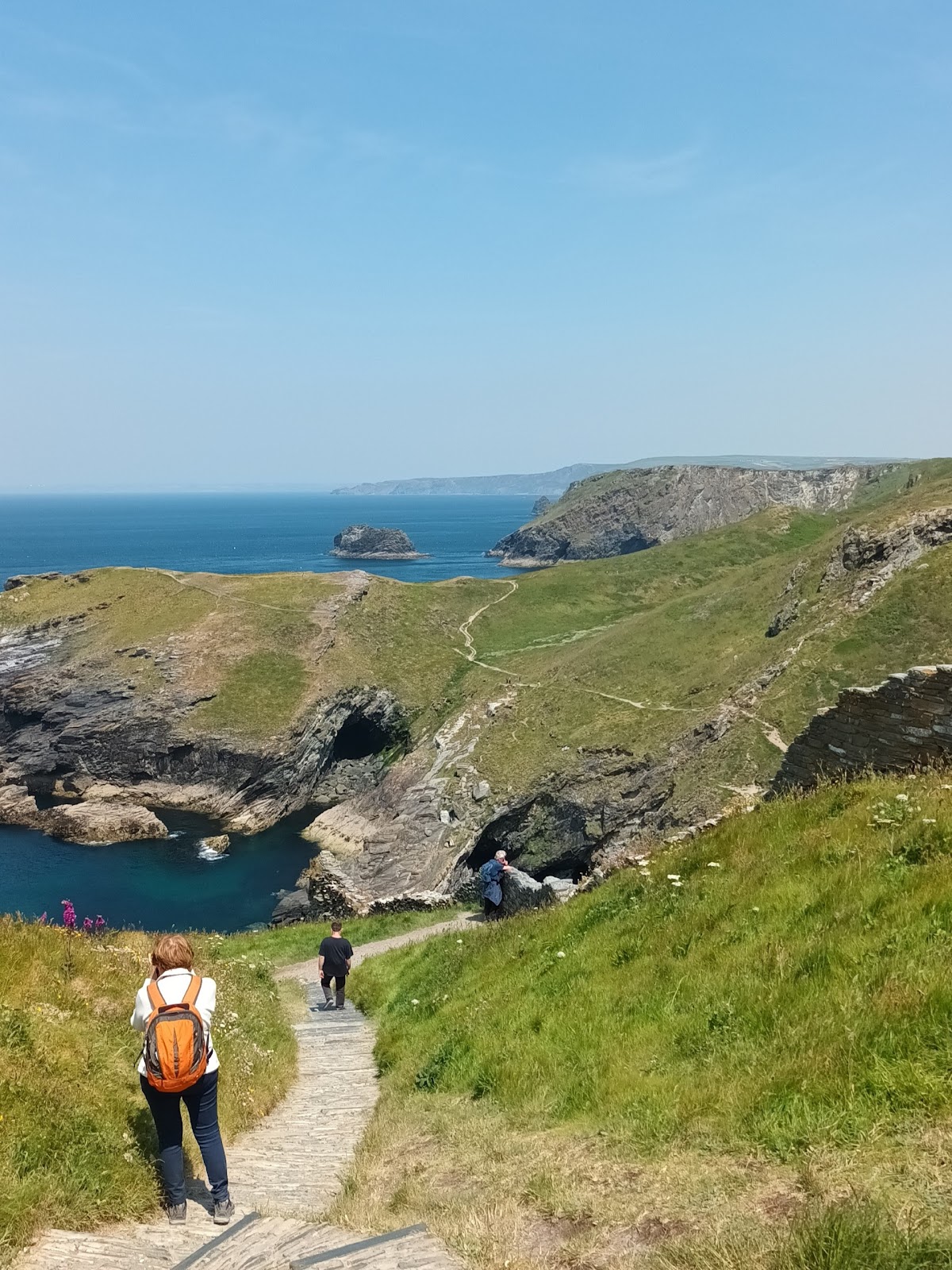 |
| Visitors climbing down the rocky headland at Tintagel Castle |
Recently I re-visited the headland at Tintagel, a glorious, dramatic location. Its association with the myth of King Arthur, and the many archaeological discoveries there, fascinate me. I bought a book in the English Heritage gift shop, which I’m now reading: Exploring the World of King Arthur by Christopher Snyder.
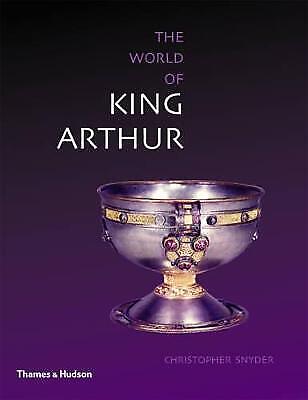 |
| Exploring the World of King Arthur by Christopher Snyder – book cover image |
The contents include:
the historical background of Arthur’s Britain, including the contributions of the Celts and the Romans;
The culture of Arthur’s Britons and their battle for supremacy against the Picts, the Scots and the Saxons
The chronicles and legends of the Britons, from the writings of St Patrick to the prophecies of Merlin
Many other elements are included. Currently I’m immersed in the fifth and the sixth centuries, those supposedly ‘dark’ centuries when we have no written record other than those by St Patrick and Gildas. They were the times after the Romans officially announced the Britons could now defend themselves, and left these shores to fight their own battles elsewhere.
From then on, hoards of invaders from every country in Europe, it seems, swept in, (with of course no opportunity to consult with each other beforehand over their plans!!) to try their luck at taking over Britain. What amuses me is that one of the local chieftains agreed to hire Saxon mercenaries to help them, and when those mercenaries arrived it wasn’t long before they decided to just try and take over themselves.
As one of my favourite books, 1066 and All That, expresses it:
The withdrawal of the Roman legions to take part in Gibbon’s Decline and Fall of the Roman Empire (due to a clamour among the Romans for pompous amusements such as bread and circumstances) left Britain defenceless and subjected Europe to that long succession of Waves of which History is chiefly composed. While the Roman Empire as overrun by waves not only of Ostrogoths, Vizigoths, and even Goths, but also of Vandals (who destroyed works of art) and Huns (who destroyed everything and everybody, including Goths, Ostrogoths, Vizigoths, and even Vandals), Britain was attacked by waves of Picts (and, of course, Scots) who had recently learned how to climb the wall, and of Angles, Saxons, and Jutes who, landing at Thanet, soon overran the country with fire (and, of course, the sword).
The writers of 1066 And All That, W.C. Sellars and R.J. Yeatman, have never been bettered, in my view, and they anticipated Horrible Histories by seventy years.
Of course, the humour in 1066 And All That can only be fully appreciated by those who know their history well. But I must confess that I now feel tempted to write a novel from the point of view of a Vizigoth or a Pict (know nothing whatsoever about them, as individuals)! However, at the moment, I’m reading through my book on the World of King Arthur, and find it utterly absorbing. During my reading and note-taking or perhaps by the end I hope to have a much more focused idea on what kind of story I might write, whether it be nonfiction, historical fiction, time-travel or simply an element in another contemporary novel.
I welcome any thoughts and ideas from seasoned historical fiction writers who read this post!
 |
| SC Skillman, author
Sheila lives in Warwickshire, and writes mystery fiction and non-fiction under the pen name SC Skillman. She is a member of the Society of Authors and the Association of Christian Writers. Her nonfiction books on Warwickshire local history are published by Amberley and includes Paranormal Warwickshire and Illustrated Tales of Warwickshire; her next book A-Z of Warwick, will be released in November 2023. Her new novel Director’s Cut is with publishers and she is working on the sequel. |

