
What would you say were the writing highs?
Your first piece of writing (aka “the I did it” moment!)?
Your first publication credit (the “family start to take you seriously” moment!)?
Your first book acceptance (the “some of the rest of the world start to take you seriously” moment!)? Sadly, it always is some of the rest of the world…
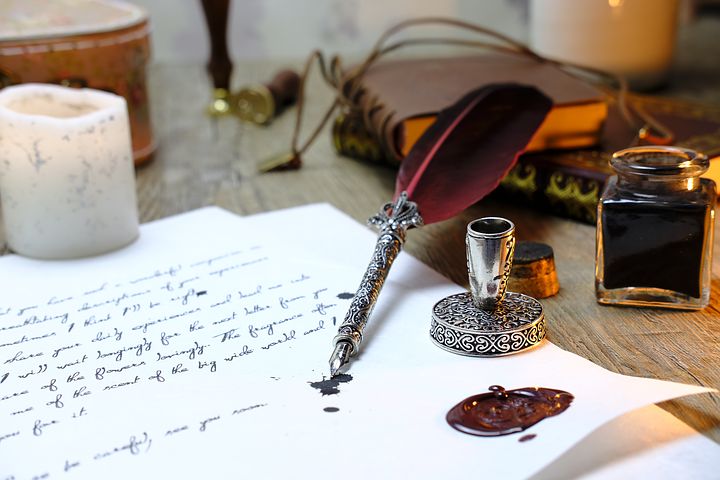 |
| Writing – the old school way. The VERY old school way! Image via Pixabay. |
What would you say were your writing lows?
That first rejection?
Having your novel come back for the umpteenth time?
Countless short stories turned down?
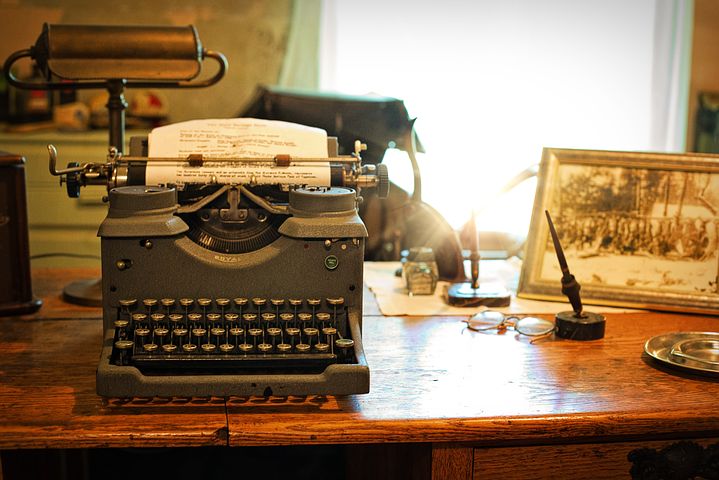 |
| I recall using a manual typewriter. Pixabay image. |
The great irony, of course, is, with the right spirit and attitude, a writer can use those rejections and set backs to (a) fill them with determination to keep going, (b) to improve on what they do so the turn downs don’t arrive so often as they once did, and (c) recognise all writers go through this.
There are no shortcuts to publication. Also, even when published, the learning curve goes on and you have to be open to it. The writer that doesn’t learn is the one who remains static. What is static dies, eventually.
 |
| As I write now… Pixabay image |
So then it is a question of relishing the highs and getting through the lows, which is where the support of understanding writing friends is crucial. One of the things I love about social media is the fact it makes it easier to stay in contact with said writing friends, especially when you can only meet up face to face once or twice a year.
 |
| Plugging in for new ideas, maybe? Pixabay image. |
Writing forums such as the one we have on the ACW website are also useful for this kind of contact (and for sharing helpful advice and tips too). Going to a good writing conference is invaluable too given that for most of the year we are at our desks, working alone.
 |
| Coming up with a great new idea always makes me smile too, as did this image from Pixabay. |
Peter, of course, literally had his mountain top experience but his low was clearly his denial of Christ. (What I love about Peter’s story is his redemption – it offers hope for us all). So this pattern of highs and lows then is a reflection of life as it is lived and not just the writing life.
Our characters must have their highs and lows. Without them, there is no conflict yet alone a story. The highs and lows are not just the story events but what is in those characters. No villain should be all evil (there must be a decent reason for them acting the way they are, decent to them at least). No hero should be a goody two shoes.
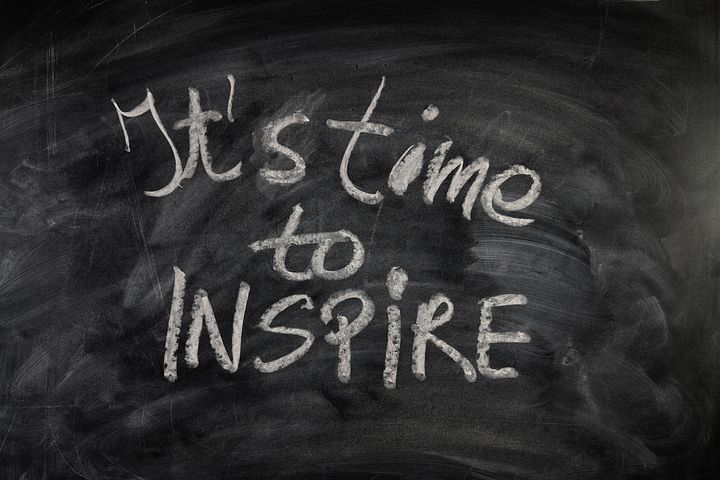 |
| An inspiring thought. Pixabay image. |
Much as I loved Little Women by Louisa May Alcott, I found it easier to identify with Amy or Jo rather than the saintly Beth. Identifying with your characters is the goal. The moment a reader does that, the more likely it is they will read on and find out what happens.
Show the flaws. Show the vulnerabilities. Show the things the character does well. Enjoy the process. And good luck.
 |
| Those light bulb moments… Pixabay image. |

