
 |
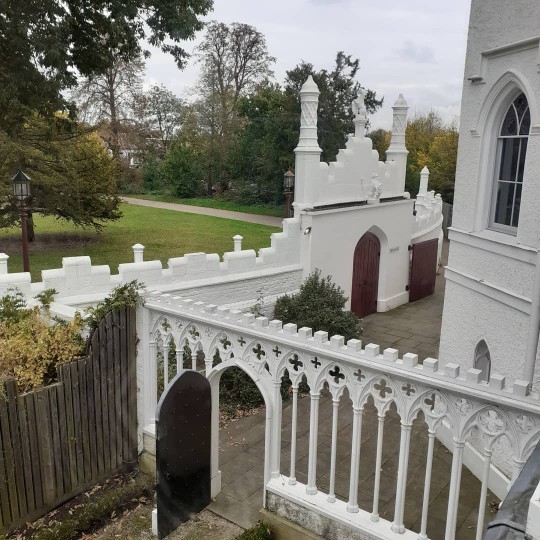
| Strawberry Hill House, Twickenham, designed and owned by Horace Walpole, author of the first gothic novel in the English language – photo credit SC Skillman |
Recent experiences have set me thinking much more deeply
about genre. Once author Fay Sampson, multi-published
novelist and longstanding ACW member, said to me that she uses her crime novels
as a vehicle for what she really wants to say.
I didn’t set out to write crime novels, but a story about a
family history researcher turned into one without my making a conscious choice.
The rest followed. I would never write one that was just about solving a
mystery, instead, I weave into them the
things I really love – history, sacred places, legends and myths. So the format
is to suit the market, but the content is my personal enthusiasm. (Fay Sampson)
So, for Fay, crime fiction is her genre for saying the things she cares about. For me, it’s the gothic genre. It’s said that when choosing your genre as a writer, you can
only be guided by the kind of books you enjoy reading. The gothic genre has been
present in all the novels I have most loved throughout my life.
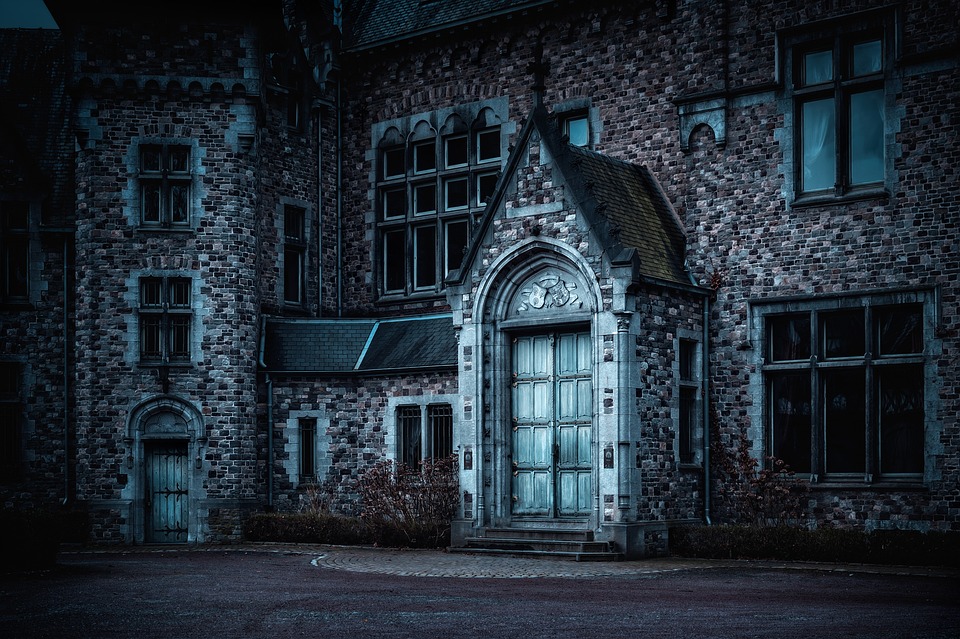 |
| A suitable setting for a Gothic novel |
My early loves
were the Brontë sisters: The Tenant of Wildfell Hall, Wuthering Heights
and Jane Eyre. I loved Daphne du Maurier’s Rebecca, Dickens’ Great
Expectations, and The Picture of Dorian Gray by Oscar Wilde.
Other novels and stories that have (literally!) haunted me over the years
include the stories and poems of Edgar Allan Poe, The Strange Case of Dr
Jekyll and Mr Hyde by Robert Louis Stevenson, The Hunchback of Notre
Dame by Victor Hugo, The Woman in Black by Susan Hill, The Name
of the Rose by Umberto Eco, The Turn of the Screw by Henry James and
The Metamorphosis by Franz Kafka.
The Castle of Otranto by Horace
Walpole was all I hoped for and more, when I finally read it at last after
buying it in the bookshop at Strawberry Hill House, Twickenham, Horace’s gothic
mansion.
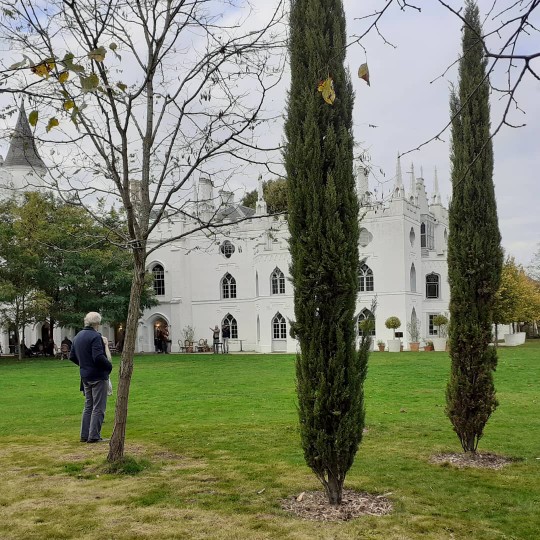 |
| Strawberry Hill House, Twickenham, Horace Walpole’s gothic fantasy of a house – photo credit SC Skillman |
And of course I loved Jane Austen’s satire on the gothic
genre in Northanger Abbey – in fact that was one of my inspirations for
my current novel.
Actor Tom Hiddleston surprised his interviewer when he was
asked to define the gothic genre, and he mentioned that it is a very
rebellious genre, providing a way of explaining things that are repressed…
ghosts are emotions trapped in time. The genre includes a young hero
or heroine drawn out of love to something dangerous,. In short, love
and death are at war in the gothic genre.
Alongside his wise definition, the tropes of this genre
include unrequited longing, thwarted desires, loss and regret and madness, a young innocent in jeopardy, a claustrophobic enclosed environment,
fear of the unknown, family secrets, a subterranean labyrinth, a taste of the
supernatural or paranormal. Using these tropes, the writer may explore the
deepest areas of the human spirit.
Currently I’m reading The Little Stranger by Sarah
Waters. Her paranormal premise doesn’t
make ‘sense’ at all, and there lies its power. Her slow build-up of fear, grief
and madness among the family is extraordinary. I love to find myself in a novel
which is utterly compelling, and I have to get back to it at every opportunity,
and the characters and their situation haunts me, and I wake up thinking about
them and wondering what is going to happen to them. It’s actually quite a rare
experience.
Recently I found this article online:
“Why we are living in Gothic times” by Hephzibah
Anderson
The article was published online on 15 March 2021 and is entitled The Books that are Channelling our Fears. It made me realise how relevant the gothic genre is to current world events. As Christians we are ever mindful of the supremacy of Christ and of the promise represented by him that ultimately love will prevail, but I don’t think any of us can be unaffected by the turbulent nature of our times and the fear and uncertainty that besets our world and indeed all of humankind.
Now we come to the reason why I’m refreshing my mind on this
subject: the other day I discussed my current novel with two fellow Society of Authors members. I shared that I’m thinking of making changes: more than one agent
has mentioned the pitch was intriguing and the writing strong, but as they read
the first chapter they failed to ‘connect with it.’ One of my companions,
herself a successful writer of gothic YA novels, read my pitch, and immediately
said, “She’s got to die.” This gave me a shock as the character in question had
a significant role to play throughout the plot. Then all my ideas about this were
turned upside down with the thought that the gothic tropes – and the
expectations I set up in my own pitch – require that this character should meet
an accidental and tragic death – early in the novel.
And so here I am looking again at the gothic tropes and reminding
myself, that I ignore them at my peril!
I’d love to hear your thoughts on how well you comply –
whether consciously or unconsciously – with the tropes of your genre!

Sheila lives in Warwickshire, and writes psychological,
paranormal and mystery fiction and non-fiction under the pen-name SC Skillman.
She is a member of the Society of Authors and the Association of Christian
Writers. Her non-fiction books on Warwickshire local history are published by Amberley and
include Paranormal Warwickshire and Illustrated Tales of Warwickshire; her next
book, A-Z of Warwick, will be released in 2023. Her new novel is with publishers,
and she is working on the sequel.
She was born and brought up in Orpington, Kent, and has loved
writing most of her life. She studied English Literature at Lancaster
University, and her first permanent job was as a production secretary with the
BBC. Later she lived for nearly five years in Australia before returning to the
UK. She has now settled in Warwick with her husband and son, and her daughter
currently lives and works in Australia.

