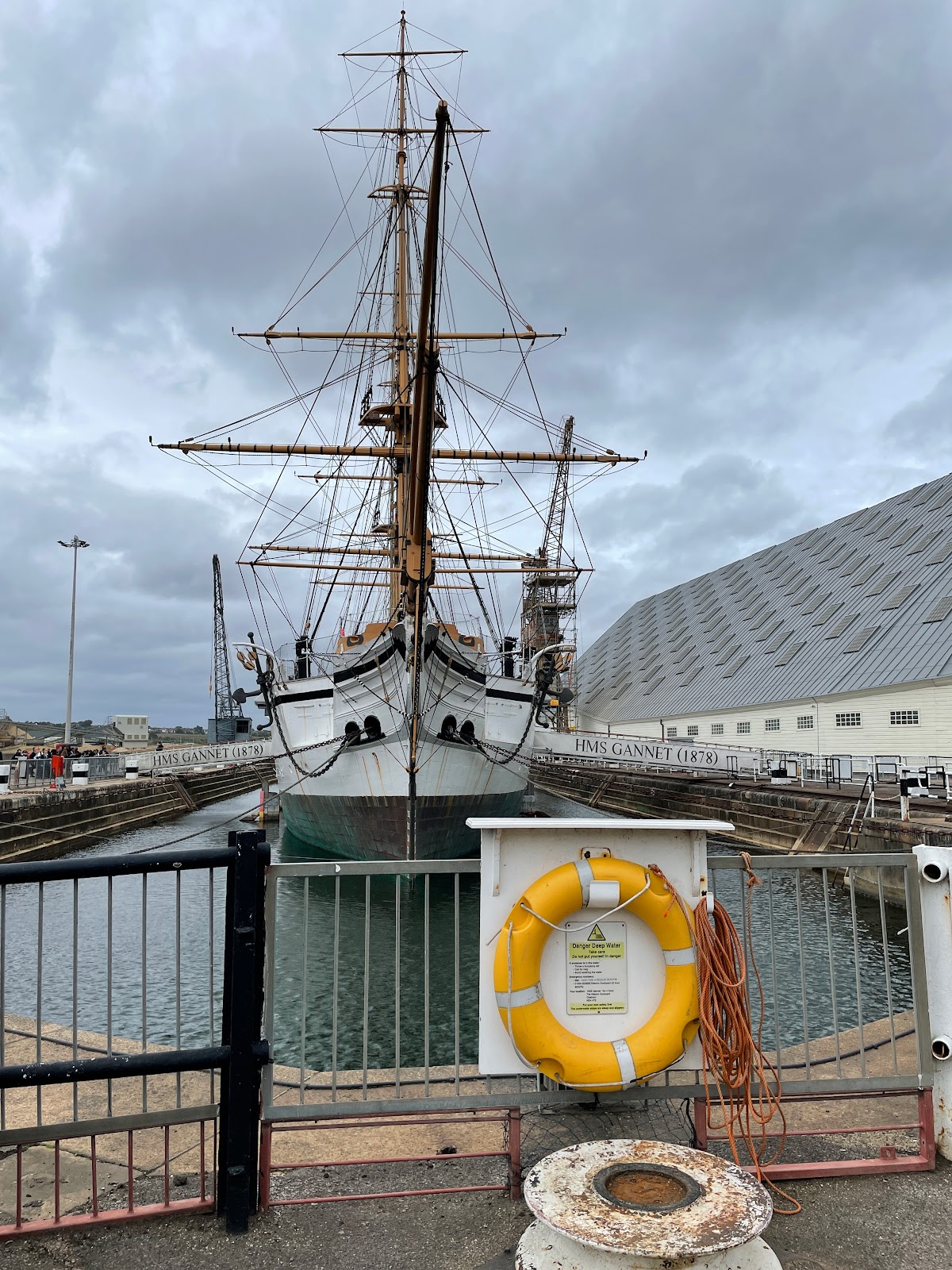
As I write this I am on a research trip to London, which in itself is a thrilling experience. Over the last two years I never thought I would be able to go on a research trip again. However, leaving that aside, why am I researching? I am currently writing a series of books based on the real life of a Naval Doctor from the early 19th Century. Hailing from Scotland originally, he died at the age of thirty-one in China, having led an extraordinary life in between. His first posting was to Melville Hospital in Chatham which led me to the first research visit of my trip. Yesterday I spent the day at Chatham Dockyard being looked after by a private historian and gaining access to their archives. Historical research is fascinating and really does reveal the strangest things. So, I thought I would share some of them here, not just from Chatham but from my recent trip to Surgeon’s Hall in Edinburgh. I hope you will be as fascinated by these facts as I am.
Firstly, to the ship above. This is HMS Gannet, which is similar to HMS Phlegathon on which my doctor sailed. I was surprised at how small it was as I imagined it to be much larger. This is important for my books as I get a sense of the place in which my character lived and worked. However, this was not the most surprising thing about the ship. As one can imagine, the largest cabin belonged to the Commander. He had a huge day cabin and a smaller sleeping cabin. Nothing strange there you may think. You would be right; except his day cabin had a humongous hole in the floor where the prop shaft was sited. For this was the time when there was a changeover from sail to steam. All I can say is, it must have been as noisy as all get out in the Commander’s cabin.

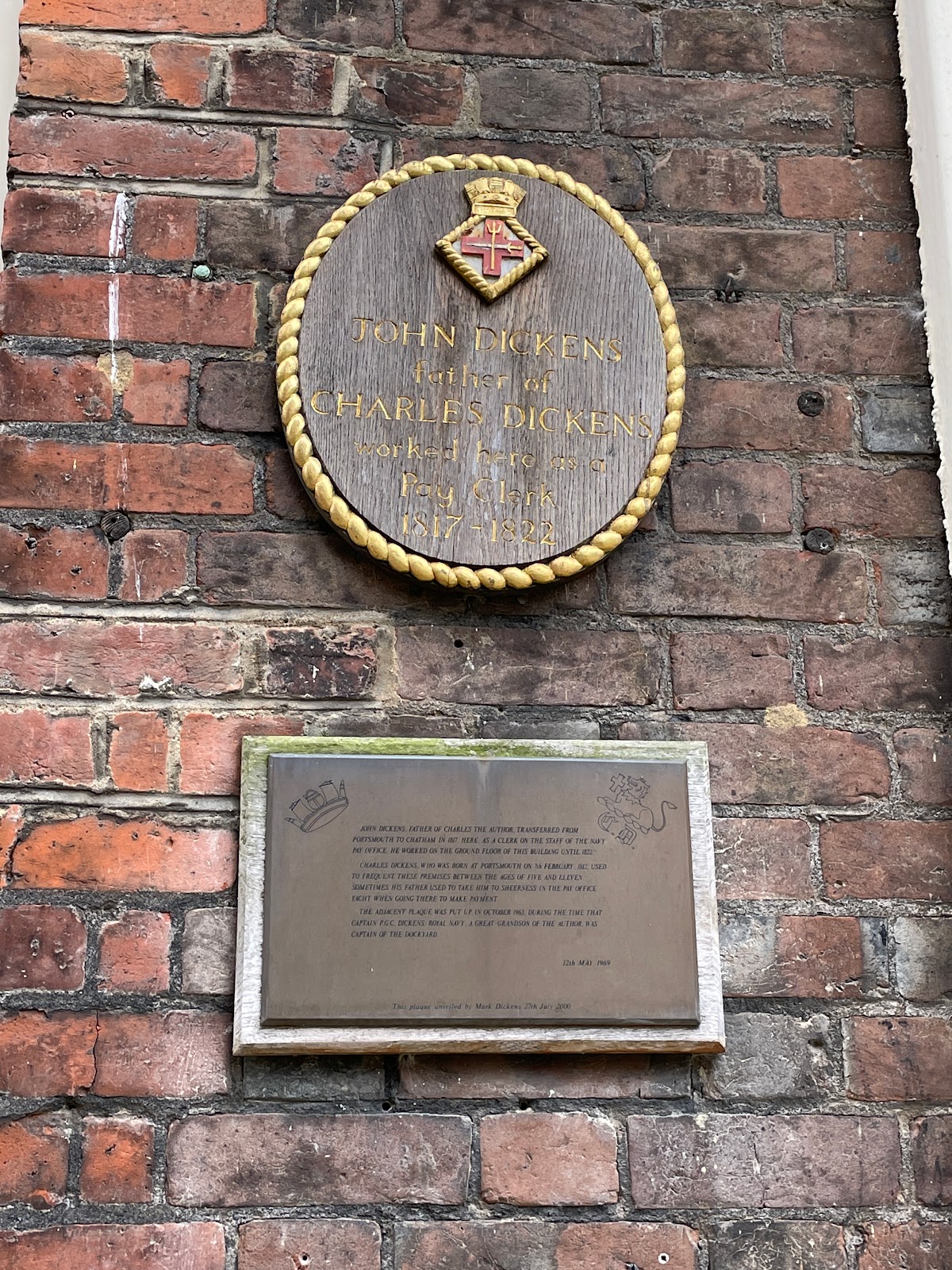
I was delighted to learn that Charles Dickens’ father was a pay clerk at the dockyard, albeit a few years before my chap. However, as Dickens came to prominence I am sure people would be gossiping about having known his father and maybe even Dickens himself if his father brought him in to the dockyard.
I also discovered that prisoners, convicted to be deported to Australia, were kept in hulks on the river until the ships were full, before setting sail for the Antipodes. It never even entered my head where these ships sailed from and I didn’t realise that they took the sails off the ships if they were anchored for a long period of time. Sails were difficult to make and were expensive, so they removed them to protect them. I’m not just talking sailcloth here, but the entire rigging. Hulks are ships which are unable to sail. Who knew?
Sleeping arrangements featured heavily as I discovered there was no Officer’s Mess in the dockyard, so Officer’s were billeted in the town. They were given a daily rate of pay but on top of that were given 1/-6 daily for victuals. When on board my doctor started out as an assistant surgeon. This meant he could not be admitted to the officers mess but slept in a hammock in the gunroom alongside the senior rates. The hammock also doubled as a shroud, so the men were literally sleeping in their coffin.
ON to Surgeon’s hall. As we are on a military medicine theme, I love this next fact as it makes my Scottish heart proud. Did you know that in the early 19th Century 100% of all military doctors trained at Surgeons Hall, the medical school in Edinburgh? Another surprising statistic is that 80% of all UK doctors trained there as well. Now, that is fascinating stuff. Also, Sir Arthur Conan Doyle based Sherlock Holmes on a medical student at Surgeon’s Hall. Go Scotland.
I guess what I am trying to say here is, research can be fascinating if you step out of the comforting realms of Google. You will learn things that will give your narrative a richness and lift it off the page. I did learn many other interesting facts but you will need to wait for the books to come out to find out what they are.
I will leave you with a question – what interesting facts have you discovered in the process of your research? I would love to know.
About the Author
Wendy H Jones is the Amazon #1 international best-selling author of the award winning DI Shona McKenzie Mysteries. Her Young Adult Mystery, The Dagger’s Curse was a finalist in the Woman Alive Readers’ Choice Award. She is also The President of the Scottish Association of Writers, an international public speaker, and runs conferences and workshops on writing, motivation and marketing. Wendy is the founder of Crime at the Castle, Scotland’s newest Crime Festival. She is the editor of a Lent Book, published by the Association of Christian Writers and also the editor of the Christmas Anthology from the same publisher. Her first children’s book, Bertie the Buffalo, was released in December 2018. Motivation Matters: Revolutionise Your Writing One Creative Step at a Time, was released in May 2019. The Power of Why: Why 23 Women Took the Leap to Start Their Own Business was released on 29th June, 2020. Marketing Matters: Sell More Books was released on 31st July 2020. Bertie Goes to the Worldwide Games will be released on 5th May, 202, and the third book in the Fergus and Flora Mysteries will be published in 2021. Her new author membership Authorpreneur Accelerator Academy launched in January 2021. Creativity Matters: Find Your Passion for Writing the third book in her Writing Matters Series was published in September 2021.
Originally written by Wendy H. Jones