
Last month I realized that my 26th-day
blog slot would fall on Boxing Day. I made a mental note to prepare in advance,
before I disappeared under a mountain of gift-wrap and mince pies. So, that went
well; suddenly it is late on Christmas Day, post-family celebrations, and I am
only just beginning.
Despite being a holiday for most in the UK,
Boxing Day can be an anti-climax: an in-between space of slumping in armchairs,
wondering what to eat, watch, play, or do next. Here in France, however, 26th
December is merely a Back-to-Work-After-Christmas day. In a country which
boasts eleven Bank Holidays per year and frequently adds bonus days to “make the
bridge” over a weekend, I can’t help
but feel that French bureaucracy may have missed a trick here.
Anyway, last-minute as ever was, here I am
in front of my screen, visions of “Good King Wenceslas” dancing in my head at
the approach of Boxing Day, the “Feast of Stephen”. I decide to investigate the
history of the carol. Written in 1853 by John Mason Neale, it sings the praises
of Wenceslaus, a 10th-century Duke (later King) of Bohemia, and exhorts us to
follow his example. A 12th-century preacher says of him, “His deeds
I think you know better than I could tell you; … no-one doubts that, rising
every night from his noble bed, with bare feet and only one chamberlain, he
went around to God’s churches and gave alms generously to widows, orphans,
those in prison and afflicted by every difficulty.” No Boxing Day slump for good old King Wenceslas,
then.
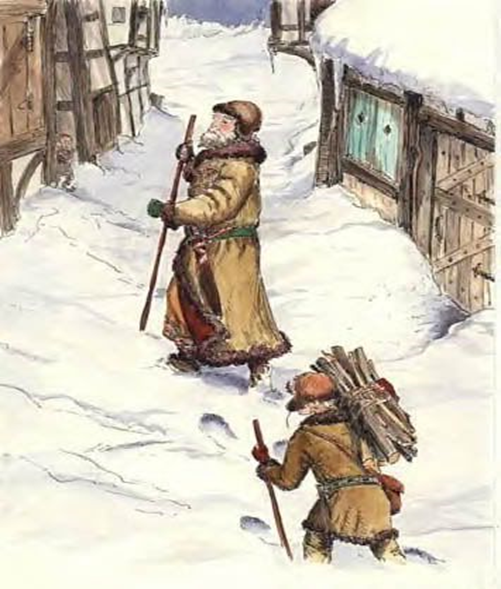
(Image: Pinterest/Photobucket)
As the clock inches past midnight, I take a
moment, as you do, to ponder this: what are my alms to give? My money, my writing,
my time? I don’t know about you, but I can easily find myself plodding in the discouraged
boots of Wenceslas’ page: “Fails my heart I know not how, I can go no longer”. Between
my intentions and my actions, an icy wind is blowing.
And yet, a whisper of hope. I discover that
for the setting of his carol, with its backdrop of snowdrifts, winter poverty, and
“the rude wind’s wild lament”, Neale perhaps incongruously selected the 13th-century
melody, “Tempus adest Floridum”, (“The Time is near for Flowers”):
a song to welcome the Spring. It feels like a sign that even in bitter depths of winter
struggles, as we hang on to our calling to tread boldly in the Master’s footsteps,
God is ever keeping and nurturing the coming Spring flowers of our work for Him.
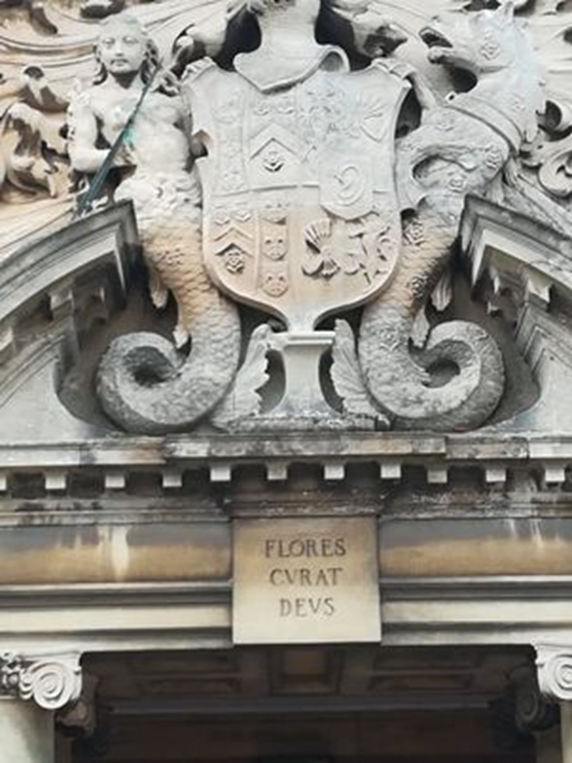
(My photo: The Pleasaunce, Overstrand, Norfolk)
You may have heard of Shamsia Hassani, the
talented graffiti artist of Kabul, Afghanistan. One of the leitmotifs of her
work is the dandelion clock. Instant affinity: I also love dandelion clocks, standing
proud in all their fragility. With a new government pursuing
and silencing creative work of all kinds, Shamsia is in dangerous, frozen territory. I had been wondering how I could use my poetry to bridge the space between us in some way. A tiny
step: I wrote this haiku, sharing it on her Facebook page with my photo of a
dandelion clock. I pray she knows that she is not forgotten.