
When I was asked to be a
regular contributor to the ACW blog, I was really excited. Projects keep me
focussed and motivated, and I had been feeling directionless since our book was
published.
Writing the book had been a
tough climb, taking almost double the time I had initially expected. It
included detours and dead ends and moments when I swore that I would never pick
up the pen again. Then came the moment when I could look back on the journey
from the peak, and all the sweat and tears along the way seemed
worthwhile.
I was not looking for
another mountain to climb. I was happy to do some gentle strolls. I
pulled out my mental map and could already identify several paths that seemed
worth exploring.
However, when I tried to
write my first post, I found myself on a desert road. The streams of
inspiration and imagination had dried up. Wherever I looked, my inner
landscape was arid and barren. The days passed, and I seemed to be going
around in circles. This is not what I had signed up for, Lord!
It reminded me of the
painful gulf between my expectations and reality when I was climbing
Kilimanjaro. Once again a journey I thought I was well prepared and equipped
for was taking me deeper into the valley.
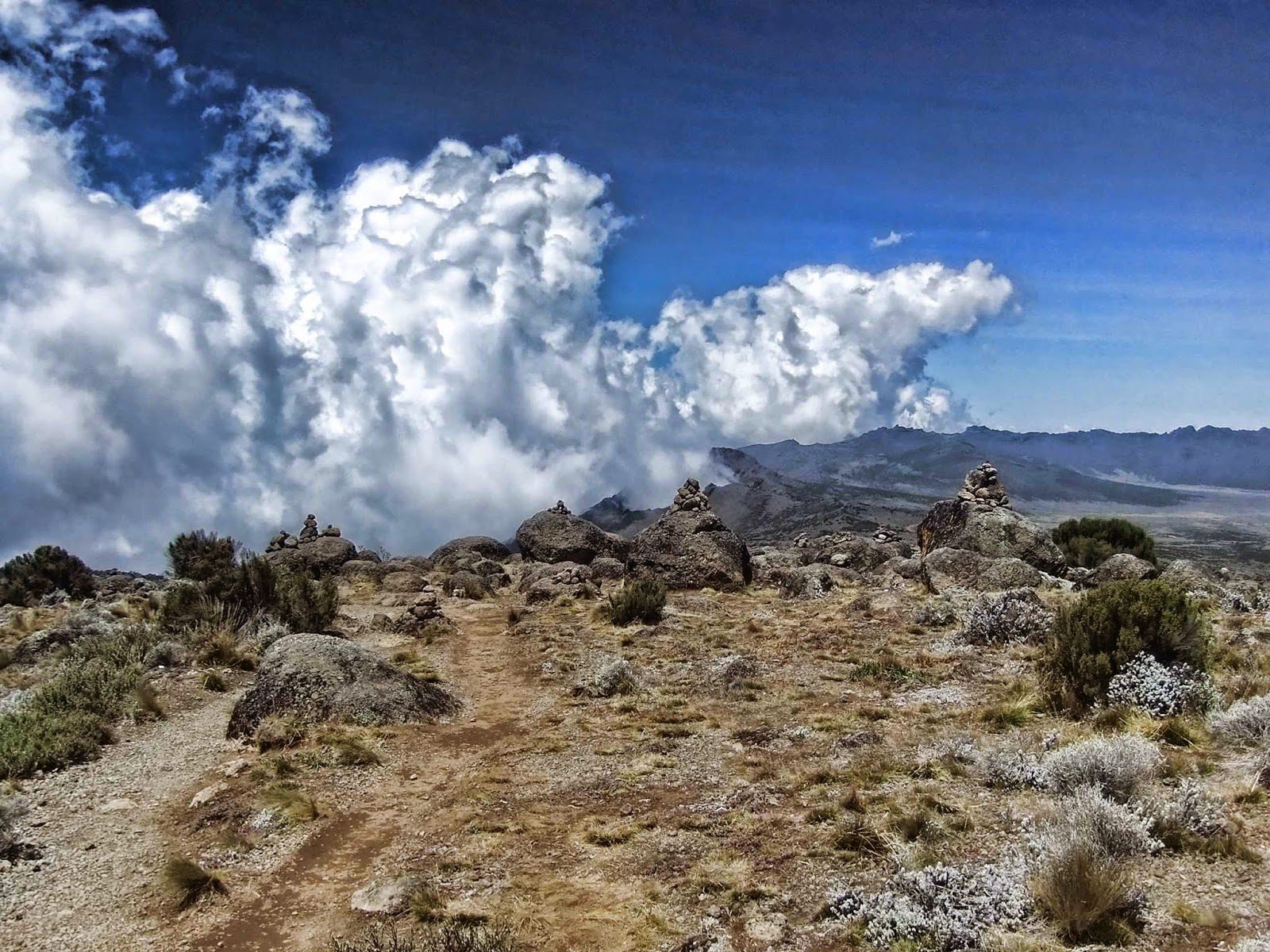
As I prayed, a picture rose
in my mind of white clouds rolling in over Shira 2 camp, a nudge to remember
and apply some of the lessons I learned on my Kilimanjaro trek:
unbearably heavy. I also kept comparing myself with other writers,
forgetting to ask myself whether my writing expressed who I was at this
moment and in this place.
Adopt a positive attitude. The words we choose to describe an
experience will shape our feelings and actions. “Writer’s block” –words with
a ring of foreboding. My mind painted pictures of impenetrable walls and no go
areas fenced in by barbed wire. But what if I thought of this as a spell of “writer’s
fog” instead? I started to feel hopeful. After all, the clouds over Shira
2 had simply dispersed when I had continued walking towards them.
Confront pride, doubts and fear. My inner mountains could only
end my journey if I stopped moving. While times of rest and reflection are
important, permanent standstill is lethal.
Accept valleys as part of the
journey. No-one can live on a mountain
top forever. Even Jesus spent a lot of time in the valleys. There is beauty and
life in barren places if we pay attention.
Keep walking. Others could help me carry my load and
encourage me, but they could not carry me. I had to keep putting one word after
the other.
My first blog post got finally written. I may
have been limping along, but I am still journeying, and that is the only thing
that ultimately matters…

