
cleaning, washing, dusting, sorting… and then six months later, you have to do
it all again!’
Ah, the cycle of futility! We are all part of it, like it or
not. And sometimes we don’t, so deeply that we wobble off the cycle for a
while, or in extreme cases altogether. I know two helpful books that address
this problem, one is called ‘The Quotidian Mysteries’ by Kathleen Norris, the
other is called ‘Ecclesiastes’.
So what problem, some of you might be asking in cheerful
bewilderment? The problem of living today what you lived yesterday and having
to do the same things all over again – not like Groundhog Day, reliving the
same events but each time with new creative possibilities, but an endless weary
cycle of action and response, like the grass growing and needing to be mowed
over and over again. The writer of Ecclesiastes sees this as the burden God has
laid upon man, and he ain’t wrong. It is a burden alleviated by thrill-seeking
but not eluded by it, and sadly thrill-seeking often ends with making the
burden feel heavier.
But there is a further burden God has laid on man, and that
is he has put eternity in our hearts. We are like caged birds, longing to soar
and fly, yet being confined by time and space, reduced to picking and
scratching and singing songs we can never follow in their flight.
Just before you give up on me, this is the condition Jesus
accepted when he became flesh. If we want to find a way to meaning and purpose,
we need to see through his eyes as he walked the earth and endured the burden
of mortality. And his teaching continually refers to living for the day, living
with simplicity, living obediently, but with hearts full of kingdom riches.
This is where I would recommend turning to Kathleen Norris
and her exploration of ‘acedia’ – the spiritual torpor or apathy associated
with repetitive monastic life but clearly experienced more widely. As a writer,
she understands this from a creative point of view, and has discovered for
herself that the cyclical burden of life has within it a wonderful potential to
bear fruit. Here are some snatches of her book (my paraphrasing):
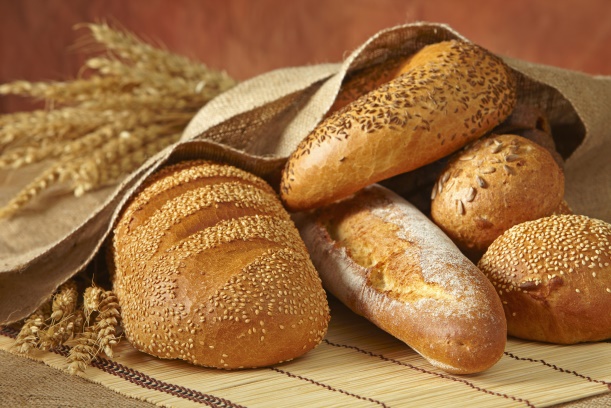
The sacramental is manifest in the ordinary – daily bread,
daily prayer – there is sacramental possibility in all things. The daily rhythm
of sunrise and sunset is a symbol of human hope. Creation is renewed every
morning; even Creation itself was a daily process. Grace, like manna from
heaven, is a ‘quotidian (daily) mystery’, i.e. it cannot be stored up for
future use but is given at the time of need. We are all engaged in priestly
work, in transformation, even in acts that seem futile to the world. It is in
the routine and everyday we find the greatest possibilities for transformation.
And so we live faithfully the daily mystery, finding grace
in daily bread, until we come to the day for which all creation longs when it
will no longer be subjected to futility, but will be liberated into the
glorious freedom of the children of God.

