
Who
did see the risen Jesus?
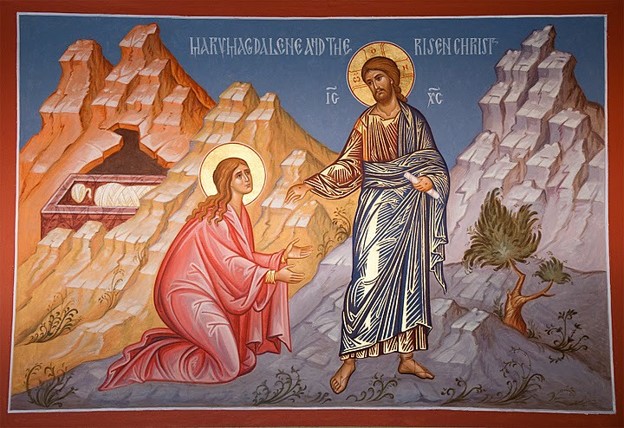
THEY SAW THE RISEN JESUS
Don’t you think it odd that the Apostle Paul, who generally shows respect and even-handedness towards women, does not mention Mary Magdalene, who was the first to meet the risen Jesus? Nor does he mention any of the other women who were present when the risen Jesus showed himself.
Paul tells us that during the forty days Jesus lived among us, he was
seen by many men, (1 Corinthians 15:3-8). But he does not mention one single
woman.
Peter saw him, Paul says, then the Twelve Disciples (Judas would be
replaced by Matthias). After that, he appeared to more than five hundred brothers
at the same time, most of whom were still alive at the time of Paul’s writing.
Jesus then appeared to James, his half brother, and “to all the
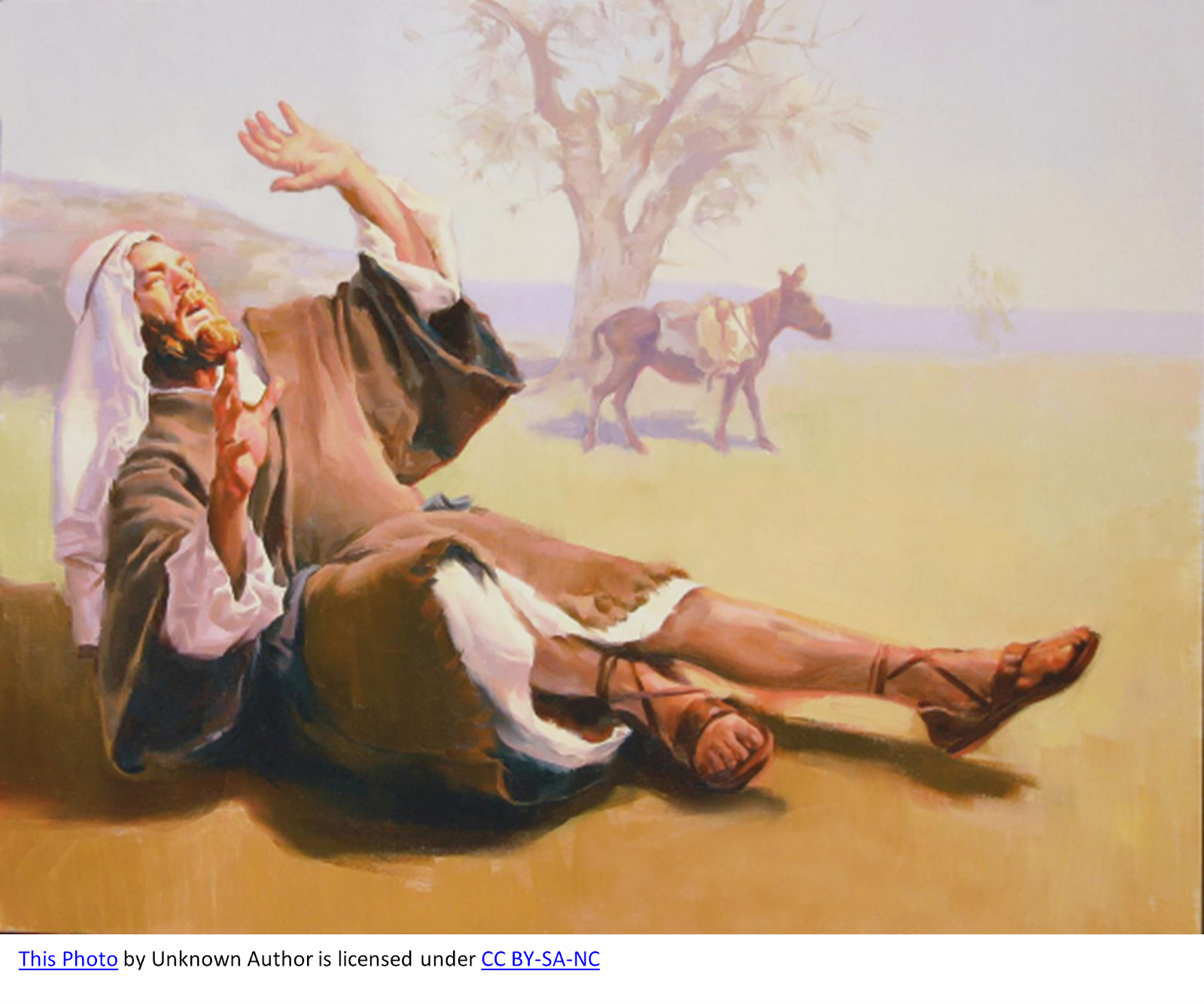
apostles.” Finally, he appeared to Paul himself, in a kind of time shift experience:
Jesus had already ascended to heaven but met with Paul by the roadside, as if
he still lived on earth.
Fortunately, the gospels do not suffer from Paul’s lack of females in
their accounts of who saw the risen Jesus.
MARY MAGDALENE
Matthew (28:1-10) tells us that Mary Magdalene and another Mary* met
Jesus on their return from the empty tomb, where an angel told them Jesus was
risen. I imagine they would have been shaking with the shock of it all. Jesus told
them to tell the disciples to go to the Galilee.
A similar account in Mark’s Gospel (16:1-8) tells us that when Mary Magdalene, Mary the mother of James and Salome** went to the tomb to anoint Jesus’ body, they heard from a young man dressed in white that Jesus had risen. The earliest manuscripts of Mark’s Gospel end with the women leaving and ‘not telling anyone’.
Yet it would not be long before everyone connected to Jesus knew what they had seen.
In Luke’s Gospel (24:1-12), Mary Magdalene, Joanna***, Mary the mother of James and other women went to the tomb early in the morning and found it empty. Two men in dazzling clothes appeared to them and told them that Jesus had risen. The women went and told the disciples, who didn’t believe them.
SITTING SHIVA
Presumably, the disciples were gathered to sit shiva, the seven days of mourning required within Judaism a kind of extended wake.
Since Paul and the gospels tell us the disciples saw the risen Jesus, then presumably all the women did, too.
In John’s Gospel (20:1-18), Mary Magdalene went to the tomb
early in the morning and found it empty. She ran to tell Peter and another
disciple, who came and saw that the tomb was empty. Mary stayed outside the
tomb weeping and saw two angels inside. Jesus appeared to her and told her not
to touch him, as he had not yet ascended to the Father.
She then ran to tell the disciples, famously declaring, “I
have seen the Lord!” (John 20:18)
The variation in names of the women mentioned by the
gospels as having gone to the tomb that Sunday morning is, to me, a question of
recall. If you were at a friend’s party, you might remember the names of only some
who were present. Ask another person and they might remember a quite different
set of people.
We know very little about any of them, even Mary Magdalene,
who appears in all four accounts. She was possibly from Magdala, a town adjacent
to Capernaum, on the shores of the Sea of Galilee.
Magdalene, which means ‘tower’, might equally refer to her
height – Towering Mary, if you like. It would not be surprising for someone named
Mary to have a nickname, given there were so many of them.
And Luke tells us that Jesus cured her of severe mental
problems. ‘seven demons’ (8:2). That’s it.
MARY OF NAZARETH
What is very curious to me is that Mary of Nazareth is not
mentioned at the tomb, yet we know from John that she was present at the cross
(19:25-27).
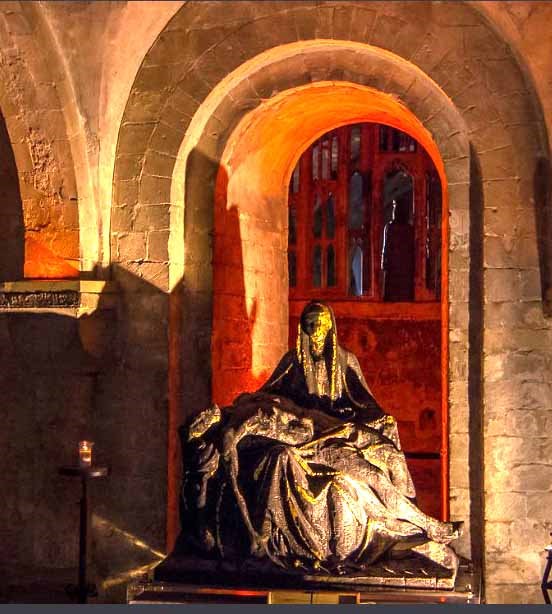
You would think that Luke, who turns over so many column
inches to Jesus’ mother at the start of his gospel, might mention her by name.
But he doesn’t.
We are not told anywhere that she even met the risen Jesus,
although we can assume that she did, from the account of his ascension in Acts
1:12-14:
“Then the apostles returned to
Jerusalem from the hill called the Mount of Olives, a Sabbath day’s
walk from the city. When they arrived, they went upstairs to the
room where they were staying. Those present were Peter, John, James and
Andrew; Philip and Thomas, Bartholomew and Matthew; James son of Alphaeus and
Simon the Zealot, and Judas son of James. They all joined together
constantly in prayer, along with the women and Mary the mother of
Jesus, and with his brothers.”
FORAGING FOR TRUTH
Since I am in the process of writing an account of Mary of Nazareth’s
challenging journey from mother to disciple that is bookended by Jesus calling
her ‘woman’ at Cana and on the cross—polite but not ‘imma’ (Hebrew for ‘mother’),
I would like to know where she was when the women went to the tomb.
She may have been with them. Or not.
If not, she may consider she was too distraught to accompany them. That
doesn’t look likely to me, since she stood so steadfastly beneath the cross to
the brutal end, according to John, who were mentioned above in the quote from
Acts 1:12-14.
Perhaps she had got up and gone to tell Jesus’ brothers. There had been
a rift in the family that must have tortured her. Jesus would not have made the
verbal will he made at the cross, giving his mother to John, had brothers James,
Joseph, Jude and Simeon been present.
We can only wonder when Mary learned her son had risen. Was she at the
tomb before the others? Did Jesus come to her as he did to her second son,
James, as Paul recounts in 1 Corinthians 15:7?
Of course, as with all things that took place two thousand years ago, we
shall never know for sure. What do you think?
*This other Mary was possibly the wife of Cleopas, who is thought to have
been the brother of Joseph, Jesus’ adoptive father.
** Salome is often said to be the mother of James and John. Since Jesus
gave John into Mary’s custody at the cross, it seems more likely that she was
their stepmother, particularly as Matthew 20:20-23 refers to her as, ‘the
mother of Zebedee’s sons.’ She may have been Jesus’ mother’s sister, which would
make her John’s aunt or step-aunt.
*** Joanna was the wife of Chuza, the manager of
Herod’s household, (Luke 8:3).

Bobbie
Ann Cole is a Christian writer, speaker and writing teacher. Read her posts about
biblical writing at her Scrollchest blog. The latest is What Genre Do You
Love?
Exploring Biblical Midrash, Fiction and
Creative Non-Fiction.

Ann Cole is a Christian writer, speaker and writing teacher. Read her posts about
biblical writing at her Scrollchest blog. The latest is What Genre Do You
Love?

