

How do you find information online that you need for your
writing? Why do Google, Safari and Edge
find different content, and why do some pages get to the top of the page and
others are further down? How can you improve the visibility of your writing
online?
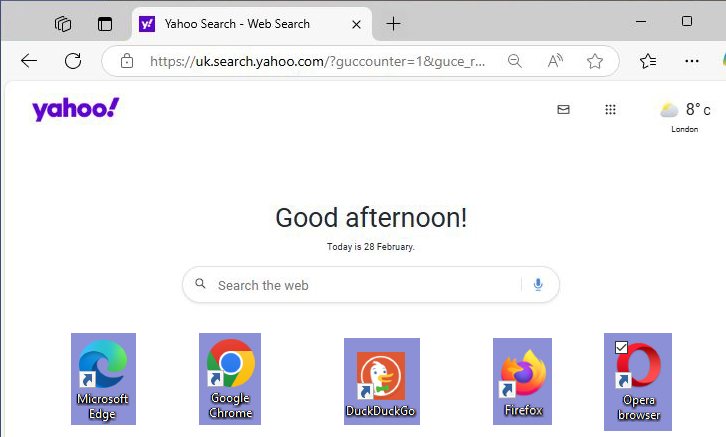
As a quick overview, browsers, such as Edge, Chrome,
Firefox, Duck Duck Go, Opera and Safari, use a ‘search engine’, like Google, Yahoo
and Bing to retrieve searches. Some set their own default, but you can select
your preferred one in the settings. A search engine (SE) ‘crawls’ through
published web pages and classify content to index them for retrieval later. When you enter search words or a phrase, algorithms (computer decision
processing) are used to match your search words with their pre-indexed stash. They
present the best matching pages, using a ranking determined by the algorithms,
in a process better known as Search Engine Optimisation (SEO). Each search engine will use different algorithms.
In the early days of the internet, the algorithms looked at information
stored in the web page code, called meta data, in addition to content text. Meta data contained descriptions and keywords (like hashtags on social media) to help
identify the content. Related terms are also identified. For example, if I
search for ‘shoes’, websites showing other footwear will also be returned.
Web programmers exploited embedded keywords to get
their content and company websites to the top page of search results. After all, who looks at
page 2 or 3, never mind page 202 or 203, of any search? They hid multiple, and
often repeated, keywords in the meta data. Some included common search terms
even if not totally relevant to their page to pop up on other searches. Over
time SE companies began penalising such techniques and pushed those pages down
the ranking and promoted matches to the text on a presented page. This is where
the content writer takes over from the web developer.
Writers are often encouraged to remove repeated words and
use synonyms. This brings variety to the reader but also works for search
engines too. Blog posts can attach labels, or keywords, via the dashboard panel
before publishing. This can be great to group your writing topics or for the
blog site to promote similar content, but why not make sure these keywords appear
in your writing too?
It may not feel appropriate for all writing, such as poetry,
short fiction or physical novels. However, it is worth considering if you write
any online content, especially if promoting yourself or an organisation via a
website or on social media. Try some of these:
- Depending on length of content, repeat your
name, book title or company name as many times as feel natural in the text.
Algorithms can spot blatant repeats over natural sentence flow. - Include different keywords that relate to topics
your audience may look for. Remember to reference generic terms, such as novels,
and specific ones, eg genres, chapters, characters. - If your text includes lots of abbreviations or
acronyms, use the full text at least once to make sure you pick up find those
looking for one or the other. - Think about what search words people may use to find
your writing. Make sure those words appear in your writing and in the sequence entered.
The more text that matches, the higher rank you could achieve. If these appear
in headings or lists, they will be termed higher than plain text. - For comparison – check out what is returned when
you make a search and see if you can identify why one page is promoted higher than
one on lower ranked entries.
Search engine ranking is also improved by popularity. As the
Association of Christian Writers (ACW) has many resources, hints and tips
available, such as on their Writing Craft web page (https://christianwriters.co.uk/writing-craft-2/),
why not help to bump ACW up the search rankings by searching for information on
your preferred search engine and visiting the ACW web site.
While checking to see if anyone else had written on this
topic for the More Than Writers (MTW) blog, I searched for ‘SEO’ and found a
list of posts (see resources below) giving great advice on improving the
visibility of blogs. Don’t judge my blogs on them as I know I’m guilty!!
Why not search More Than Writers for other topics that interest
you and see what advice may be lurking in previous posts?
Do share any search tips you use to find results or improve the visibility of your online content.
—– Resources
More Than Writers – Tips for blogging
- Growing Readership of Blogs by Susan Sanderson
- 6 blogging mistakes I’ve made (and which maybe you’re making
too!) by Lucy Rycroft
Google Help pages about searching:
How searches work
Refine Google searches
A beginners Guide to SEO (Search Engine Optimisation) by Wordstream

Elaine Langford is being distracted by remembering the joy of find a ‘Googlewhack’, where only one
web page would be returned after entering just two search words. Do let her
know if you find one or remind her to focus on her writing instead.
Recently she has
accidentally taken a career break, which may turn into early retirement.
So she is reviewing past experiences as a writer and human to find
topics to explore in new and her existing two personal blogs, Poetry Puddles and Faith Bites.

