
Some ACWers hoped to be
up in Yorkshire one weekend in May at a writers’ conference at Scargill House,
surrounded by sheep and dry stone walls. Instead, we Zoomed from our lounges
and bedrooms, recreating the experience to some extent. Big Thanks to all those
involved, if you’re reading.
up in Yorkshire one weekend in May at a writers’ conference at Scargill House,
surrounded by sheep and dry stone walls. Instead, we Zoomed from our lounges
and bedrooms, recreating the experience to some extent. Big Thanks to all those
involved, if you’re reading.
I was asked to set one of the writing tasks. Mine was ‘Write about an interrupted or cancelled journey’. Journeys are ideal
material for writing, but particularly journeys that go wrong. ‘I got on the train. The journey went well. I had a lovely day and an ice cream.’ – it’s not going to win the Booker.
material for writing, but particularly journeys that go wrong. ‘I got on the train. The journey went well. I had a lovely day and an ice cream.’ – it’s not going to win the Booker.
I wrote a piece for the task myself.
Teacher tip: always road-test what you blithely set others. But I also tracked,
as I wrote and rewrote, the changes I made, and that’s the point of today’s
blog post. Once you’ve got a basic storyline, how do you strengthen it?
Teacher tip: always road-test what you blithely set others. But I also tracked,
as I wrote and rewrote, the changes I made, and that’s the point of today’s
blog post. Once you’ve got a basic storyline, how do you strengthen it?
 |
| Strengthening is for stories as well as for muscles. |
I began with an image
of my main character – a woman – in a hallway, doing up coat buttons, looking
forward to a day out with a friend. I wasn’t quite sure where she was going, to start with.
of my main character – a woman – in a hallway, doing up coat buttons, looking
forward to a day out with a friend. I wasn’t quite sure where she was going, to start with.
I asked myself my favourite question when writing stories. What if?
What if? What if? What
if? What – er – if? [it took a while]
What if the person she was about to meet wasn’t what the
woman thought?
if? What – er – if? [it took a while]
What if the person she was about to meet wasn’t what the
woman thought?
I wrote the basic
outline quickly. It was rough, as most drafts are. But then I traced back,
adding elements in – little hints and clues – that made the story work better
and the ending more satisfying.
outline quickly. It was rough, as most drafts are. But then I traced back,
adding elements in – little hints and clues – that made the story work better
and the ending more satisfying.
So, here’s the story. Following
the story, I’ll tell you what wasn’t there in the first draft. Hopefully, you
can see how the added elements improved the story.
the story, I’ll tell you what wasn’t there in the first draft. Hopefully, you
can see how the added elements improved the story.
If you don’t think they did, please don’t let me know. No, not even on a postcard.
Perhaps
she’d tell me more
she’d tell me more
As I fastened my coat buttons
in the hallway – one, two, three, four – each fastening seemed a happy
confirmation. At last, a Saturday to myself. Peter would be on Dad duty, while
I wandered around Stratford with old school friend, Julie. We’d feel the winter
sun on our backs, eat steaks in a river barge restaurant and gossip over lattes
in cafes with steamed-up windows.
We’d missed the last
planned Saturday get-together. One of Julie’s children had fallen ill. ‘Don’t
worry,’ I’d said to her on the phone that day. ‘Pete’s been called into work
anyway. Looks as though I have a fun day of childcare ahead.’
planned Saturday get-together. One of Julie’s children had fallen ill. ‘Don’t
worry,’ I’d said to her on the phone that day. ‘Pete’s been called into work
anyway. Looks as though I have a fun day of childcare ahead.’
‘Things never turn out
the way we think, do they?’ she said. I remember the heavy sigh and I hoped she
was all right.
the way we think, do they?’ she said. I remember the heavy sigh and I hoped she
was all right.
Today, nothing would stop
me seeing her. Perhaps she’d tell me more.
me seeing her. Perhaps she’d tell me more.
I checked my pocket for
the train ticket and shouted ‘Bye, kids!’ up the stairs.
the train ticket and shouted ‘Bye, kids!’ up the stairs.
I walked through the
house to the garden to find Peter and remind him there were offspring who
needed supervision.
house to the garden to find Peter and remind him there were offspring who
needed supervision.
He was standing by the
shed, looking at his phone.
shed, looking at his phone.
‘I’m off, then,’ I
said.
said.
He didn’t seem to hear.
‘Pete. I’m off to
Stratford, to see Julie.’ Had he forgotten?
Stratford, to see Julie.’ Had he forgotten?
He looked up.
‘Your face is flushed,’
I said. ‘Have you been digging?’ I looked around for a spade.
I said. ‘Have you been digging?’ I looked around for a spade.
He had to be careful,
with his blood pressure.
with his blood pressure.
I saw him glance again
at his phone.
at his phone.
‘Is it bad news?’ I
said. I walked towards him, to comfort him. Was it about his mother? She’d been
ill for months. He’d seemed so distracted, waiting for news.
said. I walked towards him, to comfort him. Was it about his mother? She’d been
ill for months. He’d seemed so distracted, waiting for news.
He looked me in the
eyes. Thinking back, at least he gave me that.
eyes. Thinking back, at least he gave me that.
‘You have to know at
some point,’ he said.
some point,’ he said.
He passed me the phone.
‘Darling,’ said the
text. ‘Do you want me to tell her about us, when I see her today?’
text. ‘Do you want me to tell her about us, when I see her today?’
 |
| Peter, you ROTTER. |
What did I
add after the first draft?
add after the first draft?
I made Julie an old school friend. This reinforced the sense of betrayal.
I made the description of what she was looking forward to sound more appealing. What eventually happens is a starker contrast to what she hoped.
I’d decided Peter and Julie were having an affair but I added in a previous meeting with Julie that got cancelled, and hinted at a reason why. Peter was ‘called into work’. Did anyone guess at that point?
I added Julie saying ‘Things never turn out the way you think’ and her heavy sigh, then also the narrator’s concern about her, which turns out to be ironic. I love irony in stories.
I made the narrator much more concerned for Peter: his red face, and was it a call from his mother. It shows how the narrator has no idea.
I added information about Peter being tense while his mother was ill. Perhaps the rat hadn’t been tense about that at all!
At first, I had Peter not looking his wife in the eyes, but I changed that so that he did. And she remembers it. I think that increased the impact of the final revelation.
I’m definitely going to track changes a lot more in future stories I write. I’ve found it a helpful process.
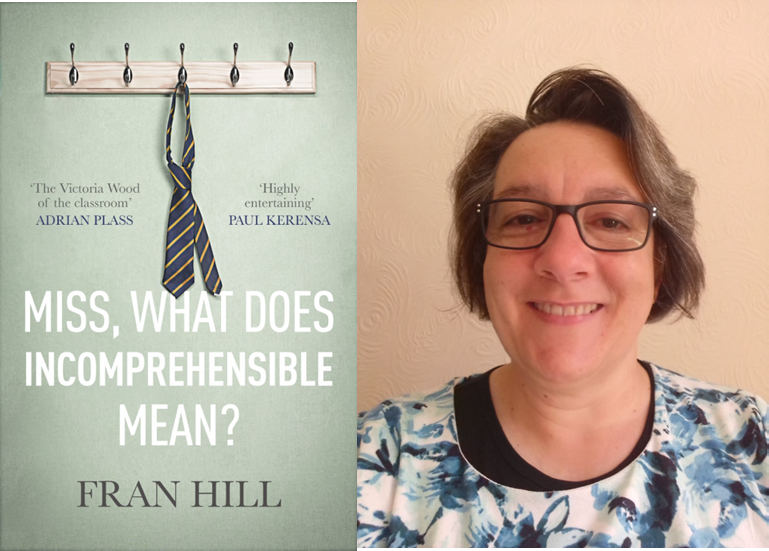
Fran is a writer and teacher living in Warwickshire and her new book ‘Miss, What Does Incomprehensible Mean?’ is out now, published by SPCK Publishing. You can find out more about Fran by going to her website https://www.franhill.co.uk/
Originally written by Fran Hill

