

Years ago, I remember reading a poem by Allan Ahlberg to my class. It’s a wonderful poem and you may have read it yourself. It starts like this: –
‘I – am – in – the – slow
read-ers’ -group – my -broth
– er – is – in – the -foot
ball – team – my – sis -ter
is – a – ser – ver – my
lit – tle- brother – er – was
a – wise – man – in – the in-fants – christ – mas – play…’
The poem always tore at my heart as it sums up that awful sense of being labelled which can so demoralise a person. Even if we do not announce the labels, sometimes our behaviour and lack of tact can communicate them in ways we don’t anticipate. We had a good discussion about it.
Some years ago, I presented a Parents’ Workshop at school based on a book called Toxic Childhood by Sue Palmer. The book talked about the huge melting pot of influences endemic in modern society and how they were affecting children and young people. It mentioned things like too much instant gratification, too little outside activity and a life rushing from after-school club to Maths Coaching to swimming, with little or no time for imaginative play. Palmer talks in the book about the importance of ‘slow time’, that wonderful stare-at-the-leaves-moving kind of day when we are unhurried, our senses are heightened and time slows. She argues that human beings need this kind of slack in their lives in order to be contented in the short term and productive further on.
Writing, is (often frustratingly) a slow-time pursuit. For most of us, it involves putting one word in front of another until there are 70,000 or so. Then you have to go through and change them all. Then you do it again. And again. The setting must sing. The plot must hum. Every sentence must be polished until it shines. And, when you have shaved the excess off every syllable and finally sat back to survey the treasure you’ve created from your blood, sweat and tears, that is literally just the beginning.
Then must follow beta reading, proof reading, editing, changing, researching, emailing, applying, attaching, responding, hoping…To say nothing of publicising, marketing, promoting, selling. It’s a long, slow business. If life has not taught us to slow, writing will. The best writers are slow-time masters.
We had to move out of our house in London a few years ago to have it extended. We rented a funny old almshouse near a royal park for four months while the builders mauled our house to bits and rebuilt it. It was a strange time living in this slightly spooky house with its huge garden and walk-in pantry. It was a hot summer and I was teaching less and writing more. I started running in the park each day. It was a beautiful place to run with gravel pathways winding beneath tunnels of trees flecked with light. I remember thinking how happy I was living in this in-between place even though it was only really waiting for our house to be finished. I wondered whether it would end up being one of the happiest times of all. Looking back, it was.
It strikes me that writing may be like that. All the things we’re doing now, in slow time, might sometimes seem to drag and be annoying, but the planning and plotting, the drafting and editing, well, they absorb us so completely don’t they? And they are so…hopeful. You never know, they might end up being our happiest times of all.
I-am-in-the-slow-writ-ers’-group
But you know, for lots of reasons, it’s not a bad place to be…
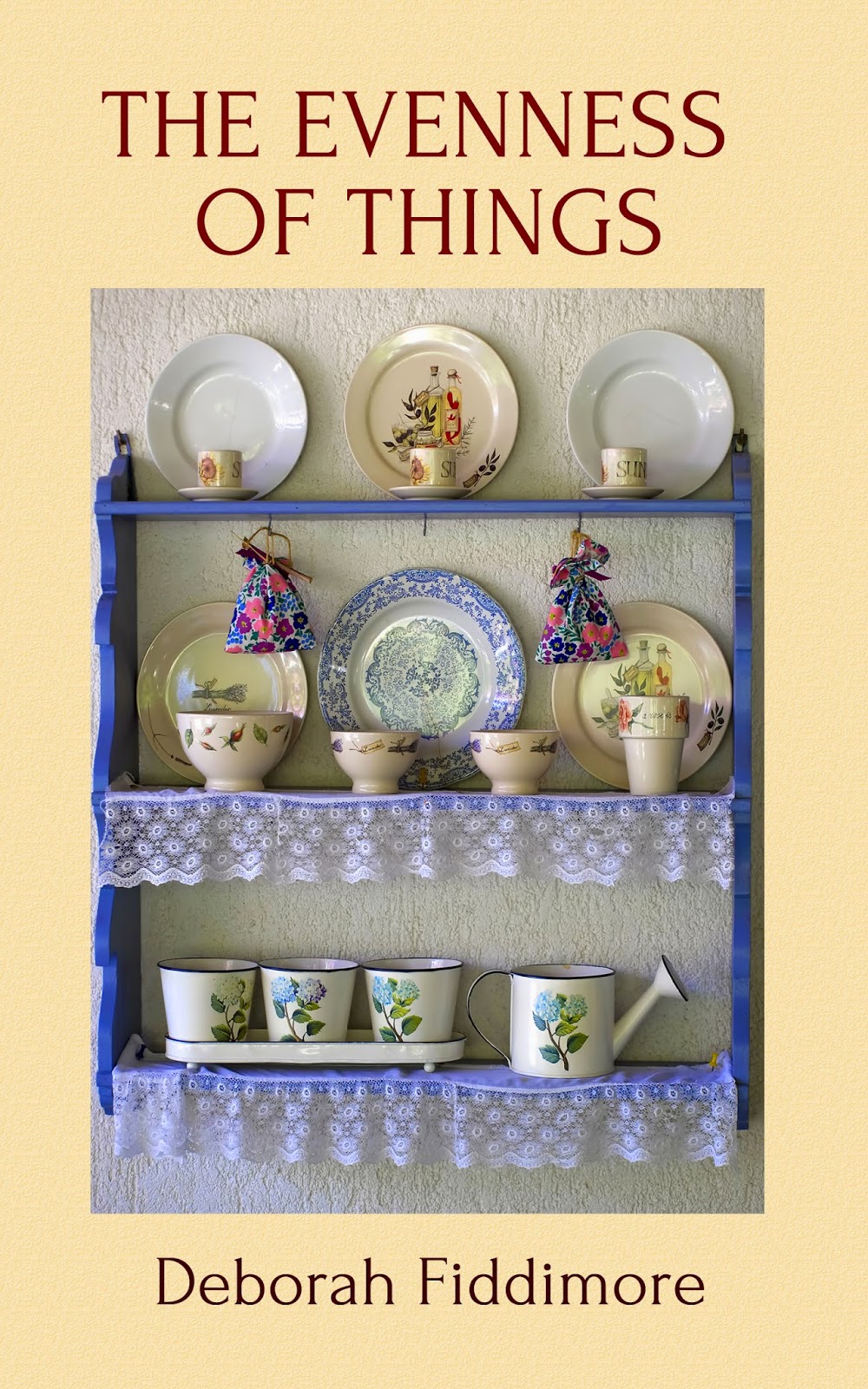
Deborah Jenkins is a primary school teacher and freelance writer who has written articles, text books, devotional notes and short stories. She writes regularly for the tes. She has also completed a novella, The Evenness of Things, available as an Amazon e-book and has just finished a full length novel. Deborah loves hats, trees and small children. After years overseas with her family, who are now grown up, she lives in Sussex with her husband, a Baptist minister, and a cat called Oliver.

