
By Fiona
Veitch Smith
Veitch Smith
When
pitching a book to an agent or publisher, a question often asked is: is there
series potential? Although I am a fiction author, I know this applies to
non-fiction too.
pitching a book to an agent or publisher, a question often asked is: is there
series potential? Although I am a fiction author, I know this applies to
non-fiction too.
Non-fiction series
A search
of any publisher’s website – an absolute must if you are planning on writing a
book which you hope will one day be sold – shows that both fiction and
non-fiction series dominate their lists. I remember once pitching a non-fiction
book to a number of publishers and I was asked if it would fit in with any of
their existing series or imprints. I quickly went and checked their lists and
discovered that my book might very well have fit in terms of subject matter,
but it had been written in a very different style. It was suggested I rework my
book to the existing style and re-submit. As my fiction career began to take
off at that time, I never got around to the rewrite.
experience taught me something: if you want to get published you would be well
advised to cut your clothes to your cloth. Writing for an existing series
increases your chance of getting published. Writing your book first then
checking to see if it fits in, decreases it. This is not to say there is no
room for original books that stand out as different, but publishers are nervous
about taking a chance on a completely new name. Being a new name but writing
for an existing series, minimises the risk.
Fiction series
I have
authored three children’s series (one as a ghostwriter) and one adult series.
In addition to that I have two adult stand-alones and one children’s
standalone. Sales figures tell me the series always do better than the
standalones. Unless you are very lucky (perhaps I should say ‘blessed’ as this
is a Christian forum J ) a standalone title has a short
shelf life. The majority of sales take place in the first year; thereafter they
slow down, sometimes, sadly, to a standstill. However, with each new book in a
series that is released, interest in the earlier books (the back list) is
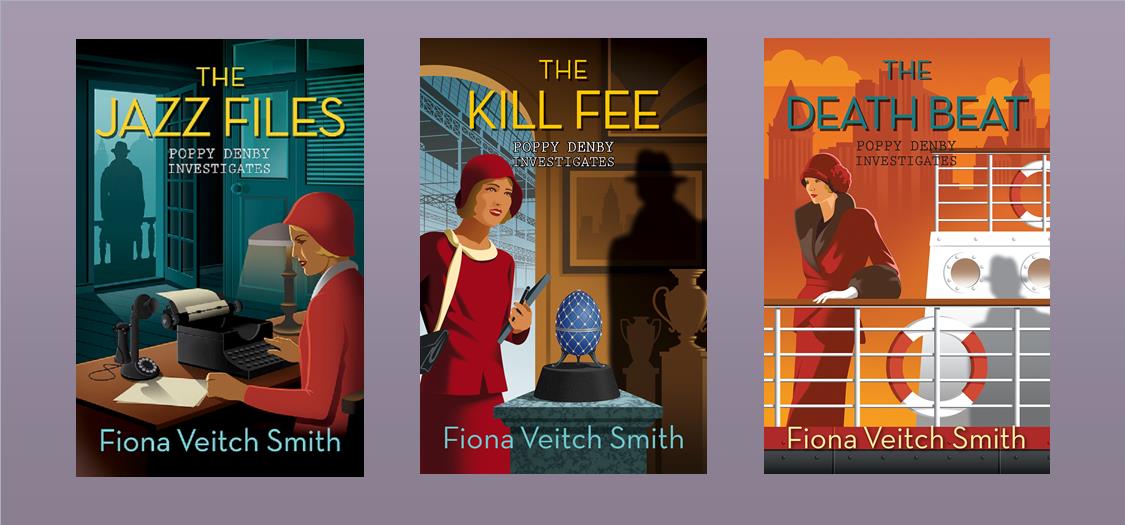
renewed. As an example, sales of my first two books in the Poppy Denby series
had slowed by last summer, but with the release of the third book, The Death
Beat, in the autumn, the first two books started selling again. Hence why
publishers are interested in series: they build a following of dedicated
readers. The same is true of my picturebook series of Young
David and Young
Joseph books – each new release stimulates sales of the older books. The
flip side of this, for a writer, is that you may feel tied in to producing
another book in the same series when you want to branch out into something new.
But despite that, I feel that the advantages definitely outweigh the
disadvantages.
Fiona
Veitch Smith is a writer and writing tutor, based inNewcastle upon Tyne .. Her mystery novel The Jazz Files, the first in the Poppy Denby
Investigates Series (Lion Fiction) was shortlisted for the CWA Historical
Dagger award in 2016. The second book, The
Kill Fee was a
finalist for the Foreword Review mystery novel of the year 2016/17, and the third, The
Death Beat, is out
now. Her novel Pilate’s Daughter a historical love story set in Roman
Palestine, is published by Endeavour Press and her coming-of-age literary
thriller about apartheidSouth Africa
Crafty Publishing imprint. Her children’s books The
Young David Series
and the Young
Joseph Series are published by SPCK.
Veitch Smith is a writer and writing tutor, based in
Investigates Series (Lion Fiction) was shortlisted for the CWA Historical
Dagger award in 2016. The second book, The
Kill Fee was a
finalist for the Foreword Review mystery novel of the year 2016/17, and the third, The
Death Beat, is out
now. Her novel Pilate’s Daughter a historical love story set in Roman
Palestine, is published by Endeavour Press and her coming-of-age literary
thriller about apartheid
Crafty Publishing imprint. Her children’s books The
Young David Series
and the Young
Joseph Series are published by SPCK.
Originally written by ACW Blogger

