
Do we sometimes pause to wonder about those literary masters whom we admire almost as if they occupy a rarefied level of existence above the rest of us? Shakespeare, for instance, or Homer?
How different might this be if we were to see their first drafts?
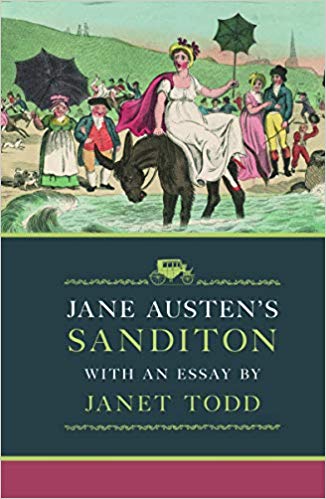
I love Jane Austen, and believe ‘Pride and Prejudice’ is close to being the perfect novel, for many reasons. I know people exist who don’t agree with me, but for the sake of argument let us say here, that for me Jane Austen the novelist is a rarefied being. So recently I feel as if I have seen her in a new light, in a light I might even identify with; I have had an insight into her first draft.
The first draft I’m talking about is, of course, Chapters 1-12 of her last, unfinished, novel, ‘Sanditon’, which the screenwriter Andrew Davies has recently adapted and completed for ITV as a very successful and enjoyable drama series.
Even Andrew Davies says of the material he had to work with: “It reads like a first draft. But the concept’s interesting.” Doesn’t that sound a bit like a polite rejection from a publisher?
Now I’ve read Jane’s 12 chapters which she sadly had to finish on 18th March 1817, suffering from the illness of which she would die four months later. It is said the disease that killed her was Addison’s Disease, and among other symptoms, this would have made her feel very tired and lethargic. But these chapters are energetic, lively and exuberant. Her characters are caricatures; their dialogue is a bit ‘in your face’ and she makes statements which would have been far better conveyed through the lips of a character. Yet all this she would have transformed in her subsequent drafts, weaving in the subtlety and complexity and irony for which she is so celebrated.
It amazes me that she chose to write in such an entertaining style about hypochondriacs who revel in imaginary ill health, at a time when she was herself genuinely ill; and to take as a subject outrageous speculators and the easy-come-easy-go nature of wealth, when she and her mother and sister were never free from financial insecurity. Even the fortune of her wealthy brother Edward was under threat at that time. But here in this first draft we see Jane Austen the human being, who carried on writing even through the progression of her illness – and that makes it so much more moving.
Have you ever come upon the first draft of one of your most admired writers? What has helped to remind you that even the greatest of authors was a human being, and even, perhaps, a little like you?

