

My son collected his GCSE results last month, or rather, I collected
them on his behalf, as he was away. I opened the envelope on a video
call, so that he was the first to see them. Fortunately he did really
well, so it was an easy call; he knew he’d be able to do the
subjects he wanted at A level and after he’d phoned a few family
members with the good news he could go and celebrate with his
friends. Provided they’d also been successful.
Whatever successful meant for them.
Over the next few days, I bumped into some of my son’s friends and
I perfected my questions. Instead of ‘how did you do?’ I asked,
‘Were you happy with your results?
‘Did you get what you need for your next step?’
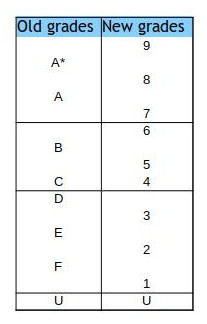
Because success looks different for different people. For one boy,
scraping a pass in both English and maths was a massive success as he
can do his carpentry apprenticeship without needing to worry about
resits. For another friend, failing to get a 7 in maths means he had
to make different A level choices which will probably affect his
future career.
What does success look like for you?
I belong to various writing groups on social media. It’s
interesting to see what people post about. Someone was complaining
last week that they’d only sold 5 books, compared to the average of
30+ a week. Someone else was anxious because they hadn’t heard back
from either of the agents who’d requested to see their full
manuscript. Others were despairing of ever finding the physical or
mental health to write again and for them, one line of a poem after
months of dryness was a major success.
For us as Christians, success should be following God’s lead and
living our lives for him. Writing for him and for his glory. I
believe that writing is one of my gifts, and our gifts are to be used
in service of the kingdom of God.
It’s hard to see how my writing serves God and furthers the kingdom
if no one ever sees it. But is that truly my motive for seeking
publication, or is it that I want recognition for what I do?
If I’m honest, it’s both. I would like to successfully serve God,
and I would like to have some success in a form that my non-Christian
friends can understand.
Joshua tells the Israelites, ‘Be strong and courageous. Be
careful to obey all the law Moses gave you; do not turn from
it to the right or to the left, that you may be successful
wherever you go.’ And under Joshua’s leadership, the Israelites
entered the promised land.

Jeremiah was faithful, obedient and loyal to God, but mocked,
ridiculed and imprisoned, he certainly wasn’t successful in any
worldly sense of the word. He was only successful in that he never
shut up!
Success might be getting more kingdom-focussed books into the hands
of Christians to encourage them, or non-Christians to challenge them.
It might be putting work out there, submitting and entering
competitions and collecting the rejections. It might just be writing
one painfully crafted line. It is always committing our time and our
work to God, for him to use as he chooses.
As John Milton puts it, God is King of heaven. He has thousands to do
his bidding. He may choose to use us, but he does not have to.
- God doth not
need - Either man’s work or his own gifts; who best
- Bear his mild yoke, they serve him best.
John Milton’s sonnet, When I Consider how my Light is Spent which closes with the famous line They
also serve who only stand and wait.


