
 |
|
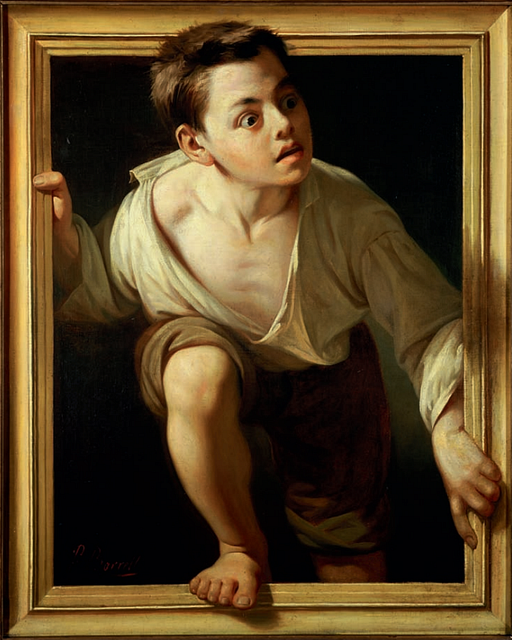
| Escaping Criticism by Pere Borrel del Caso |
How do you handle criticism?
That
might be a bit of a broad question. I might depend who’s giving the
criticism and how sympathetically it’s delivered. But imagine this
scene: you’ve sent the manuscript you’ve been working on for
months to someone you respect. They kindly but insistently point out
all the things that don’t work. What do you do?
1 throw
the comments to the floor (or the equivalent with an email) and storm
off in anger;
2 believe
the remarks and decide the whole piece of writing is rubbish, as is
your decision to write anything at all;
3 take
some time to reflect on the comments and then consider them calmly.
Of
course it should be 3, we all know that. But let’s admit, that’s
easier said than done. When we’ve spent weeks polishing a poem or a
piece of prose, and we think it’s really good, we hope that the
response is going to be, ‘wow, that’s amazing’. Not, ‘good
premise, but x doesn’t really work and have you thought about
developing y?’
Or
is that just me?
It’s
difficult to accept that our work may not be as good as we hoped. But
that’s why we send it out, isn’t it? To find out how someone else
sees it. Because we can be too close; we know the thought processes
that have gone into the work. We need someone to look at it for the
first time. If an action confuses them, maybe it needs clarifying. If
a sentence jars for them, maybe it needs tweaking. If a character
seems superfluous, maybe that character need re-working, or even
cutting. However painful that is.
The
view of a knowledgeable outsider is important. But however skilled a
writer or editor, they did not write your piece. Which is why I found
this quotation so helpful.
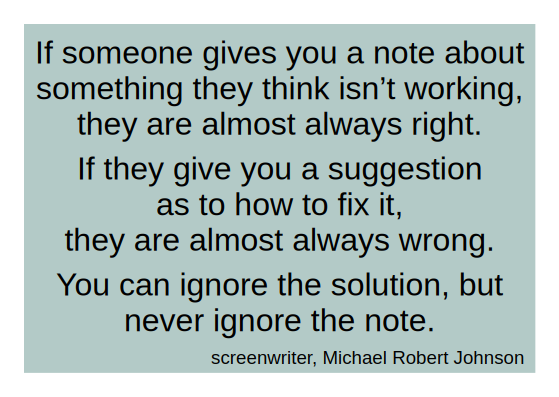
Readers
can tell us what doesn’t work for them and we need to listen.
Especially if several readers make the same comment. Whatever we’re
writing, we need it to be coherent and powerful. But suggestions
about how best to solve the issue, they will be personal. Not
necessarily helpful. And as the author, we know the characters and
settings best. We should be best placed to work out how to improve
something that isn’t working.
So
take the criticism and find your own solution.
And
remember
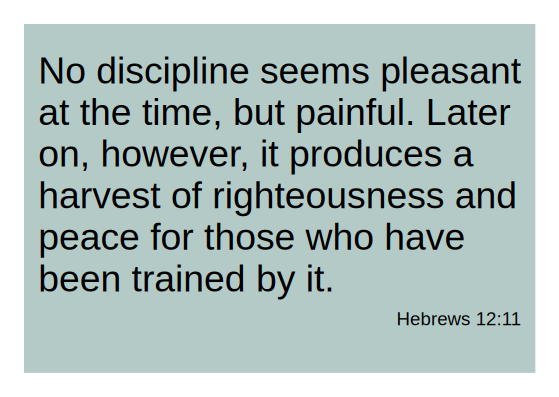
If
we can handle criticism well, we can learn from it, and our writing
can improve.


