
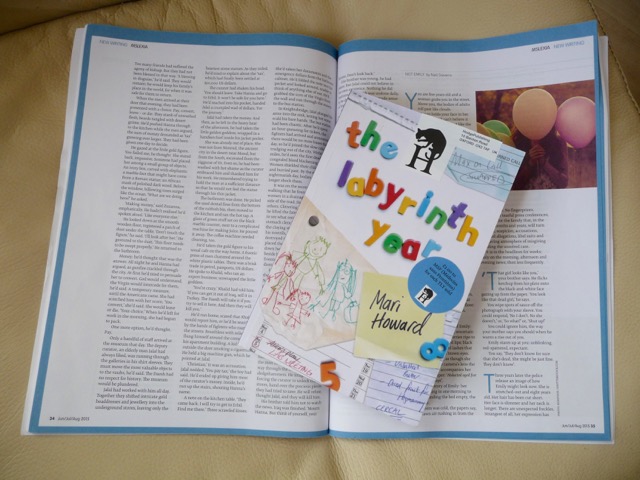
some us shared our thoughts on Mslexia magazine (‘for women who write’) and in
a wider context, the sense of gloom, re-named better ‘bleak’ which appears in
so many contemporary novels. Although we reminded ourselves that bleakness is
not a new departure for fiction, inhabiting for example Hardy’s Jude the Obscure, Shakespeare’s Macbeth, and the Greek tragedies. we
seemed to feel this post-modern bleakness is different.
idea if I’d send it off or where to) describing what I feel browsing in
bookshop today (and for a number of years). This piece began to get quite long,
as I cited the various apparent essentials for a current novel, and the
desperate and overwhelming amount of ‘visceral’ – now termed more often
‘physicality’ thought necessary. Especially in scenes of sex or violence, this
also hovers around at all times. Though examples exist about anything: say, the
way person eats a sandwich, or slurps their tea, the scent of a full nappy,
what happens behind the lavatory door. And of course terminal illness, mental
breakdown, and living with disability: all in extra-stark realism.
which is not what was intended. Should we carp at the writing of others, people
may conclude this is merely in order to talk up our own work. Like a
not-so-good preacher who loudly condemns the Pharisees in order to make Jesus
more attractive. Positivity is best.
the problem is that within these earnest, bleak, novels there is nowhere a sign
of hope. We, the readers, must conclude that the human race is all utterly
depraved, lonely, loveless, and unloving, and there is no hope for it. The
curtain should indeed be rung down on it sooner rather than later. Yet the
writers keep writing, becoming prize-winning or acclaimed, selling books.
Presumably, they do actually want to live, even without hope?
a corner from what I had been working on when I realised that I should inject discernable
hope into the novel I’d been working on. Without making everything into a
1950s, cosy, ‘Ladybird Book’, story, I would write about both sides of the secular/Christian
(or secular/faith, indeed) divide, have my central characters from a secular
and a faith-based upbringing, and give weight to each side. I’d not paint the
Christian Family as either perfect or totally imperfect and destructively
pious. Nor the secular as wrong in every way. I wanted to proclaim the hope
side of life, something which Christians have, even though their lives may be
flawed (always a problem!). And even to slip in bit of faith knowledge while
not preaching, indeed while demonstrating how Christians can get it wrong. And
what they do about it.
stories aren’t fashionable. Crime,
mystery, yes. Not family.
wondering whether or not it is right to continue with novel number 3. Which
though a family study again, will surprise and disturb, even without being
over-physicality-based, and definitely still including hope.
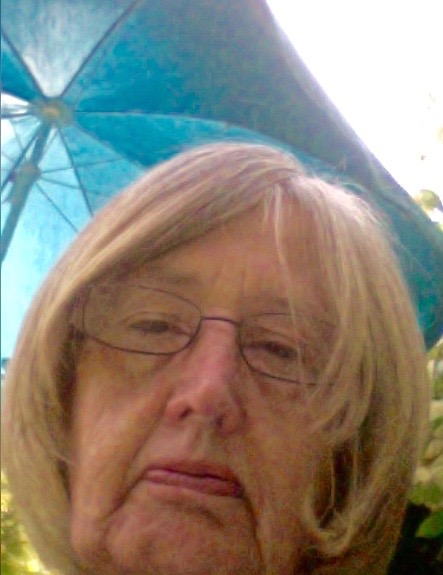
Clare Weiner, (as Mari Howard), writes contemporary, family-based fiction exploring change, diversity, and reconciliation, using her background in social sciences and religion. Think Joanna Trollope or JoJo Moyes, though influences include Kamila Shamsie and Khalid Hosseini, and like them she observes and critiques her own cultural traditions, the clashes and the outcomes. Clare believes in writing ‘crossover’ which gives a balanced view of today’s Christians living closely alongside convinced secularists and diversities of beliefs.
She has 3 grown children, no grandkids, 3 cats and a long-suffering husband, was born a Londoner, studied in Newcastle, and now lives in Oxford. To escape the compulsion of writing, she is also a painter, likes gardening, spending time with friends (& retail therapy), and helps organise her church walking and Exploring Spirituality groups. She is passionate to try and put across, in fictional form, the essence of the real lives of believers – often messy and confused, but always predicated on the hope we have in Christ, whatever our circumstances.

