
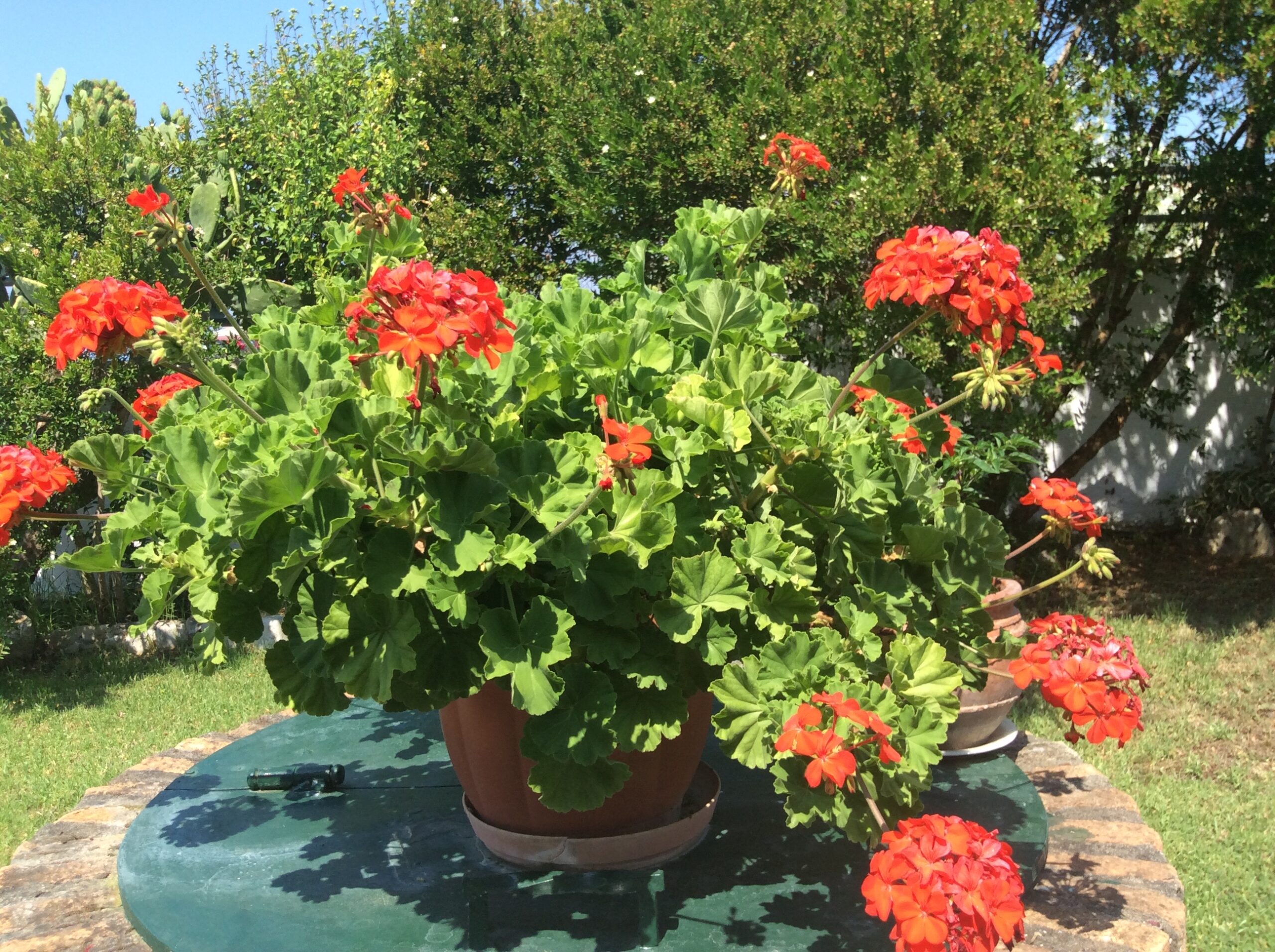
Photo Author’s Own
When I was about six, my parents bought me a book I loved called ‘Tiger Flower’. It was set in a mythical place where a tiger was a gentle, small creature that could rest on a blade of grass, and mushrooms were bigger than trees. The writer, Robert Vavra, had been inspired by Fleur Cowles’ paintings that illustrate the story. They feature detailed depictions of jungle wildlife and plants. My husband, who grew up in Africa, showed me a picture of a group of cheetahs the other day. He was surprised I could identify them, as most people confuse them with leopards, but I remember them from this book, which portrays them in such perfect detail. In ‘Tiger Flower’ the tigers, lions and cheetahs are small creatures in a world of large plants, where ‘everything that should be small is big, and everything that should be big is small’.
In my small garden, I have a tiny geranium plant that has thrived this year despite my lack of skill. It started as a seedling on the windowsill, doing nothing much for months. Then my husband planted it out in a bigger pot, and now it’s thriving in the sunshine.
Another tiny thing that’s growing all the time is my new granddaughter, now just a couple of weeks old. She was a big creature in a small space a fortnight ago. Now, she’s a tiny creature in a gigantic world, and through plenty of cuddles and her mother’s milk, she’s learning to navigate it.
Starting small and growing big. That’s the natural order of God’s creation, the miracle of growth. We can nourish and tend to plants and babies, but only God has the power to transform them:
‘I planted the seed, Apollos watered it, but God has been making it grow.’ (1 Cor 3 vv 6-9)
The world of ‘Tiger Flower’ subverts the natural order of things. It starts with a ‘wild, wild wind’ that sweeps everything away. The destruction of the earth has led to a new and different world, where butterflies sail boats and tigers make friends with birds. Rather than regretting his loss, the tiger is content to be ‘King of the grass’, and the lion hunts flowers with a soppy expression on his face.
The best fantasy writers can create something new out of a small idea. Something in those paintings inspired the writer to invent an imagined world. There are so many examples of random ideas that have sparked flights of imaginative fantasy. That’s all it takes. For CS Lewis, it was the image of a faun carrying an umbrella and parcels in a snowy wood that kicked off the Narnia idea. It only takes something small – a tiny geranium plant, a tiger on a blade of grass, a new grandchild, a remembered dream or image – to spark the imagination.
My imagination is often stunted and dulled because I don’t give it time and space to thrive. But if I take a moment to look at something in a new way and ponder it, inspiration will come. And I might work it up into something fresh and original in my writing.
Jane lives on the south coast and loves to write when she is not busy serving as ACW treasurer on the committee. She started blogging on the ‘Medium’ platform during the pandemic and has a backlog of material there. She hopes to resume work on her first novel soon.

