
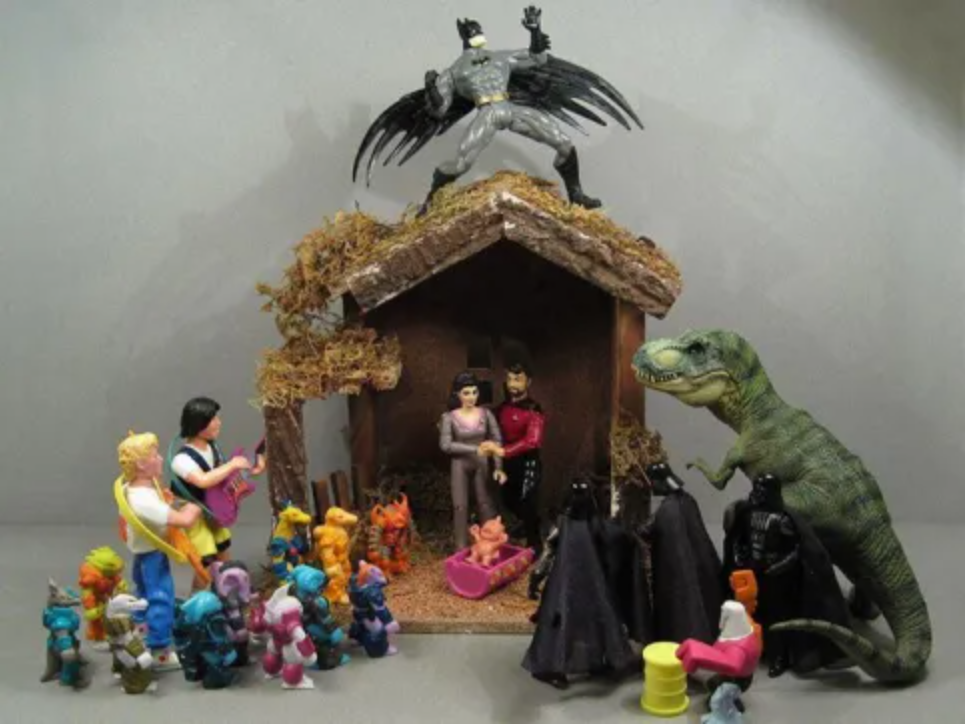
Growing up as a child, I marvelled at the magic of Christmas, yet now,
having been a Christian for nearly 40 years, I realise that the Nativity story
has become distorted. The story is now a blend
of Scripture with tradition, legend, and artistic imagination. Let’s break down
some of the major ways the Christmas story has been distorted or mythologised:
1. The
Setting: A Stable vs. a House
- Traditional image: Jesus
was born in a stable with animals around Him. - Historical/Scriptural reality: The
Greek word used in Luke 2:7 is kataluma, often translated as “inn”
but more accurately a guest room or upper room. Many scholars believe
Jesus was likely born in a lower room or courtyard of a relative’s home in
Bethlehem, where animals were kept on the ground floor—hence the “manger.”
It wasn’t a separate barn in the middle of nowhere. - Implication: The cosy,
romanticised stable is likely more an artistic convention than a historical
fact.
2. The
Shepherds’ Visit
- Traditional image:
Shepherds suddenly appear with glowing angels singing, arriving at the
same time as the Wise Men. - Reality: Luke 2:8–20 describes shepherds in the
fields being told by angels of Jesus’ birth. There’s no mention of the
Wise Men here—they were not part of this event. - Implication: The
conflation of shepherds and Magi in nativity scenes is purely for
storytelling cohesion.
3. The Wise
Men (Magi)
- Traditional image: Three
kings arrive at the stable on the night of Jesus’ birth, bearing gifts of
gold, frankincense, and myrrh. - Reality:
- Matthew 2:1–12 refers to “Magi from the East,” but does not say
they arrived at the time of Jesus’ birth—some estimates suggest up to two
years later, based on Herod’s decree to kill children two years old
and under (Matthew 2:16). - Their number is not specified; the idea of three comes from the
three gifts. - They were likely wealthy, scholarly travellers, not crowned kings.
- Implication: The
familiar “three kings” kneeling at a manger is historically inaccurate.
4. The
Timing of Events
- Traditional image:
Everything happens on a single night—Jesus is born, shepherds visit, Wise
Men arrive, angels sing. - Reality: The Gospels suggest these events
occurred over weeks or months, not all on one night. Jesus’
circumcision and presentation at the temple (Luke 2:21–24) happened eight
days after birth, and the Magi visited later. - Implication:
Christmas pageants condense events for narrative simplicity, not
historical accuracy.
5. Mary and
Joseph’s Status
- Traditional image:
Humble young couple, living in poverty. - Reality: They were likely common but not
destitute, observant Jews who followed the Law. The travel to
Bethlehem (Luke 2:1–5) was for a census, and they probably stayed in a
family home rather than a strange inn. - Implication: The
“poor and desperate couple” trope is partly a legend.
6. Angels
and Star of Bethlehem
- Traditional image:
Angels appear in dramatic heavenly glory; a star hovers over the stable. - Reality: Angels in Luke appear to shepherds in
the fields; the star in Matthew may have been a celestial event
(comet, conjunction, etc.) and did not necessarily hover over a manger. - Implication:
Nativity art often adds visual flair that isn’t in the biblical text.
I could go on about the big
red imposter, who now seems to take centre stage. I could mention that 25th
December is the wrong date, although it is rather convenient that it is a
national holiday. (Now who’s twisting the truth?
Happy BOXING DAY, huh! Where
did that come from?
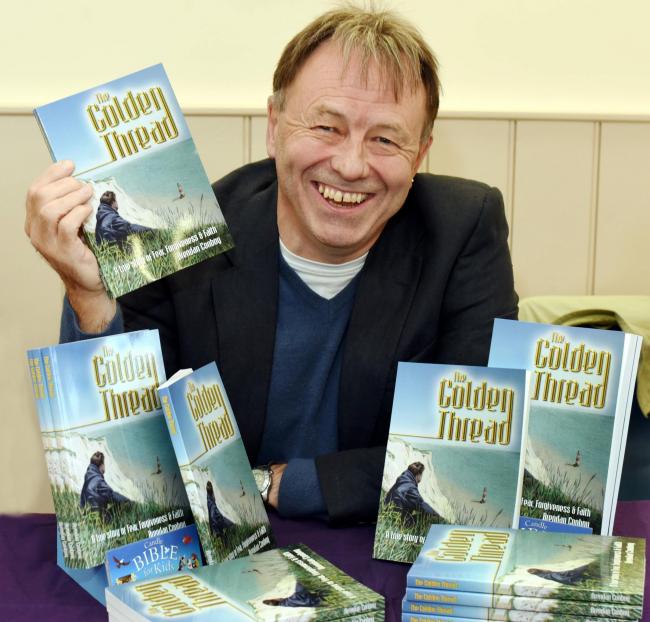
Brendan Conboy aka Half Man Half Poet, is the author of 16 published books, including two
fascinating autobiographies, The Golden Thread and I’m Still VALUED.
In 1986, Brendan invited Jesus into his life, and God blessed him with the gift
of rhyming words. He used that gift as a Christian Rap artist for 25
years and has written 6 poetry books, including the entire Book of
Psalms in Rhyme. He has 3 published novels – Issues, Invasion
of the Mimics and Legacy of the Mimics. He is the creator of
Book Blest.

