
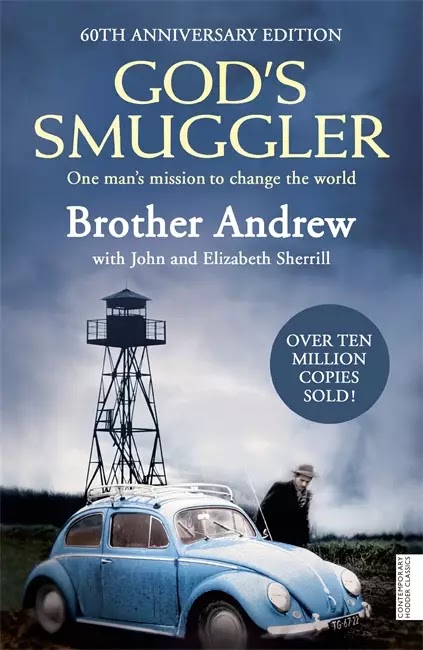
Yes, I am starting with a question, and borrowing a title from Brother Andrew’s excellent book God’s Smuggler (60th Anniversary – first published in 1964). The reason for asking this question is to scratch an itch, or at least relieve an inner uncomfortableness…with your help.
And I wonder if this itch is present in other ACW members?
In the social context of the 2020s, how can we smuggle moral, spiritual, and supernatural elements of the Christian faith into genres that are not explicitly theological or devotional?
Three authors from the past who have attempted to do so are Charlotte Bronte (Jane Eyre) 1847, Fyodor Dostoyevsky (Crime and Punishment) 1866, and CS Lewis (The Chronicles of Narnia) 1950-1956.
How subversive were these literary works to the age in which they were published? Alternately, how much were they a product of their time? How much did they challenge superficial Christianity, creeping humanism, materialism, and the paganism of their day?
CS Lewis was a well-known Christian broadcaster who had written explicitly Christian literature such as Mere Christianity (1952) – one of the books that, much later, demolished my free-wheeling agnosticism. He also wrote The Chronicles of Narnia to reach a wider audience, accepting the risk that many would enjoy the books without ever rumbling Aslan’s true identity.
Dostoyevsky’s Crime and Punishment ends with such a beautifully written appeal to the Christian faith that, to our modern sensibilities, suddenly and rather awkwardly, shifts the genre from novel to tract.
Bronte’s Jane Eyre is a matrix of themes: romantic fiction, gothic horror, female liberation, and the relationship between the rational and supernatural. And yet, Jane Eyre emerges with her Christian faith intact. Therefore the novel is ‘evangelistic’ – even if to modern readers this element can be ignored or rendered irrelevant to our age.
I am attempting to smuggle Christ into the story without it feeling…artificial
In an era when less than 5% of the UK population regularly attend church compared with approximately 50% in 1950 and nearly 60% in 1850, how can we, as Christian writers, and in our writing permeate our society as Christ has permeated us?
Thus far, I have written one non-fiction book, tackling the subject of Israel from a theological perspective, aimed at a Christian audience, and am currently writing a historical fiction in which I am attempting to smuggle Christ into the story without it feeling clunky, artificial, or preachy.
I would welcome anyone’s reflections on how to be a subversive, spiritual smuggler in our secular age, and how to communicate the gospel in 2024, in fiction.

