
They say there’s a psalm for every occasion, don’t they? You can google lists of psalms to read when you’re afraid, when you’re happy, when you want guidance, when you need to know God close. The psalms speak deeply into the human condition at every level, and one of the things I love most about the psalms is that they are authentically raw. The writers cry out their pain and are not afraid to lay out the darkness. Sometimes the darkness threatens to overwhelm, such as in Psalm 88:
I am overwhelmed with troubles
and my life draws near to death.
I am counted among those who go down to the pit…
…darkness is my closest friend. (Psalm 88: 3-4, 18)
Life so often falls in shadows, and some of us are called to write in the darkness, just as the writer of Psalm 88, Psalm 42 and others did. Some of these psalms contained great swathes of hope, of looking up to God and hanging on, but some simply stated the reality of darkness, and in that, many over the years have found resonance and relief: it’s okay to admit to the darkness, it’s okay to dwell there a while, and it’s okay to lament where we need to.
I’ve been thinking a lot about writing in the shadows lately. I’ve always written non-fiction and poetry for the Christian market, feeling that sense of calling to write hope in the midst of pain, to point readers to the one who is in it with them. It’s a great joy and privilege to write thus. Five years ago yesterday my first book, Catching Contentment, was published, and it was a revelation to me that I could write joy and pain all tangled up together and that people would find it chiming with them. But there’s long been another side of me that senses a calling to write deep in fictional shadows as well as authentic non-fiction. My first novel, out next week with Resolute Books, is a cry out against the great evil and darkness I see throughout the world, an imagining of how things might be in a dystopian society that values people by their productivity rather than their worth. It’s a dark, sometimes harrowing story, and yet it’s a story I’ve felt the fire of the Holy Spirit stirring in the very pit of my belly, that feeling of creating something that both grapples with evil and whispers hope to the void.
When I think about how we as writers need to write in the shadows as well as the light, I’m reminded of Samwise Gangee’s words to Frodo in Lord of the Rings:
“It’s like in the great stories, Mr. Frodo. The ones that really mattered. Full of darkness and danger, they were. And sometimes you didn’t want to know the end. Because how could the end be happy? How could the world go back to the way it was when so much bad had happened? But in the end, it’s only a passing thing, this shadow. Even darkness must pass. A new day will come. And when the sun shines it will shine out the clearer. Those were the stories that stayed with you. That meant something, even if you were too small to understand why. But I think, Mr. Frodo, I do understand. I know now. Folk in those stories had lots of chances of turning back, only they didn’t. They kept going. Because they were holding on to something.”
― Samwise Gamgee
I’m reminded of how Frodo and his group had to tread the path of the ancient evil of the Mines of Moria, the desperate darkness of Helm’s Deep, and the desolate deathscape of Mordor before the light of victory blazed. All throughout, Tolkien gave hints of hope that kept them going, but there’s no denying that these characters walked the deepest shadows as they pulled together towards a far-off light. There’s something in me as a writer that responds to this feeling, a similar feeling I experience when I read John 1:5: ‘The light shines in the darkness, and the darkness has not overcome it.’
Our world lives in great darkness. Oppression and injustice reign in so many places, and individuals live with grief and pain every day. I’m grateful that there are Christian authors called to speak authentically into that very darkness, knowing that light is on its way; sometimes it’s a long way off, or seems to flicker in the distance – but in the end, it blazes. If we as writers can draw readers to that glorious light in any way, then this is a great blessing and privilege. Some are called to speak to a Christian audience, to encourage and to build hope; some to a secular audience, to write of raw reality while introducing tendrils of light that may spark something new. I think of Deborah Jenkins’ beautiful book, Braver, written for a secular audience yet weaving subtle hints of gospel hope through flawed characters and dark situations, and Lydia Jenkins’ Merit-Hunters series, a dystopian future where evil is evident but light still shines; I think of Narnia where darkness was absolute in a dead world before Aslan sang the morning into being (The Magician’s Nephew) and where winter gripped the land and people lost hope (The Lion, the Witch and the Wardrobe). I think of many advent books written by our wonderful ACW authors, admitting the dark while pointing to light, such as the new Jesse Tree Anthology by Rachel Yarworth, Christ Illuminated by Joy Margetts and Contemplating Christmas by Abby Ball. There are too many more to mention, but all of them find shadow-places that somehow burst with hope.
Writing in the shadows is sometimes uncomfortable, especially when the light seems far away, but the thing is that the light will never go out. The darkness will never overcome it. In my new book there’s a great evil at hand, in a society where all mention of God has been squashed, yet, as C.S Lewis says, Aslan is always on the move. God still moves hearts and minds towards gospel light, towards truth, value and ultimately, towards hope. We write words in these desolate places in the hope that something of this will shine through and touch lives, that it will speak to readers in subtle tones of light in dark places. We may not always succeed, but our call to write in shadows as in light is a great and noble call, and our walk with the Spirit as we spill words onto pages might do more than we hope or imagine.
Either way, whether you are called to write serious sonnets or cosy romance or faith-building devotionals or epic fantasy, keep writing. Keep creating, along with your Creator, who whispers words of life to you as you pour yourself out. Write in the light, write in the shadows, and all the places between, and see God working in the most unexpected places.
What do you think? Do you like to write shadows, light or in-between? What about books you read – do you prefer the hopeful stuff or a dose of reality, even if harrowing? What line should we draw as Christians when we write in genres that can get crowded with shadow? Drop your thoughts in the comments.
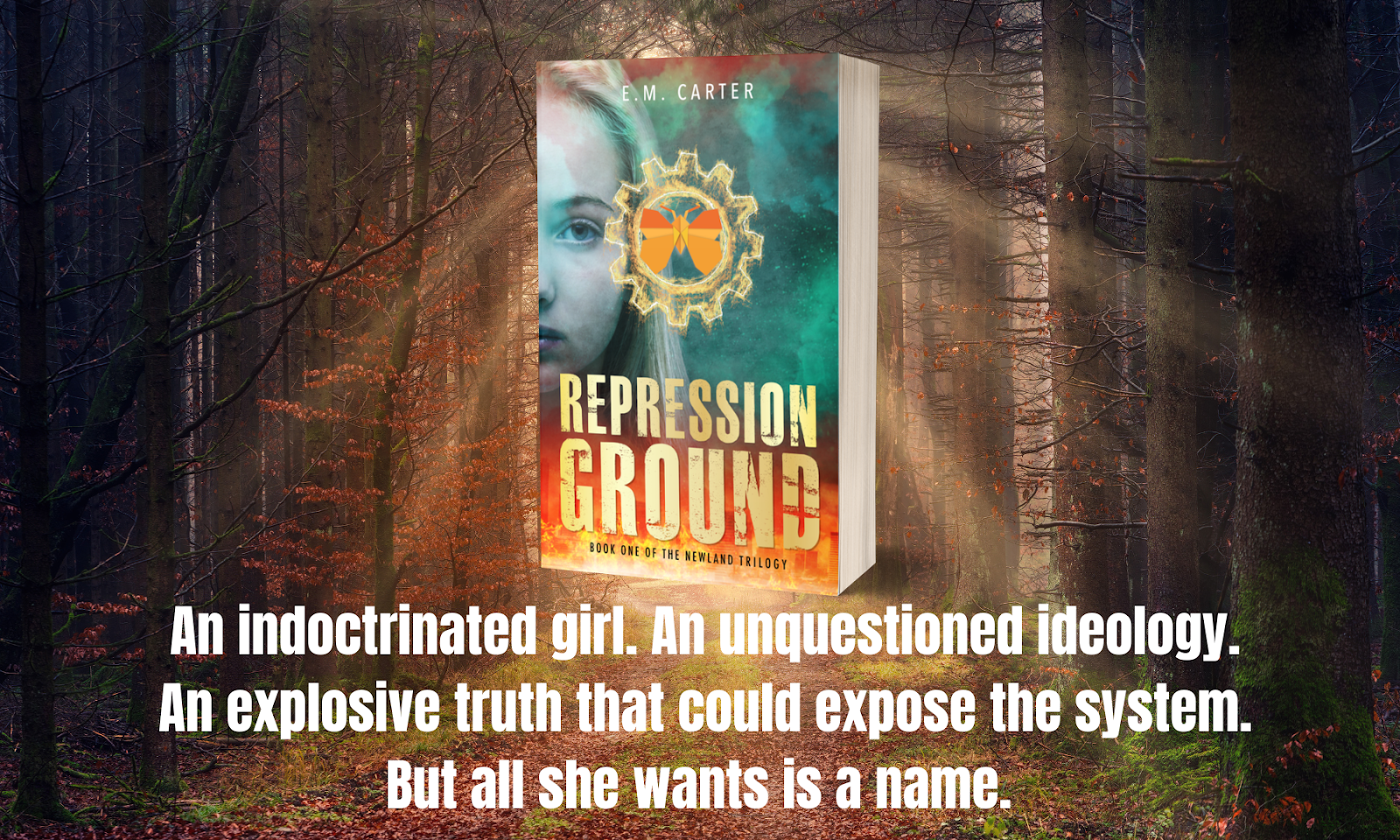
Liz Carter is an award-winning author, poet and editor from Shropshire. She loves to write about the difficult and painful times in life, and how we can find gold in the mess. Her debut novel, a YA thriller, Repression Ground, is out November 23rd with Resolute Books and is now available to pre-order for Kindle. Her new non-fiction book with The Good Book Company, Valuable, was published in June. Her other books Catching Contentment and Treasure in Dark Places are available in online bookstores. She works freelance to proofread, format and design books.
You can find her at www.greatadventure.carterclan.me.uk

